


The Wiper Blade De-Icer Tool That Stops Ice Dead
Andrew MelamedIce on your wiper blades can turn a clear windshield into a streaky, stressful mess. Frozen buildup keeps the rubber from sitting cleanly against the glass, so even a working wiper may leave haze, missed patches, or glare. A wiper blade de-icer tool gives this overlooked part of winter prep its own controlled contact point.
Ready to upgrade? The EDGE has you covered.
The EDGE works as a wiper blade de-icer tool because it has a Wiper Blade Clearing Groove, a small V-notch at the center of the back edge, for removing ice accumulation from wiper blades. Use the groove on the blade, then use the broad scraper edges to clear snow and frost from the rest of the vehicle.
That two-in-one approach means fewer tools, fewer awkward movements, and a cleaner routine before you drive. Here is why frozen wipers matter, how to clear them without forcing the mechanism, and where The EDGE fits into the job.
Why Frozen Wipers Can Reduce Visibility
Quick answer: Ice changes how a wiper blade meets the windshield. When the rubber is covered in frozen slush or stuck to the glass, it may skip, chatter, or leave streaks instead of making consistent contact. Clearing the blade before switching on the wipers helps restore a more controlled sweep.
Visibility problems do not always look dramatic at first. A thin ridge of ice can leave a narrow streak in the driver's view. A rough patch can make the blade drag or chatter. Wet snow, road spray, and headlights can then turn those small defects into broad glare across the windshield.
The safest habit is simple: clear the windshield and the wiper blades before asking the wiper motor to do the work. Do not use the wipers to break free blades that are frozen to the glass. That can strain the system and still leave the rubber edge covered in ice.
Ice blocks the working edge
A wiper clears effectively when its flexible rubber edge can follow the glass. Ice buildup makes that edge uneven and less flexible. The blade may move, but movement alone does not prove that the windshield is being cleared evenly.
Give the blade a quick visual check before you leave. Look for packed snow, a crust along the rubber, or a section that appears bonded to the windshield. Clear the buildup first. If the blade is damaged, split, or lifting away from its frame, replace it rather than scraping harder.
Wiper prep belongs with the rest of the vehicle
Winter vehicle prep is not finished when the center of the windshield is clear. Remove snow and ice from the mirrors, lights, roof, hood, glass, and wiper blades. A clean blade supports a clearer sweep and keeps the most important part of the tool, its contact edge, ready for the road.
For more prevention ideas, read how to keep windshield wipers from freezing. Prevention and careful removal work best together.
Frozen wipers can compromise blade contact and leave the clear view you need covered in streaks.
What Is a Wiper Blade De-Icer Tool?
Definition: A wiper blade de-icer tool is a scraper or grip feature designed to remove frozen buildup from the rubber and frame of a windshield wiper. Unlike a broad windshield scraper, it reaches the narrow blade area directly. Unlike a random hard edge, it gives you a more deliberate way to loosen accumulation without treating the blade like a windshield panel.
Many winter tools solve only one part of the problem. A small scraper may clear a patch of glass but feel awkward near the wiper assembly. A separate brush may move loose snow without removing bonded ice. A spray may help in some conditions but does not replace physical removal when buildup remains on the blade.
The EDGE takes a different route. It has one Wiper Blade Clearing Groove, so the wiper task is built into the tool instead of added as another item in the trunk. The groove is intended for ice accumulation on the blades. The scraping edges handle the larger surfaces around them.
This matters on cold mornings because the best tool is the one you can reach, control, and use for the complete job. Pull out one tool, clear the blade, scrape the glass, and move on. No frantic search for a tiny accessory buried under winter gear.
How The EDGE Works as a Wiper Blade De-Icer Tool
Key advantage: The EDGE combines a dedicated blade-clearing detail with a broad vehicle scraper. The groove addresses the narrow wiper edge, while the 18-inch primary scraping edge and 14-inch secondary scraping edge cover larger areas. The specifications refer to two scraping edges, not one 18-by-14-inch scraping surface.
That distinction matters when you choose a tool. A large scraper can cover more glass per pass, but size alone does not solve the blade problem. The EDGE pairs broad coverage with a Wiper Blade Clearing Groove. The result is a more complete winter-prep tool.
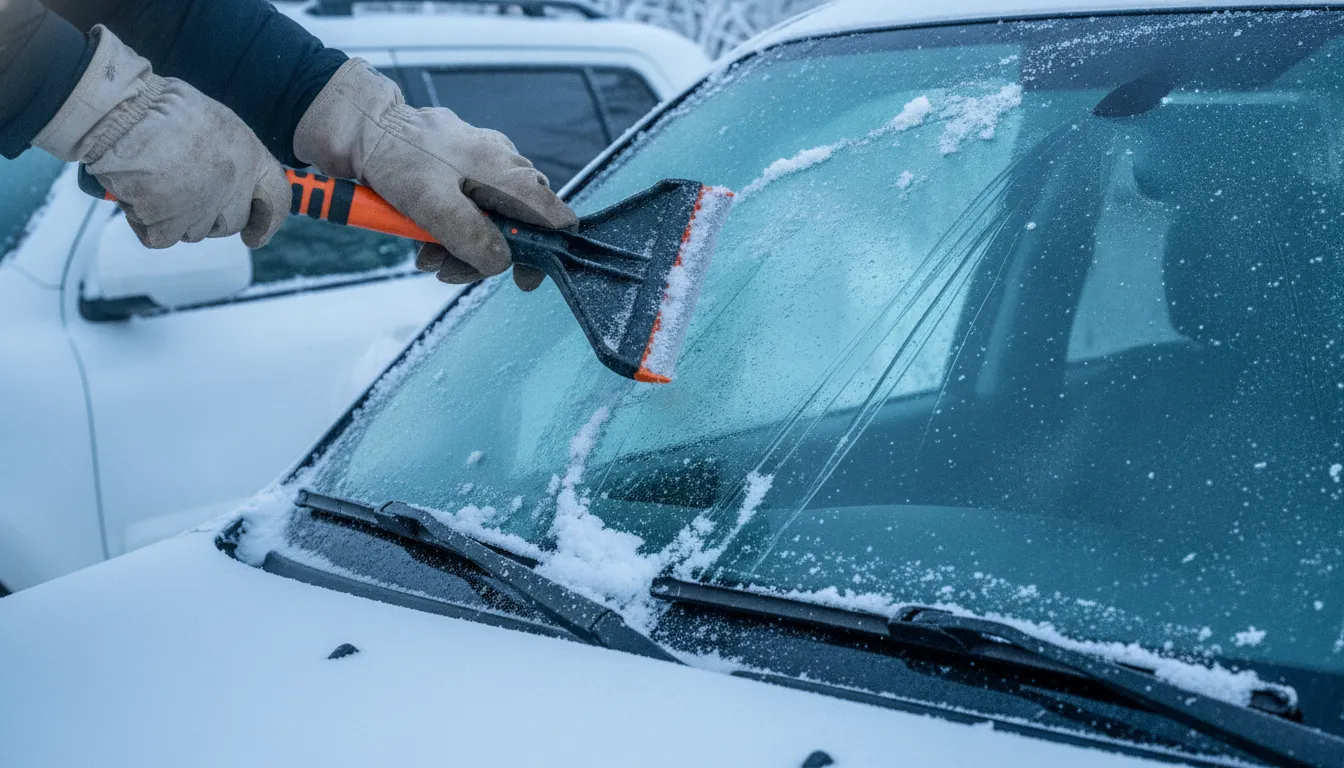
Use the groove for the narrow job
Position the groove over the iced section of the blade. Keep your movement controlled and follow the blade rather than pressing the scraper into the glass. Work along the buildup until the rubber edge and nearby frame are free of loose ice.
The goal is removal, not force. If ice is heavily bonded, give it time to loosen and make several controlled passes. Do not twist the blade sharply or use a pointed object against the rubber. The dedicated groove gives you a defined place to work.
Use the scraping edges for the wide job
Once the blade is clear, turn to the windshield and vehicle surfaces. The EDGE has an 18-inch primary edge and a 14-inch secondary edge for push and pull movements. Its broad format can reduce repeated passes compared with a narrow tool. The product page also highlights reduced effort and faster clearing compared with traditional scrapers.
Keep the motion smooth. Push loose snow away, then use the edge to work through remaining frost or ice. The paint-friendly design is intended for proper vehicle clearing, but grit still deserves respect. Brush away loose abrasive debris when possible, and never drag trapped gravel across paint.
Why the Multi-Purpose Grip Beats a Single-Use Accessory
Summary: A single-use wiper accessory can solve a narrow problem, but it creates another item to stow and remember. The EDGE keeps the Wiper Blade Clearing Groove on the same tool used for winter vehicle clearing. That makes the tool easier to find and gives one compact design more jobs.
The grip is built around practical control. It gives you a comfortable place to hold while removing snow and ice, and the wiper groove sits on the same tool. You are not switching from a broad scraper to a tiny accessory halfway through the job.
This is especially useful when the vehicle has several frozen areas. Clear the top of the windshield, move to the wiper blades, then return to the lower glass or side windows. The tool stays in your hand while the task changes. That is the point of a multi-purpose design: fewer interruptions and less equipment to manage.
One tool covers more of the morning routine
| Winter task | What to use | Why it helps |
|---|---|---|
| Clear ice from wiper blades | Wiper Blade Clearing Groove | Targets narrow buildup on the blade. |
| Move snow from glass | 18-inch primary scraping edge | Covers a broad path per movement. |
| Work around tighter areas | 14-inch secondary edge and rounded corners | Improves control where a broad pass is awkward. |
| Stow between storms | Flat handle-free profile | Fits neatly under a seat or in the trunk. |
The flat profile adds another practical advantage. A traditional long handle can take up awkward space in a trunk or back seat. The EDGE stows flat, so it is easier to keep with the vehicle without adding clutter.
When winter is over, the design still has utility. The EDGE can work as a portable tray for carrying wet or muddy items and helping protect vehicle interiors. Its recyclable materials and year-round format support a tool that does more than sit unused after the last storm.
How to Use a Wiper Blade De-Icer Tool Before Driving
Best practice: Clear the blade first, then clear the rest of the vehicle. Use steady pressure, avoid forcing frozen mechanisms, and inspect the rubber after the ice is gone. A repeatable sequence keeps winter prep controlled when the temperature is low and visibility is already compromised.
- Turn the vehicle off and check that the wipers are not running.
- Brush loose snow away from the windshield and the wiper area.
- Use a dedicated groove to loosen ice along each wiper blade.
- Clear the windshield with the primary or secondary scraping edge.
- Inspect the blades, mirrors, lights, roof, and glass before driving.
Start with loose snow
Loose snow is easier to move than bonded ice. Clear it first so you can see the wiper blades and avoid dragging unnecessary grit across the working surfaces. If snow has packed around the wiper arm, remove it carefully before addressing the rubber blade.
Work the blade with control
Use the groove along the blade and make short, deliberate passes. Let the tool do the contact work. Do not yank the blade away from the windshield or bend it backward to break ice. If the buildup is stubborn, repeat the pass rather than increasing pressure dramatically.
Finish with a full visibility check
After the blade is clear, run your eyes across the windshield and mirrors from the driver's position. Check that the headlights and taillights are visible, the roof is not carrying loose snow, and the wipers can move normally. If a blade still leaves heavy streaking after it is clean, it may need replacement.
For a broader routine, pair this article with The EDGE ice scraper maintenance guide. Clean tools and a quick edge inspection help keep winter prep ready for the next storm.
Can Spray Alone Replace a Wiper Blade De-Icer Tool?
Short answer: Spray may help loosen some ice, but it does not always remove the buildup from the blade or frame. A physical groove gives you a direct way to work on the frozen area. The right choice depends on the amount of ice, the temperature, and how quickly you need a clear view.
Sprays can be useful as part of a larger routine, but relying on a chemical solution alone can leave softened or remaining ice on the blade. The wiper still needs to sit cleanly against the glass. A tool with a dedicated groove lets you check the result and remove what remains.
Never substitute hot water for careful de-icing. A sudden temperature change can create problems for cold glass, and water can refreeze when it reaches another cold surface. Avoid sharp household objects, too. They can damage rubber, scratch glass, or create a new hazard while you are trying to solve the first one.
The EDGE is designed for a direct, mechanical approach. Its groove handles the narrow blade task, and its scraping edges handle the surrounding vehicle. Use it with patience. Faster winter prep comes from better coverage and control, not from forcing a frozen part.
Winter Wiper Maintenance That Keeps the Tool Ready
Takeaway: The best wiper blade de-icer tool is only useful when it is in the vehicle, clean, and ready. Stow The EDGE flat, rinse away salt and grit after use, and inspect the working edges before the next storm. A small reset after each use protects the next morning's routine.
Clean away salt and grit
Winter roads leave abrasive residue behind. Rinse or wipe the tool after use, paying attention to the groove and scraping edges. Remove trapped debris before it dries in place. Clean contact surfaces are easier to inspect and use.
Dry before flat stowage
Dry the tool before placing it under a seat, in a trunk, or on a garage shelf. Flat stowage keeps it accessible without taking the space of a long-handled brush. Choose a consistent spot so you are not searching when the first freeze arrives.
Check the edges before scraping
Look for cracks, chips, rough debris, or changes in the edge. If the working surface is damaged, do not force it across painted areas or glass. Replace a damaged tool rather than turning extra pressure into a larger problem.
The EDGE is backed by a 5-year performance guarantee covering eligible defects in materials and workmanship under its stated terms. Read the product details before purchase, and use the tool as intended.
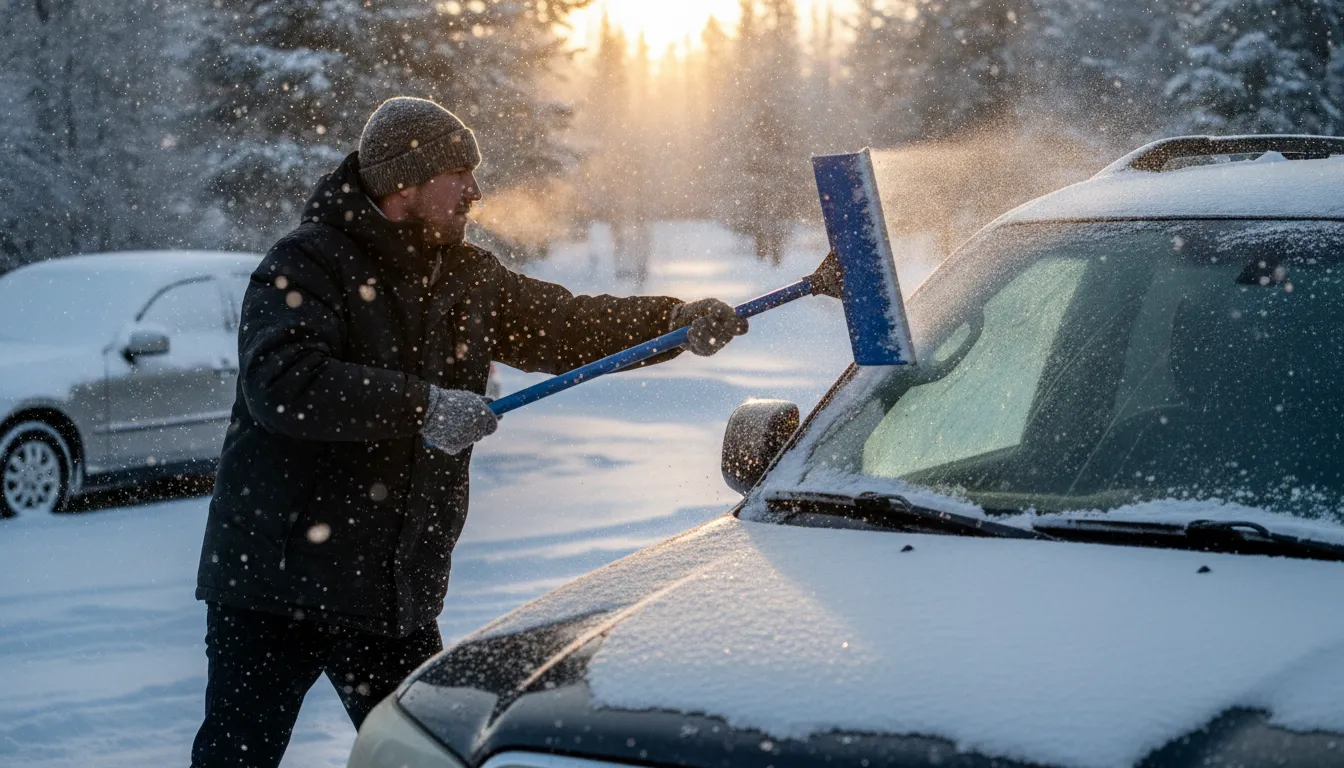
Ready to make winter prep easier? The EDGE clears wipers and scrapes the rest of the car.
Frequently Asked Questions
What is the best way to remove ice from windshield wipers?
Turn the wipers off, clear loose snow, and use a controlled wiper blade de-icer tool or dedicated groove along the blade. Avoid forcing frozen wipers to move and avoid sharp objects that can damage the rubber or glass.
Does The EDGE have a wiper blade groove?
Yes. The EDGE has a Wiper Blade Clearing Groove, a small V-notch at the center of the back edge. The groove is designed to remove ice accumulation from wiper blades while the main scraping edges handle snow and frost on the vehicle.
What are The EDGE's scraping-edge dimensions?
The EDGE has an 18-inch primary scraping edge and a 14-inch secondary scraping edge. These are two distinct scraping edges, not a single 18-by-14-inch scraping surface.
Can The EDGE clear more than wiper blades?
Yes. The EDGE is designed as a multi-purpose snow and ice scraper. In addition to the Wiper Blade Clearing Groove, it has broad scraping edges, a paint-friendly Rubber Snow Plow for loose snow, rounded corners for tighter areas, and a flat profile for stowage. It can also serve as a portable tray for carrying wet or muddy items.