


Winter Tires vs All Season Tires in Snow: Guide
Andrew MelamedWhen the forecast turns cold, tire choice becomes part of your vehicle's winter strategy, not just a shopping decision. The right setup depends on your typical temperatures, snow depth, road conditions, commute, and how often winter weather interrupts your plans.
Ready to upgrade your winter vehicle prep? The EDGE has you covered.
In winter tires vs all season tires in snow, winter tires are generally the stronger choice for sustained cold and deep snow. All-season tires can fit drivers who see milder conditions and varied roads. NHTSA notes that tire selection should reflect where you live and the weather you usually face.
No tire replaces careful driving, proper tread, or a safe vehicle-preparation routine.
Start with what each tire is designed to do. Understanding the rubber compound, tread pattern, and temperature range makes the tradeoffs much easier to judge before the next snow day.
What Is the Difference Between Winter and All-Season Tires in Snow?
Quick take: All-season tires are built to handle varied road conditions, including some mud and snow. Dedicated winter tires are designed for prolonged cold-weather conditions such as snow, ice, and slush. The right choice depends on where you live and the weather you typically drive in, not on the tire label alone. NHTSA explains the difference clearly: winter tires are more effective than all-season tires in deep snow.
| Factor | All-season tires | Winter tires |
|---|---|---|
| Tread and compound | Designed for a broad mix of dry, wet, and mild winter conditions. | Designed for prolonged winter conditions, including snow, ice, and slush. |
| Temperature | Can provide some traction in light snow and occasional storms, but are not designed for sustained cold around 45 degrees Fahrenheit and below. | Winter compounds are intended to remain suited to temperatures around 45 degrees Fahrenheit and lower. |
| Snow depth | Reasonable for some light snow when the vehicle, tires, and route are otherwise suitable. | More effective than all-season tires in deep snow, according to NHTSA. |
| Year-round tradeoff | One set covers most seasons and supports a smooth, quiet ride in many conditions. | Offers a more specialized winter setup, usually requiring a seasonal changeover and storage plan. |
Why the rubber compound matters
Temperature changes how tire materials perform. All-season tires can be a practical fit for drivers who see mostly clear roads, moderate winters, and occasional light snow. However, a tire that works across many conditions is not the same as a tire optimized for sustained cold. One tire-industry explanation places dedicated winter compounds at about 45 degrees Fahrenheit and lower, while NHTSA emphasizes that tire selection should reflect local climate and typical driving conditions. Read those thresholds as decision guidance, not a guarantee of performance on every road.
Winter tires are designed around cold-weather traction, handling, and control. Their advantage becomes more relevant when low temperatures persist and snow or ice is a regular part of the commute. They do not eliminate the need to slow down, increase following distance, check forecasts, or follow local restrictions. Tire choice improves the vehicle's preparation, but it cannot make an unsafe route safe.
What about light snow?
For occasional light snow, all-season tires may offer useful traction when they have adequate tread, correct inflation, and the route is treated and passable. For deep snow, frequent storms, icy roads, or a winter that stays cold for weeks, dedicated winter tires deserve closer consideration. Drivers uncertain about tread condition, fitment, or seasonal timing should ask a qualified tire professional to inspect the vehicle and recommend an appropriate setup.
In short, compare the tire's design with your actual winter, not an idealized average. Snow depth, temperature, ice frequency, road clearing, and daily driving demands all matter.
How Winter Tires vs All Season Tires in Snow Changes the Decision
Decision summary: Choose based on the winter you actually drive through, not the label on the tire. Frequent snow, ice, sustained cold, steep routes, and early commutes favor dedicated winter tires. Mild climates, occasional light snow, and mostly cleared roads may suit all-season tires. A 3PMSF all-weather tire can bridge the gap for some drivers.
The right answer starts with climate. NHTSA notes that tire choice should reflect where you live and the weather you typically drive in. A driver in a region with brief flurries and mostly wet pavement faces a different decision than someone who regularly travels through packed snow, refreeze, or unplowed roads. NHTSA's tire guidance can help frame the basic categories.
Look at temperature, not just snowfall
Typical temperature matters because rubber compounds respond differently as conditions change. Dedicated winter tires are intended for prolonged winter conditions and compounds designed for about 45 degrees Fahrenheit and lower. They make the strongest case when cold weather lasts for weeks, even when the pavement is dry. All-season tires can handle varied road conditions and offer some mud and snow capability. But they are not designed for deep snow, ice, or sustained cold around that range.
Snow frequency is the next filter. If storms are occasional and shallow, roads are cleared quickly, and you can avoid driving during the worst conditions, a capable all-season setup may be reasonable. If deep snow is routine, NHTSA says winter tires are more effective than all-season tires in deep snow. Frequent ice, slush, or hard-packed snow also raises the value of winter-focused traction and control.
Match the tires to your commute and vehicle use
Consider the whole route, not only the neighborhood street. A short urban commute on treated roads is different from a rural drive. A hilly route, or a schedule that requires leaving before plows and salt trucks have worked. Ask how often you must drive during active storms, how safely you can delay a trip. And whether your vehicle carries family members, equipment, or other passengers who depend on a predictable trip.
Vehicle type matters, but all-wheel drive does not replace appropriate tires. Review the vehicle manual and tire manufacturer's guidance for the correct size, load rating, and installation approach. Avoid installing winter tires on only one axle unless a qualified tire professional and the vehicle manufacturer specifically support that arrangement. Consistent handling across the vehicle matters more than chasing a partial upgrade.
Consider all-weather tires and local requirements
All-weather tires with the Three-Peak Mountain Snowflake, or 3PMSF, designation offer winter-driving capability while retaining all-season performance. They may suit a driver who sees meaningful winter weather but wants one set year-round. They are still a compromise, so compare the tire's specifications with your route and conditions rather than treating the symbol as a universal guarantee.
Finally, check local requirements before winter arrives. Some jurisdictions regulate studded tires, require specific traction equipment on designated roads, or impose chain rules during severe conditions. Requirements can vary by vehicle and route. Confirm the current rules with your state, province, or local transportation authority, and follow the tire maker's recommendations. Whatever you choose, maintain proper inflation, inspect tread and damage, and do not treat tires as a substitute for slowing down or postponing an unsafe trip.
What Are the Tradeoffs of Choosing Winter Tires?
Summary: Dedicated winter tires can make sense for drivers who regularly face cold temperatures, snow, ice, or slush. The tradeoff is added planning: seasonal installation and removal, off-season storage, possible changes in ride and road noise, and careful attention to tread condition. Studs may help on ice, but local rules and tire-maker guidance matter.
Winter tires solve a specific problem well: maintaining winter capability when cold weather is not an occasional surprise but a regular part of driving. Their compounds and tread designs are intended for prolonged winter conditions, and a winter compound is generally designed for temperatures around 45 degrees Fahrenheit and lower. That focus can be valuable in a cold climate, but it also creates practical tradeoffs.
Seasonal swaps require a plan
A dedicated set means changing tires as the seasons change. You need a reliable window for installation before sustained winter weather arrives, then another appointment when warmer conditions return. You also need a clean, dry place to store the off-season set, or a tire shop that offers storage. Build those logistics into the decision instead of treating them as an afterthought.
Warm-weather driving is another reason timing matters. A tire designed around cold-weather performance is not automatically the best choice for extended use in warmer conditions. Follow the tire maker's recommendations for temperature, seasonal use, inflation, rotation, and storage. A qualified tire professional can help match the setup to your vehicle, wheels, climate, and driving pattern.
Ride, noise, and tread life can differ
Changing tire categories can change how the vehicle feels. All-season tires are designed for a smooth, quiet ride in most conditions. A dedicated winter setup may feel different on clear, dry pavement, particularly when compared with the all-season set you use for much of the year. Tread life also depends on compound, alignment, inflation, rotation, road conditions, driving habits, and whether the tires are used in their intended temperature range. Do not choose on snow performance alone; consider the full year of driving.
Studs add rules to the decision
Studded winter tires can add traction on icy roads, but they are not a universal upgrade. Their use may be limited by state or local regulations, seasonal dates, road conditions, or vehicle requirements. Check the rules where you drive before buying or installing them. When the choice is close, ask the tire manufacturer or a professional installer for advice rather than mixing tire types or making a front-only change on your own.
The right setup depends on where you live and the weather you typically drive in. Winter tires can be a strong fit for sustained cold and frequent severe conditions, while another approved setup may better match a milder climate and varied use.
Can All-Season Tires Handle Snow Safely?
Short answer: Sometimes, but the safe call depends on tire condition, tire design, temperature, snow depth, route, and your vehicle's readiness. All-season tires have some mud and snow capability, while NHTSA notes that winter tires are more effective in deep snow. Use this sequence instead of relying on a universal yes or no.
- Check the tire's condition and designation. Inspect tread, sidewalls, inflation, and age before judging performance. New passenger tires commonly start around 9/32 to 12/32 inch of tread, but usable tread declines with wear. General Tire recommends planning replacement when tread reaches 4/32 inch and having previously used winter tires checked if they are below 5/32 inch. Treat those figures as professional guidance, not a substitute for the vehicle and tire manufacturer's instructions. Also confirm whether the tire is a conventional all-season, an all-weather tire with the Three-Peak Mountain Snowflake designation, or a dedicated winter tire. The label matters because design and compound affect cold-weather capability.
- Match the tire to the forecast and route. All-season tires may be reasonable for a short trip in light, occasional snow when roads are treated or clear, temperatures are moderate, and you can drive conservatively. They are not designed for deep snow, ice, or sustained cold around 45 degrees Fahrenheit and below, according to the supplied tire guidance. If the forecast includes accumulating snow, freezing rain, untreated roads, or a long rural route, lower your confidence. NHTSA advises that tire choice should reflect where you live and the weather you typically drive in.
- Account for deep snow, ice, and persistent cold. When winter conditions are routine rather than occasional, dedicated winter tires deserve serious consideration. Their compounds and designs are intended for prolonged snow, ice, slush, and colder temperatures. NHTSA specifically says winter tires are more effective than all-season tires in deep snow. No tire removes the need for slower speeds, longer following distance, and careful braking, especially on ice.
- Prepare the entire vehicle before leaving. Check tire pressure when the tires are cold, clear snow and ice from every window, mirror, light, roof. And the vehicle's contact areas, and confirm that the battery, wipers, washer fluid, and fuel or charge level support the trip. Use this winter car safety checklist for a broader pre-drive review. Tire traction cannot compensate for poor visibility or a vehicle that is not ready for the conditions.
- Know when to delay or ask for help. Delay travel when roads are closed, visibility is poor, ice is widespread, or your tires show damage, low tread, uneven wear, or poor inflation. If you are unsure whether your current tires fit your climate, vehicle, or route, ask a qualified tire professional. For the driving decision itself, review this winter driving safety checklist and follow local advisories. Arriving later is safer than forcing a trip your tires and conditions do not support.
Beyond Tires: Complete Your Winter Vehicle Preparation
Summary: Winter tires address traction, but they are only one part of a ready vehicle. Check the rest of your setup, including visibility and snow removal. The EDGE complements your tire choice with a flat, paint-friendly scraper and snow pusher that helps clear snow and ice without pretending to replace traction equipment.
Tires matter, but winter readiness does not stop when the vehicle is parked on four suitable wheels. Before the first serious storm, look at the full preparation picture: Can you see clearly through every window? Can you remove packed snow from the roof, hood, and lights? Is your scraper easy to reach, or buried under cargo in the back?
Use the winter car maintenance checklist to work through the broader seasonal details. Tire selection and condition belong in that plan, alongside visibility and practical equipment for clearing the vehicle before you drive.
Elevate your winter vehicle prep with a tool built for the job.
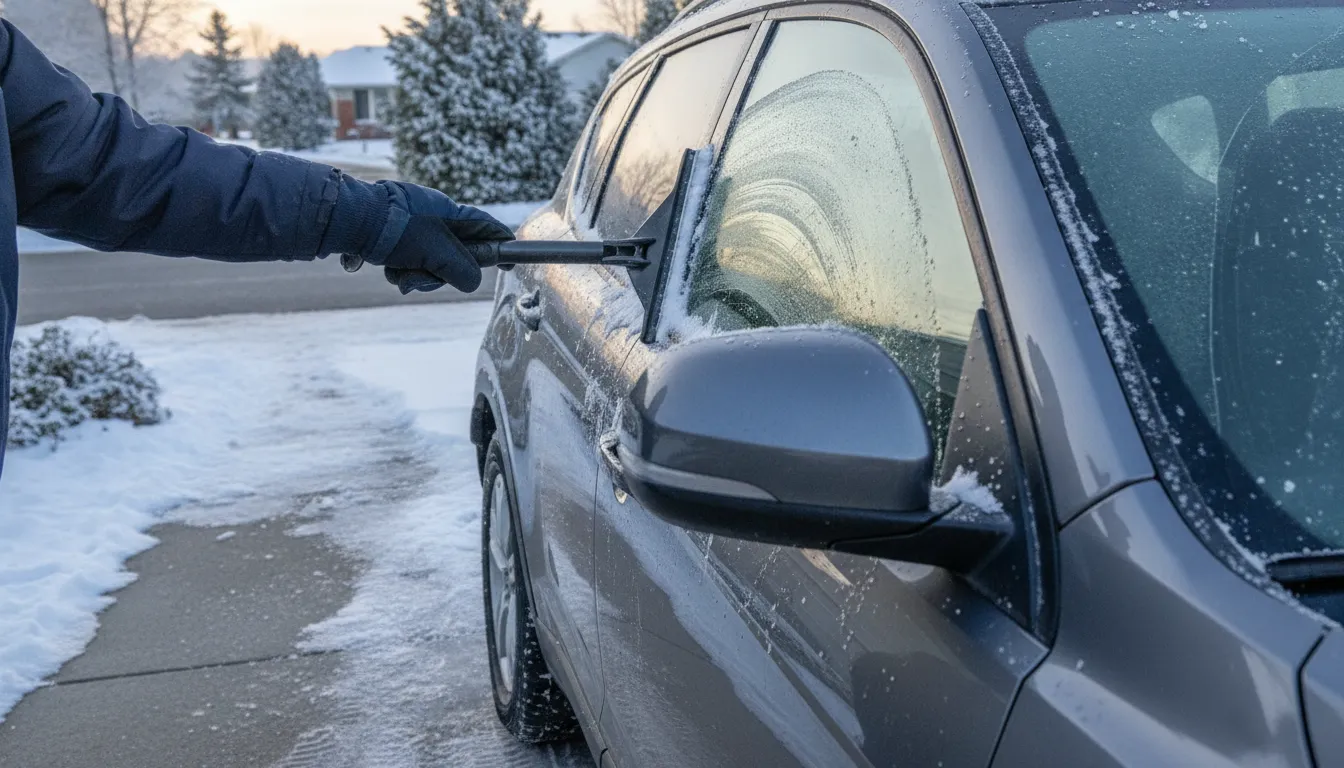
A clearing tool, not a traction substitute
The EDGE fills a different role from winter or all-season tires. It does not add traction, change handling, or replace tires, chains, safe driving practices, or professional guidance. It is a vehicle-clearing tool for the moment before you pull away.
Its 18-by-14-inch surface area gives you a broad working surface for winter vehicle preparation. The hard blades are designed for scraping, while a Wiper Blade Clearing Groove helps remove ice buildup from wiper blades. That combination addresses two common preparation jobs without asking one small tool to do everything.
The EDGE can work as both a scraper and a snow pusher. When the job is done, its flat, handle-free design simplifies stowage in the vehicle. It can also stow flat for use as a floor protector or portable tray. Those details matter when winter equipment needs to stay accessible without taking over the cargo area. See the The EDGE snow and ice scraper for the product specifications and approved use details.
Build a repeatable pre-drive routine
A strong winter setup is one you will use consistently. Check the forecast and route, inspect the tires, clear snow and ice from the vehicle, and make sure windows, lights, mirrors, and wiper blades are visible before moving. Keep the clearing tool where you can reach it, not where it becomes another thing to search for during a storm.
The EDGE includes a 5-year performance guarantee for defects in materials and workmanship under normal use, subject to exclusions. That durability coverage supports keeping a dedicated clearing tool ready through repeated winter preparation, while your tire choice continues to handle the traction job.
A Simple Snow-Day Checklist for Any Tire Setup
Snow-day summary: Check tire condition before checking the calendar. Confirm the forecast, route, and visibility, then clear every window, mirror, light, and roof surface before moving. All-season tires can handle varied conditions and some snow, but winter tires are more effective in deep snow. If conditions exceed your equipment or comfort level, delay the trip.
1. Check the tires first. Look for visible damage, uneven wear, and correct inflation according to the vehicle manufacturer's recommendation. Inspect tread depth before a storm. New passenger tires commonly measure 9/32 to 12/32 of an inch, while General Tire recommends planning replacement when tread reaches 4/32 inch. Have a tire professional evaluate questionable tires, especially previously used winter tires.
2. Match the plan to the conditions. Tire choice depends on where you live and the weather you typically drive in, as NHTSA explains. All-season tires have some mud and snow capability, but NHTSA says winter tires are more effective than all-season tires in deep snow. Check the expected temperature, snow and ice accumulation, road treatment, and your route before deciding whether the trip is reasonable.
3. Protect visibility. Clear all glass, mirrors, lights, cameras, and the roof. Do not rely on a small opening in the windshield. Remove packed snow and ice with deliberate strokes rather than sharp tools or excessive force. The EDGE has an 18-by-14-inch surface area, plus a paint-friendly edge and a Wiper Blade Clearing Groove for clearing ice from wiper blades. It is a clearing tool, not a substitute for traction equipment or safe driving.
4. Know when to wait. Delay travel when roads are closed, visibility is poor, ice is severe, your tires are compromised. Or the route includes conditions your vehicle and equipment are not designed to handle. Leave extra time and avoid treating all-wheel drive as a guarantee of stopping control. For a fuller pre-drive review, use this winter driving safety checklist.
Preparation is not about predicting every road perfectly. It is about checking the variables you can control, then making the conservative call when the remaining risk is too high.
Frequently Asked Questions
Can I drive on snow with all-season tires?
Sometimes, if the snow is light, the tires are in good condition, and the route is cleared. All-season tires provide some mud and snow capability, but NHTSA says winter tires are more effective in deep snow. Check the forecast and road conditions before deciding whether to drive.
What are the downsides of winter tires?
Winter tires require seasonal planning, including installation, removal, and storage. Their winter-focused compounds and tread are intended for prolonged cold, snow, ice, and slush, so they are not a universal replacement for an all-season setup. Studded options may also be restricted by local rules.
Can I put winter tires on the front only?
Do not choose a front-only setup based on a generic rule. Mixing tire types can change how the vehicle responds, so check the owner manual and the tire maker's fitment guidance first. A qualified tire professional can recommend a complete setup for your drivetrain and vehicle.
How should I check tires before a snow trip?
Inspect tread, inflation, visible damage, and age before traveling. As a general reference, new passenger tires commonly start around 9/32 to 12/32 inch of tread, while General Tire recommends planning replacement near 4/32 inch. Follow your tire maker's guidance and have questionable tires evaluated professionally.
Ready to Finish Your Winter Vehicle Prep?
Tires help determine how your vehicle handles winter roads, but clear windows and body panels matter before you pull away. The EDGE is a complementary snow and ice clearing tool, designed to help you remove snow and ice without replacing tires, chains, or safe driving practices. Shop The EDGE and make winter vehicle preparation simpler.