


The Ultimate Winter Car Care Essentials Checklist
Andrew MelamedLet’s be honest: most people don’t think about their car’s winter readiness until they’re scraping ice with a credit card. But by then, you’re already behind. A truly prepared vehicle is one that’s been checked from the tires up, long before the first snowflake falls. This isn’t a job for a mechanic; it’s a series of simple checks anyone can do. We’ll show you how to inspect your tires for winter grip, protect your paint from corrosive road salt, and ensure your fluids are ready for freezing temperatures. This is your complete guide to the winter car care essentials that keep you safe and prevent costly repairs down the road.
Key Takeaways
- Prepare Before the Freeze: A simple check of your battery, tires, and fluids in the fall is your ticket to avoiding a dead car on a frozen morning. Don't wait for the first storm to find a problem.
- Stock Your Car for Self-Reliance: Go beyond just blankets. A well-organized kit with a quality scraper, portable jump starter, and flashlight means you can solve problems yourself instead of waiting for help in the cold.
- Make Monthly Check-Ins a Habit: Winter is a season, not a single event. A quick monthly check of your tire pressure, washer fluid, and safety gear keeps your car performing reliably and prevents small issues from becoming major emergencies.
Your No-Nonsense Winter Car Prep Checklist
Before the first snowflake falls, a little prep work can save you from a massive headache later. Think of it as your car’s defense against winter’s worst. Forget the complicated manuals and long to-do lists. This is the straightforward, essential checklist to make sure your vehicle is ready to handle whatever the season throws at it. Getting these key areas checked out ensures you won’t be left stranded on a freezing morning. A prepared car is a safe car, and these simple steps are your ticket to a smoother, less stressful winter on the road.
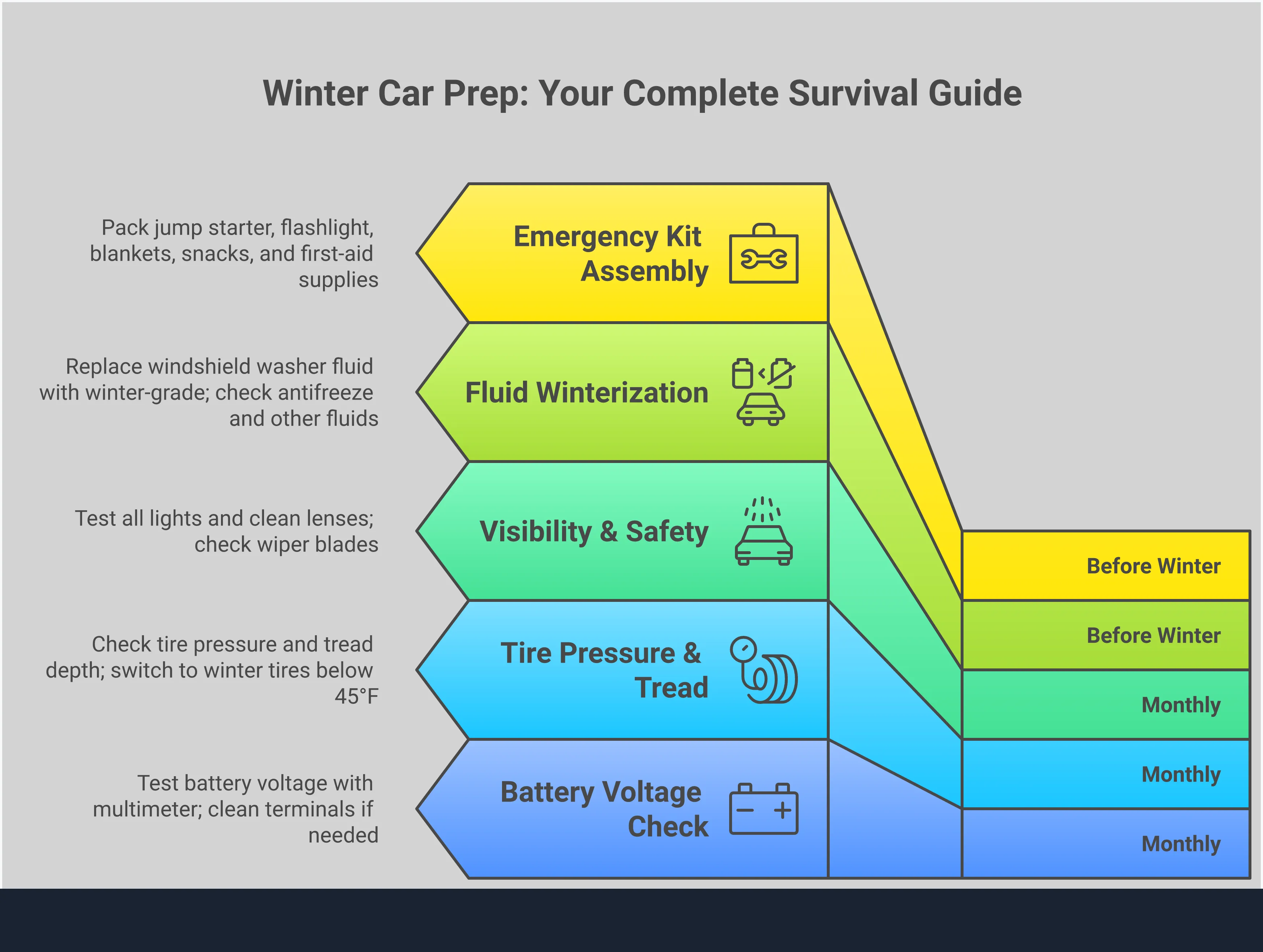
Check Your Engine and Fluids
Cold weather puts a strain on your engine, and the right fluids are its first line of defense. Start with the most obvious one: your windshield washer fluid. Swap out your standard fluid for a winter-grade version that includes a de-icer. According to the NHTSA, this simple change helps prevent your lines from freezing and cuts through ice and grime on your windshield. Also, take a look at your antifreeze (coolant). It’s what keeps your engine from freezing solid. Make sure the level is correct and the fluid is clean. If it looks rusty or has particles in it, it’s time for a flush.
Test Your Battery and Electrics
A dead battery is one of winter’s most common and frustrating problems. Cold temperatures can slash a battery’s power, making it much harder to start your car. Before the deep freeze sets in, check your battery’s age and inspect the terminals for any fuzzy, white, or blue corrosion. If you find any, clean it off with a wire brush. Most auto parts stores will test your battery for free, giving you a clear idea of its health. To help protect your car battery during the cold months, try to limit short trips, as they don’t give the alternator enough time to fully recharge it.
Inspect Your Tires
Your tires are your only point of contact with icy, slippery roads, so their condition is non-negotiable. Cold air causes tire pressure to drop, so get in the habit of checking your PSI at least once a month. Proper inflation is key for traction and control. Next, check your tread depth. While you can use a penny to get a rough idea, it’s important to know that winter tires lose their effectiveness once the tread wears down. Good winter tire maintenance is crucial for safety, so if your tread looks low or you see any cracks, it’s time for a new set.
What Belongs in Your Winter Emergency Kit?
A flat tire or a dead battery is an inconvenience in July. In January, it can be a serious emergency. Having a well-stocked winter kit isn’t about being paranoid; it’s about being prepared for the worst-case scenario. A good kit covers three key areas: survival gear to keep you safe and warm, tools to help you get moving again, and supplies to keep you nourished if you have to wait for help. Don't get caught unprepared when the temperature drops.
Survival and Safety Gear
This is all about staying warm and safe if you’re stranded. Start with the basics: pack extra blankets, gloves, hats, and chemical hand warmers. Hypothermia is a real risk, and these items are your first line of defense. A bright, reliable flashlight with extra batteries is non-negotiable for signaling for help or changing a tire in the dark. Finally, a well-stocked first-aid kit is a must-have for any vehicle, any time of year. Make sure yours includes bandages, antiseptic wipes, pain relievers, and any personal medications you might need.
Essential Tools and Equipment
The right tools can mean the difference between a minor delay and a major crisis. Start with a quality ice scraper. Cheap plastic ones snap when you need them most, but The EDGE is built to dominate winter and backed by a 5-year performance guarantee. Its large surface clears snow and ice significantly faster, getting you back on the road safely. Also, pack a set of jumper cables, a small shovel, and a multi-tool. And don’t forget a portable power bank for your phone. Your phone is your lifeline to call for help, so keeping it charged is critical.
Emergency Food, Water, and Warmth
If you’re stuck waiting for a tow truck, you’ll be glad you have snacks and water. Pack non-perishable, high-energy foods like granola bars, nuts, and dried fruit. These don’t take up much space and can make a long wait much more bearable. For water, use containers that are only partially filled. This simple trick allows the water to expand if it freezes, preventing the container from bursting. Having these essentials on hand provides not just physical sustenance but also peace of mind, which is invaluable in a stressful situation. For more tips, check out the government's guide to building an emergency kit.
How to Winter-Proof Your Car's Exterior
Winter throws a lot at your car. Between road salt, icy grime, and freezing temperatures, the outside of your vehicle takes a serious beating. Protecting your car’s exterior isn’t just about keeping it looking good; it’s about maintaining its value and ensuring you can see and be seen on treacherous roads. A little prep work before the first storm hits can save you from headaches and costly repairs down the line. Think of it as armor for your car against the harshest season. By focusing on your windows, paint, and lights, you’re setting yourself up for a safer, less stressful winter drive. These simple steps ensure your vehicle is ready to handle whatever the forecast has in store.
Prep Your Windshield and Windows
Waking up to a windshield sealed in a thick sheet of ice is a terrible way to start your day. To get ahead of the freeze, a windshield cover can prevent ice from forming overnight. But for the ice and snow that builds up while you’re on the go, you need a tool that works. Don’t get caught hacking away with a credit card or a flimsy scraper that snaps in the cold. A high-quality snow and ice scraper is your best defense, designed with a durable blade that clears ice efficiently without cracking under pressure. Keeping one in your vehicle is non-negotiable for maintaining clear visibility.
Protect Your Paint and Body
Road salt is essential for melting ice on the roads, but it’s brutal on your car’s paint and undercarriage. It can cause corrosion and rust that eats away at the metal. Before winter arrives, give your car a coat of armor by applying a quality wax or sealant. This creates a protective barrier that shields the paint from salt and grime. It’s also a good idea to wash your car regularly throughout the winter, especially after a snowstorm. According to the Colorado Department of Transportation, this simple step helps remove corrosive materials before they can do long-term damage to your vehicle’s finish.
Check Your Lights for Visibility
With shorter days and frequent storms, being visible on the road is a top priority. Your car’s lights are your first line of defense, but only if they’re clean and working properly. Make it a habit to walk around your car and check that your headlights, taillights, and turn signals are all functioning. Snow, ice, and road grime can quickly cover the lenses, dimming their brightness and making you harder for other drivers to see. A quick wipe-down before you head out is all it takes. The NHTSA’s winter driving tips emphasize that clean, working lights are critical for seeing the road and being seen by others.
Your Guide to Winter Tire Care
Your tires are the only part of your car that actually touches the road. In winter, that connection is everything. Getting your tires right isn't just about maintenance; it's about control, safety, and peace of mind when the weather turns nasty. From knowing when to swap them out to understanding what makes winter tires different, a little prep goes a long way. Let's break down what you need to check to make sure your car has the grip it needs to handle snow, ice, and slush.
Know When to Switch to Winter Tires
Don't wait for the first blizzard to think about your tires. The golden rule is to switch to winter tires when the temperature consistently drops below 45°F (7°C). At that point, the rubber compound in all-season tires starts to harden, reducing traction. Age is another factor. Even if the tread looks fine, rubber degrades over time. According to the NHTSA's winter driving tips, some manufacturers recommend replacing tires every six years, no matter how much they've been used. Think of it as giving your car the right shoes for the season before the storm hits.
Monitor Tire Pressure and Tread
Cold weather makes the air in your tires contract, causing the pressure to drop about one PSI for every 10-degree drop in temperature. Underinflated tires wear unevenly and can't grip the road properly. Check your tire pressure regularly, filling them to the level recommended on the sticker inside your driver's side door frame, not the number on the tire itself. Tread depth is just as important for channeling away snow and slush. You need deep grooves to maintain traction. A simple way to check your tread is with a penny. If you can see all of Lincoln's head, it's time for new tires.
Winter vs. All-Season Tires
So, are all-season tires really enough for winter? The short answer is no, not if you live where it gets truly cold and snowy. All-season tires are a compromise, designed for decent performance in a range of mild conditions. Winter tires, however, are specialists. Their unique rubber compound stays soft and flexible in freezing temperatures, while their deep, sharp-edged treads are designed to bite into snow and ice. As Michelin's experts explain, all-seasons simply don't offer the same level of control in severe weather. For real winter conditions, dedicated winter tires are the safest choice for you and your passengers.
How to Keep Your Battery Alive in the Cold
A frozen windshield is a hassle, but a dead battery is a showstopper. Cold weather is brutal on your car’s electrical system, draining power when you need it most. The chemical reactions inside a battery slow down significantly in the cold, reducing its ability to hold a charge and deliver the cranking amps needed to start a cold engine. A battery that works fine in the fall can suddenly fail on the first truly frigid morning, leaving you stranded and scrambling for a jump.
But getting stuck doesn’t have to be part of your winter story. A little prep work goes a long way in making sure your car starts every time, no matter how low the temperature drops. Think of it as insurance against a very bad, very cold morning. Just like you wouldn't face an iced-over car without The EDGE scraper, you shouldn't face winter without a reliable battery. This isn't about complex mechanical work; it's about simple, proactive steps anyone can take. Here’s how to make sure your battery is ready to perform all season long, so the only thing you have to worry about is clearing your glass and getting on your way.
Test Your Battery Before It Fails
Don't wait for that dreaded clicking sound to find out your battery is on its last legs. The best time to check your battery is before winter hits. Cold temperatures can slash a battery's starting power by more than half, turning a weak battery into a dead one overnight. Most auto parts stores offer free battery testing, which gives you a clear picture of its health. You can also check the battery's voltage yourself with a multimeter. If your battery is more than three years old, it’s smart to get it tested annually. A proactive check saves you the headache of a car that won’t start when you're already running late.
Clean and Maintain Connections
Sometimes the problem isn't the battery itself, but the connection. That fuzzy, crusty buildup on your battery terminals is corrosion, and it acts like a barrier, preventing electricity from flowing properly. A quick inspection can tell you if your terminals need attention. If you see any white or bluish powder, it’s time for a cleaning. You can use a simple wire brush and a baking soda solution to scrub it away. Keeping the connections clean is one of the easiest ways to ensure your battery delivers maximum power, especially when the cold is working against it. A solid connection means a reliable start.
Pack an Emergency Power Source
Even with perfect maintenance, the unexpected can happen. That’s why having a backup plan is non-negotiable. Instead of relying on another vehicle for a jump-start, pack a portable jump starter in your emergency kit. These compact power banks are powerful enough to start your car without another vehicle and are much safer and easier to use than traditional jumper cables. A good portable jump starter can be a lifesaver, getting you back on the road in minutes instead of waiting for roadside assistance in the freezing cold. It’s the ultimate tool for self-reliance during winter.
Prepping Your Car's Interior for Winter
Winter prep isn’t just about what’s under the hood. Your car’s interior is your command center during a storm, and keeping it warm, clean, and functional is critical. A freezing cabin and messy floors are more than just uncomfortable; they can be distracting and unsafe. Taking a few simple steps before the first snowfall ensures you’re ready for whatever winter throws your way. It’s about setting yourself up for a frustration-free season so you can focus on the road, not on frozen fingers or a mud-caked interior.
Service Your Heating System
Don’t wait for the first freezing morning to discover your heater is on the fritz. A working heating and defrosting system is non-negotiable for winter safety. It keeps you warm and, more importantly, keeps your windshield clear of frost and fog. Cold weather already forces your engine and battery to work harder, so a faulty heater adds unnecessary strain. Before temperatures drop, have a trusted mechanic inspect your entire climate control system, from the heater to the defroster, to make sure it's all working properly. It’s a simple check that pays off big when you need it.
Protect Your Floors and Seats
Winter means dragging snow, salt, and slush into your car. Over time, that mess can ruin your vehicle’s carpet and create a damp, musty environment. The easiest fix is a set of durable, all-weather floor mats. They trap moisture and debris, making cleanup as simple as pulling them out and rinsing them off. For everything else you bring inside, from wet gloves to muddy boots, use a utility tray to keep the mess contained. The EDGE doubles as a perfect tray, protecting your seats and floors from whatever you need to haul. It’s a simple way to keep your car’s interior clean and preserved all season long.
Optimize Your Climate Control
Clear visibility is your best defense against winter road hazards. While a good scraper clears the outside, your climate control system handles the inside. Start by swapping out your standard washer fluid for a winter-grade formula that contains a de-icer. This will prevent the fluid from freezing in the reservoir and help melt ice on your windshield. The NHTSA recommends ensuring your reservoir is full before winter hits. Also, check that your defroster vents are clear and directing maximum airflow to the glass. A powerful blast of warm, dry air is the fastest way to fight interior fog and frost, keeping your line of sight wide open.
What to Do If You're Stranded in a Storm
A winter storm can turn a routine drive into a dangerous situation in minutes. If you get stuck, your next moves are critical. Panic is the enemy; a clear plan is your best friend. Knowing what to do will help you stay safe, warm, and visible until help arrives. It’s not about brute strength or luck, it’s about smart, simple actions that make all the difference. Before you find yourself in this situation, commit these three steps to memory. They could be the most important part of your winter prep. Focus on staying in your vehicle, conserving your resources, and making it easy for rescuers to find you.
Stay in Your Vehicle
It might feel counterintuitive, but the safest place you can be is inside your car. Your first instinct might be to walk for help, but leaving your vehicle exposes you to freezing temperatures and the risk of getting lost in whiteout conditions. More importantly, it makes you vulnerable to other vehicles that may not see you. Your car is a solid, visible object that is much easier for rescuers to spot than a person trudging through a storm. The NHTSA confirms that staying put provides crucial shelter and protects you from being struck. So, call for assistance, then sit tight.
Conserve Fuel and Keep Warm
Your car’s heater is a lifeline, but your fuel is limited. Don't leave the engine running constantly. Instead, run it for about 10 minutes each hour to warm up the cabin and charge your phone. Before you start the engine, you must check that your exhaust pipe is clear of snow. A blocked pipe can cause deadly carbon monoxide to leak into the car. While the engine is off, bundle up with the extra blankets from your emergency kit. As recommended by winter weather safety experts, having layers of clothing and blankets is essential for conserving body heat while you wait for help to arrive.
Signal for Help
Once you’re safely inside and warm, make sure you can be seen. This is where your emergency kit proves its worth. Use your hazard lights, but be mindful of your car’s battery. If you have emergency flares or reflective triangles, place them near your vehicle, but only if it’s safe to get out for a moment. A brightly colored cloth tied to your antenna or window can also catch the eye of rescue crews. The goal is to make your car stand out against the white landscape. A well-stocked car emergency kit with signaling devices isn’t just a suggestion; it’s a critical part of any winter driving plan.
Your Monthly Winter Maintenance Plan
Winter car care isn’t a one-and-done task you handle in the fall. It’s an ongoing routine. Think of it as a quick monthly check-in to make sure your vehicle is ready for whatever the forecast throws at it. Staying on top of a few key areas prevents small issues from turning into major headaches, like getting stranded on the side of the road in a blizzard. A little bit of prevention goes a long way in keeping you safe and your car running smoothly all season. This simple plan breaks down what you need to look at each month to stay ahead of the cold.
Follow a Pre-Storm Routine
When you see a storm in the forecast, it’s time for a quick pre-check. The most important thing to look at is your tires. Cold weather causes air pressure to drop, which can lead to poor handling on slick roads. Before the temperature plummets, make sure each tire is filled to the pressure recommended by your vehicle’s manufacturer. You can find this information in your owner’s manual or on a sticker inside the driver's side door frame. Following the NHTSA’s winter driving tips is a great way to ensure your car has the best possible traction before the first snowflake falls. This is also the perfect time to check that your wiper blades are in good shape and that your Edge scraper is easily accessible.
Monitor Your Fluid Levels
Your car’s fluids are its lifeblood, especially in freezing temperatures. Make it a monthly habit to check your windshield washer fluid and top it off with a winter-rated formula that won’t freeze in the lines. There’s nothing worse than trying to clear road salt from your windshield only to find your fluid is frozen solid. Just as important is your antifreeze. A quick check ensures your engine is protected from freezing, which can cause serious and expensive damage. A good winter car care checklist will always remind you to keep these fluids at the proper levels so you’re never caught off guard by a sudden cold snap.
Check Your Equipment
Your car’s core components work harder in the winter, so give them a monthly once-over. Start with your tires again, but this time look at the tread. Worn-out tires won’t grip snow and ice, no matter how much air is in them. You can find great tips for winter tire maintenance that show you how to check for wear. Next, inspect your battery. Cold weather is tough on batteries, and a weak one will leave you stranded. Check the terminals for corrosion and consider getting it tested at an auto parts store. Learning how to prepare your car battery for winter can save you from a dead car on the coldest morning of the year.
How to Stow Your Winter Gear
You’ve got the gear, but if it’s buried under a pile of gym bags and forgotten groceries, it’s useless when you actually need it. A cluttered car isn’t just messy; it’s a hazard. Winter tools are often bulky, awkward, and a pain to stow. That flimsy snow brush and scraper combo never seems to fit anywhere, rolling around on the floor until it’s covered in slush and dirt. You deserve a smarter system.
The key is choosing gear that works for your space, not against it. This is where thoughtful design makes a difference. Instead of fighting with clumsy tools, find ones that integrate seamlessly into your vehicle. For example, The EDGE was designed to solve the stowage problem. It lays completely flat, so you can slide it under a seat or in the trunk without a second thought. It even doubles as a utility tray to protect your interior from muddy boots or leaky grocery bags. When your primary tool stows this easily, you have more room to organize the rest of your emergency essentials without creating chaos. A tidy car is a safer, more efficient car, especially when a storm hits.
Organize Your Emergency Kit
First things first: get a dedicated bag for your emergency supplies. A simple duffel bag or a clear plastic bin works perfectly. Tossing everything in loose is a recipe for disaster when you’re trying to find a flashlight in the dark. Group similar items together. Put first-aid supplies in one pouch, and warmth items like blankets, gloves, and hand warmers in another. Having a well-stocked emergency kit is non-negotiable for winter driving. Once it’s packed, keep a list of its contents on your phone so you know what you have and what needs restocking after you use it.
Find Space for Your Tools
Let’s be honest, most winter tools are a pain to stow. A collapsible shovel and jumper cables can be secured in your trunk with a cargo net or organizer to keep them from flying around. But the biggest offender is usually the ice scraper. While old-school scrapers get stuck between seats or roll around on the floor, The EDGE lays flat under a seat or in a trunk pocket, completely out of the way. It protects your interior and stays put, so you always know where to find it. Secure your tools properly; the last thing you want in a sudden stop is a shovel becoming a projectile.
Keep Essentials Within Reach
Some items need to be accessible without getting out of the car. Your glove compartment or center console is the perfect spot for a flashlight with extra batteries, a phone charger, and a multi-tool. These are the things you’ll grab first in an unexpected situation. Most importantly, make sure anyone else who drives your car knows exactly where to find the full emergency kit and what’s inside. A quick tour of the car’s safety gear can make all the difference. Don’t let a dead flashlight or a buried first-aid kit turn a minor inconvenience into a major problem.
Related Articles
- Winter Car Maintenance Checklist: How to Prepare Your Car for Winter
- The Ultimate Guide to Winter Car Care
- The Ultimate Winter Vehicle Emergency Kit Guide
- 25+ Costly Winter Car Care Mistakes to Avoid
- The Ultimate Winter Car Accessories Checklist
Frequently Asked Questions
This seems like a lot. What are the absolute must-dos if I'm short on time? If you only have time for the basics, focus on what keeps you safe and moving. First, check your tires for proper pressure and good tread. Second, get your battery tested, especially if it's over three years old. Finally, make sure you can see. That means filling your washer fluid with a winter-grade formula and having a reliable tool like The EDGE ready to clear ice and snow fast.
Are winter tires really worth the investment? Think of it this way: all-season tires are like sneakers, while winter tires are like snow boots. You can get by with sneakers in a light dusting, but when things get serious, you need the right gear. Winter tires use a special rubber that stays flexible in the cold and have deep treads designed to grip ice and snow. They provide significantly better stopping power and control, making them a smart investment in your safety.
Why can't I just use a cheap ice scraper from the gas station? You can, but you'll likely regret it during the first real storm. Those flimsy scrapers are famous for snapping in the cold, leaving you stranded and hacking at your windshield with a credit card. The EDGE is built differently. It’s durable enough to be backed by a 5-year performance guarantee and its wide design clears your windshield significantly faster, getting you on the road safely without the frustration.
My car is new. Do I still need to worry about the battery? Yes, you do. Extreme cold doesn't care how old your car is; it drains power from any battery. While a new battery is certainly in better shape than an old one, its starting power can still be cut dramatically by freezing temperatures. A quick, free test at an auto parts store gives you peace of mind and ensures you won't be the one with a new car that won't start on the coldest morning of the year.
What's the most overlooked item for a winter emergency kit? A portable jump starter is the one thing most people forget. We all pack jumper cables, but those rely on another person and another car being available. A portable power pack allows you to get yourself going in minutes without waiting for roadside assistance in the freezing cold. It’s a game-changer for self-reliance and can also be used to charge your phone if you get stranded.