


The Essential Winter Car Maintenance Checklist
Andrew MelamedThe most obvious sign of winter is a windshield covered in ice, but the real damage happens where you can't see it. Cold weather wages a silent war on your vehicle, weakening its most critical systems. It drains your battery's power, thickens essential fluids into sludge, and secretly deflates your tires, compromising your grip on the road. Understanding these hidden threats is the first step in a proper winter car maintenance plan. Before you find yourself stranded, learn what the cold is actually doing to your car and how to fight back to ensure you stay safe and in control.
Key Takeaways
- Master the Basics Before the Freeze: Winter targets your car's weakest points. Regularly checking your battery, fluids, and tire pressure is non-negotiable for avoiding a breakdown when temperatures plummet.
- Your Tools Define Your Readiness: A cheap scraper that snaps is useless in a storm. Stock your emergency kit with reliable gear, including a tool like The EDGE that's built to perform, jumper cables, and a power bank to stay safe and connected.
- Build a Simple Winter Routine: Consistent checks are your best defense against winter. A monthly tire pressure check and a pre-storm kit restock are simple actions that ensure you're always prepared for unpredictable road conditions.
Win Winter: Your Essential Car Maintenance Checklist
Winter weather is a battle you can win before the first storm ever hits. Getting your car ready isn't just about convenience; it's about safety for you and everyone else on the road. A little prep work now saves you from a massive headache—or worse—later. Running through a quick maintenance checklist ensures your vehicle is ready to handle whatever ice, snow, and frigid temperatures come its way. Think of it as your pre-season training. From the battery to your wiper blades, every part of your car needs to be in fighting shape. Let's get your vehicle ready to dominate the cold.
Check Your Battery and Electrics
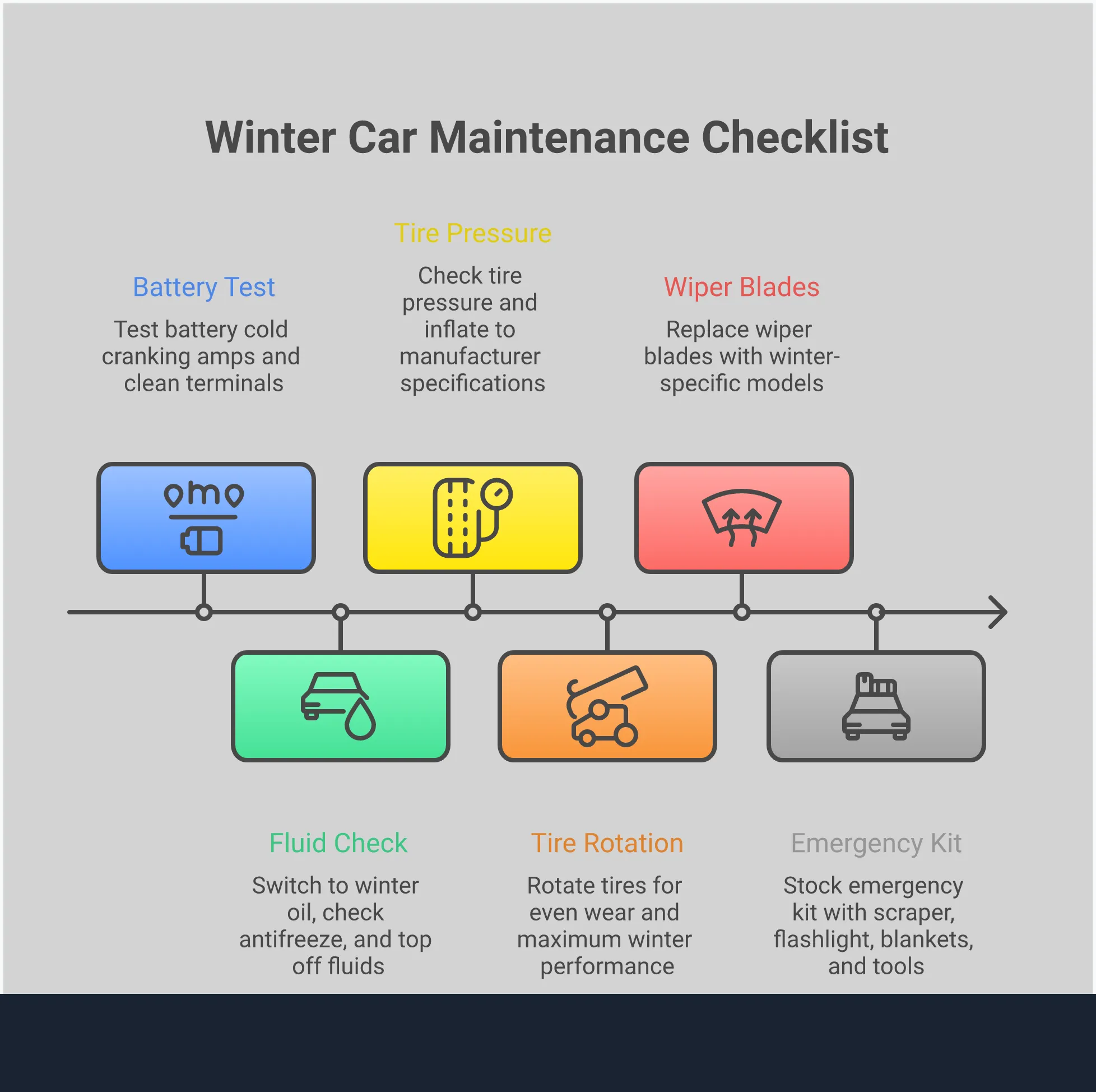
Cold weather is brutal on car batteries. The chemical reactions that generate power slow down in the cold, and your engine requires more juice to turn over. A battery that worked fine in the fall can die without warning on the first freezing morning. Don't get stranded. Before winter sets in, have a professional test your battery’s charge. If it’s weak, replace it. Also, check that the connections are clean and tight, ensuring your battery can deliver all the power your car needs to start reliably in the harshest conditions.
Top Off Fluids and Antifreeze
Your car relies on several fluids to run smoothly, and cold temperatures can thicken them, reducing their effectiveness. Make sure your oil, power steering, brake, and transmission fluids are all at their proper levels. Most importantly, check your antifreeze (coolant). This fluid is critical for preventing your engine from freezing and protecting it from corrosion. Your owner’s manual will specify the correct type and mixture. A 50/50 mix of antifreeze and water is standard for protection against freezing temperatures. Keeping your car’s fluids topped off is a simple step that prevents major engine damage.
Inspect Your Tires and Treads
Your tires are your car’s only point of contact with the road, and their performance is critical on snow and ice. First, check your tire pressure. For every 10-degree drop in temperature, your tires can lose about one pound per square inch (PSI) of pressure. Driving on underinflated tires is unsafe and causes uneven wear. Next, inspect your tread depth. If your treads are worn down, your tires can’t grip the road effectively. For areas with heavy winter weather, investing in winter tires provides the best possible traction and braking performance on slick surfaces.
Prep Wipers and Windshield
Visibility is non-negotiable in a winter storm. If you can’t see, you can’t react. Summer sun and heat can degrade your wiper blades, leaving them cracked and brittle. Replace them with a fresh set before the first snowfall to ensure they can clear away snow and slush without streaking. Top off your windshield washer fluid with a winter-specific formula that won’t freeze. And for the ice that builds up on the wiper blades themselves, rendering them useless, The EDGE features a Wiper Blade Clearing Groove to clear them, keeping your view unobstructed.
What Winter Really Does to Your Car
Winter doesn't just attack your windshield—it wages a full-scale assault on your entire vehicle. From the battery to the tires, the cold is relentless, creating problems that go far beyond a frosty view. Understanding what’s happening under the hood and on the road is the first step to staying safe and avoiding costly repairs. The cold weakens your car’s most critical systems, turning minor issues into major headaches. Before you find yourself stranded, get familiar with the four biggest ways winter impacts your vehicle’s performance and what you can do about it.
Why Your Battery Drains Faster
Ever turn the key on a frigid morning and get nothing but a sad click? That's winter draining the life from your battery. Cold temperatures force your battery to work much harder to start the engine, all while its power capacity is drastically reduced. In fact, a car battery can lose up to 60% of its power when the thermometer hits freezing. While a fully charged battery can handle extreme cold, a weak or old one can freeze and fail right when you need it most. Don't wait for that dead-silent start—get your battery tested before the first major storm hits.
How Cold Thickens Your Fluids
Think of your car's fluids as its lifeblood. In the cold, that blood can turn to sludge. Engine oil, transmission fluid, and antifreeze all become thicker and more viscous as the temperature drops, making it harder for them to circulate properly. When oil gets thicker, your engine is forced to work overtime just to get going, causing unnecessary wear and tear. That’s why some vehicles require a different weight of oil for winter. Check your owner’s manual or talk to a mechanic to make sure your car has what it needs to run smoothly, not sluggishly.
The Truth About Tire Pressure in Winter
That little tire pressure light on your dash seems to pop up more often in winter, and it’s not your imagination. Cold air is denser than warm air, and as the temperature outside drops, so does the pressure inside your tires. For every 10-degree drop, your tire pressure can fall by about one pound per square inch (PSI). Driving on underinflated tires is dangerous—it reduces your traction, affects handling, and increases your stopping distance on slick roads. Make it a habit to check your tire pressure regularly throughout the winter to maintain control when you need it most.
The Dangers of Poor Visibility
If you can't see, you can't drive safely. Winter’s main goal is to blind you with snow, ice, and sleet, and your car’s basic equipment often isn’t up to the task. Wiper blades that survived the summer heat are often cracked and ineffective against a real storm. A frozen-solid washer fluid reservoir won’t help you clear road salt and grime. And a flimsy, cheap scraper just won’t cut it. Having a reliable ice scraper and fresh, winter-grade wiper blades isn't optional—it's your first line of defense against dangerous driving conditions.
Build Your Winter Emergency Car Kit
Even the best-maintained car can run into trouble in a blizzard. A well-stocked emergency kit isn’t just a nice-to-have; it’s your lifeline when you’re stuck on the side of the road waiting for help. Think of it as your winter survival plan, packed and ready to go before the first snowflake falls. Having the right gear on hand turns a potential crisis into a manageable inconvenience. It’s about staying safe, warm, and visible until you can get back on your way. Don’t wait for an emergency to find out what you’re missing. Build your kit now, stow it in your trunk, and drive with confidence all season long.
Safety and Visibility Gear
When you’re stuck in a storm, being seen is just as important as staying warm. Your kit needs tools to make you visible to other drivers and first responders. Start with battery-powered flashlights (and extra batteries), road flares, or reflective triangles. A basic car tool kit, tow chains, and jumper cables can handle common mechanical issues. Also, pack a bag of sand or cat litter—it provides excellent traction if your tires get stuck on ice. Finally, make sure you have extra windshield washer fluid and antifreeze on hand. These items are your first line of defense in a breakdown, ensuring you can address the situation and signal for help safely.
The Right Tools for Ice and Snow
Your plastic scraper called—it quits. Keeping your windows clear isn't optional, it's a fundamental part of winter driving safety. At a minimum, you need a solid ice scraper and snow brush. But why settle for minimum? Cheap tools snap in the cold, leaving you stranded and struggling. Invest in a tool that works as hard as you do. The EDGE clears ice and snow significantly faster and is built to last, backed by a 5-year performance guarantee. Its unique design even has a Wiper Blade Clearing Groove to clear ice from your wiper blades. Ditch the flimsy plastic and get a tool that ensures you have maximum visibility every time.
Survival and Comfort Items
If you’re stranded for more than a few minutes, comfort becomes a top priority. The temperature inside your car drops fast once the engine is off. Pack a warm blanket—or one for each family member—along with extra gloves, hats, and socks. Hypothermia is a real risk, and staying dry is key. You’ll also be grateful for a stash of non-perishable snacks like granola bars and nuts, plus a few bottles of water. Being stuck is bad enough; being stuck while cold, wet, and hungry is miserable. These simple items can make a long wait much more bearable.
Power and Communication Backups
A dead car battery and a dead phone are a nightmare combination in a winter storm. Cold weather is notoriously tough on batteries, so jumper cables are non-negotiable. A portable jump starter is an even better option, as you won’t have to rely on another vehicle for a boost. Just as crucial is a portable power bank and a charging cord for your phone. Your phone is your connection to help, whether you’re calling a tow service or letting family know you’re safe. Ensuring you have a reliable way to keep it charged is one of the smartest moves you can make.
Don't Make These Winter Maintenance Mistakes
Winter prep is more than just finding your gloves and hoping for the best. A few common oversights can leave you stranded on the coldest day of the year. Getting ahead of these simple maintenance tasks will keep your car running reliably and, more importantly, keep you safe on the road. Here are the critical mistakes to avoid when the temperature starts to drop.
Forgetting Your Tire Pressure
That little tire pressure light on your dash isn't just for show, especially in winter. As the air gets colder, it contracts, and the pressure in your tires drops with it. In fact, your tire pressure can drop by about one pound per square inch (PSI) for every 10-degree dip in temperature. Driving on underinflated tires is a major risk—it reduces your traction on slick roads and causes uneven wear. Make it a habit to check your tire pressure regularly and inflate them to the recommended PSI.
Using the Wrong Oil
Think of engine oil like syrup—it gets thick and slow-moving when it's cold. If your oil is too thick, your engine has to work much harder to circulate it on a frosty morning, leading to extra strain and poor performance. Your car might need a different type of oil for winter that has a lower viscosity, allowing it to flow more freely at low temperatures. Not sure what your car needs? Your owner's manual is the best place to start. A quick check can save your engine from unnecessary stress.
Ignoring a Weak Battery
If there’s one thing winter is good at, it’s killing a weak car battery. The cold reality is that freezing temperatures make car batteries weaker, sometimes draining up to 60% of their starting power. An old or struggling battery that worked fine in the fall might not have enough juice to turn your engine over after a frigid night. Don't wait to get stuck. Before the first deep freeze hits, have your battery tested at an auto parts store or your local mechanic. It’s a simple check that can prevent a major headache.
Scraping Your Windshield the Wrong Way
Grabbing a credit card or a cheap, flimsy scraper to attack a sheet of ice is a recipe for disaster. You risk permanently scratching your windshield or, worse, cracking it. Your visibility is your first line of defense on winter roads, so compromising it with the wrong tool isn't worth it. You need to choose an ice scraper with a smooth, durable edge that’s designed to clear ice from your glass. A high-quality tool like The EDGE not only clears your windshield significantly faster but is built to last, backed by a 5-year performance guarantee.
Your Winter Maintenance Timeline
Staying on top of winter car care isn’t a single event—it’s a routine. Getting ahead of the weather means you’re always prepared, whether it’s for a routine commute or the first big storm of the season. A simple timeline helps break down essential tasks into manageable steps, so you’re never caught off guard by a sudden freeze. Think of it as a simple schedule for your car that keeps you safe and your vehicle running smoothly from the first frost to the final thaw. This approach turns daunting seasonal prep into a few easy habits that make a massive difference on the road.
The Monthly Check-In
Set a recurring reminder to check your tire pressure. For every 10-degree drop in temperature, your tires can lose about a pound of pressure. This isn't just a minor detail—underinflated tires wear out unevenly, handle poorly on slick roads, and hurt your gas mileage. Most gas stations have air pumps, and a reliable pressure gauge is an inexpensive tool to keep in your glove box. A quick monthly check takes less than five minutes and is one of the simplest ways to maintain control and safety when conditions get unpredictable. It’s a small habit that prevents bigger problems down the road.
How to Prep Before a Storm
When a storm is in the forecast, make sure your car is stocked and ready. This starts with building a solid winter emergency kit. Your kit isn't complete without a serious tool for clearing ice and snow. Ditch the flimsy plastic and equip your car with The EDGE Snow + Ice Scraper to clear your windshield faster and more effectively. Beyond that, include essentials like jumper cables, a portable phone charger, a first-aid kit, warm blankets, and a flashlight. Having these items on hand means you’re prepared for a worst-case scenario, like getting stranded, and can handle minor emergencies with confidence.
Key Seasonal Swaps
A couple of smart swaps at the start of the season can save you a world of frustration. First, change your windshield washer fluid to a winter formula that won’t freeze in the lines or on your windshield, which is typically effective in temperatures well below freezing. Next, consider upgrading to winter wiper blades. Unlike standard wipers, they’re built with a rubber boot that prevents ice from building up on the joints. This keeps the blade flexible and ensures it maintains firm contact with your windshield, giving you a clear, streak-free view no matter what the weather throws at you.
Related Articles
- The Ultimate Guide to Winter Car Care – The EDGE
- 25+ Costly Winter Car Care Mistakes to Avoid – The EDGE
- The Ultimate Winter Car Maintenance Checklist – The EDGE
- 8 Best Heavy-Duty Ice Scrapers
- 10 Best Durable Snow Scrapers for Tough Winters
Frequently Asked Questions
If I only have time to do one thing to prepare my car, what should it be? While every step is important, your top priorities should be your battery and your visibility. A car that won't start and a windshield you can't see through are the two fastest ways to get stranded. Have your battery tested before the first freeze and replace your worn-out wiper blades. A reliable ice scraper is just as critical for ensuring you can see the road clearly.
Are winter tires really worth the investment? This depends entirely on where you live. If your area gets significant snow and ice, winter tires are a game-changer for traction and stopping power, making them a crucial safety investment. For regions with milder winters, a good set of all-season tires with plenty of tread depth can be sufficient. The key is to be honest about the conditions you'll be driving in.
Why can't I just keep using my cheap plastic ice scraper? You can, but you're gambling with your time and safety. Those flimsy scrapers often snap in freezing temperatures, leaving you stranded with an icy windshield. They also require significantly more effort and time to clear a small peephole, which is incredibly dangerous for driving. Investing in a durable tool like The EDGE means you clear your glass faster, get full visibility, and have a tool backed by a 5-year performance guarantee.
My car is brand new. Do I really need a winter emergency kit? Absolutely. A winter emergency kit isn't just for breakdowns. A sudden blizzard can cause massive traffic jams, leaving you stuck in your car for hours. Your kit is your lifeline for staying warm, safe, and connected until you can get moving again, regardless of how reliable your vehicle is.
How do I know what kind of oil or antifreeze my car needs for winter? The best and most accurate source of information is your vehicle's owner's manual. It will specify the exact type and weight of fluids recommended for cold-weather operation. If you can't find your manual, a quick call to your local mechanic or dealership will get you the right answer. Using the correct fluids is a simple step that protects your engine from unnecessary strain.