


Windshield Frost Scraper Guide for Safer Clearing
Andrew MelamedFrost looks light, but a thin layer can hide the road and slow your morning. It can also tempt you into scraping too aggressively. The safest approach is simple: prepare before the temperature drops. Loosen frost with controlled movements. Do not drive until the windshield, side windows, and mirrors are fully clear.
Ready to upgrade? The EDGE has you covered.
A dependable windshield frost scraper should give you broad coverage, a paint-friendly edge, comfortable control, and a way to clear wiper blades. Pair the right tool with your defroster and a final visibility check for a cleaner, safer start.
Good frost removal begins before you touch the glass. A few small preparation steps can keep the tool within reach, reduce rushed scraping, and make the first clear morning of winter far less frustrating.
How Should You Prepare Before Frost Forms?
Summary: Park under shelter when practical, or use a suitable vehicle cover, and keep your windshield frost scraper within easy reach. Test the defroster, inspect the wipers, and plan to clear every window before driving. A ready tool and a ready vehicle turn a frosty start into a controlled winter routine.
Before the temperature drops, remove the morning scramble from your winter routine. Choose where the vehicle will sit, place your scraper where you can reach it, and confirm the equipment that keeps glass clear is ready to work. NHTSA says preparing yourself and your vehicle is key when winter weather arrives.
Preparation does not need to be complicated. A few deliberate choices can make frost easier to manage while keeping your focus on complete visibility.
Choose a better overnight setup
Sheltered parking is the simplest option when it is available. A garage, carport, or another protected spot can reduce direct exposure to frost. If sheltered parking is not practical, a properly fitted vehicle cover may be useful. Follow the cover manufacturer's instructions, secure it for the conditions, and remove it before starting the vehicle.
Wherever the vehicle sits, think about access. Keep a windshield frost scraper in the trunk, back seat, or another dry location you can reach without digging through winter gear. The EDGE's flat design is made to stow on a vehicle floor, back seat, or in the trunk. The best stowage spot is the one that keeps the tool available without creating a loose object near the driver's controls.
Check the tools that clear your view
Turn on the defroster before the first serious frost arrives. Make sure it warms and directs air toward the glass as expected. Check the windshield wipers for damage or poor contact, and replace or service them if they no longer clear moisture effectively. A clean cloth can also be kept in the vehicle for handling interior fog without leaving new smears.
Keep the routine focused on the whole vehicle, not just the driver's viewing area. Frost can cover side windows and mirrors too. NHTSA notes that winter weather can create dangerous road conditions. So start with a vehicle that is ready for the season, then clear the windshield and windows fully before moving.
For a broader pre-drive routine, use this winter driving safety checklist. It can help you organize seasonal checks without turning this frost-specific preparation step into a general winter-driving guide.
What Is the Safest Way to Clear Windshield Frost?
Start with heat, remove loose frost before scraping, and work across the glass in controlled passes. Clear every window and mirror, inspect the wipers, and do not move until your view is complete. This sequence keeps the focus where it belongs: clean glass, steady technique, and no rushing through the final visibility check.
-
Start the defroster
Start the vehicle and direct the defroster toward the windshield. Let the system begin loosening the frost while you prepare the rest of the vehicle. The California Highway Patrol recommends using the car defroster and a clean cloth to keep windows free of fog. If the glass begins fogging while you work, use the defroster and a clean cloth rather than scraping through reduced visibility. See the full winter driving guidance.
-
Brush away loose frost
Before applying pressure, sweep away frost that is already loose. Move from the roofline and upper glass toward the lower edge, keeping the buildup from falling back across areas you have cleared. Use a light touch around trim and mirrors. The goal is to remove what will come away easily, leaving the scraper for frost that remains bonded to the surface.
-
Use controlled scraper strokes
Hold your windshield frost scraper securely and use deliberate strokes across a manageable section. Keep the working edge flat against the glass, maintain consistent pressure, and overlap each pass slightly. Avoid wild swings or forcing the tool through resistance. For stubborn ice layers, The EDGE's bullnose design is intended to work through them, but patience and controlled movement still matter. Do not use a metal object or an improvised tool.
-
Clear every window and mirror
Do not stop when the windshield looks passable. Clear the front side windows, rear glass, and mirrors so you can see vehicles, cyclists, and changing conditions around you. The California Highway Patrol advises drivers to keep windshields and windows clear. For more detail on safe windshield ice removal, review the broader clearing guide.
-
Check the wipers and defroster
Make sure the wiper blades are free of frost before using them. Frozen blades can smear the glass instead of improving visibility. Also confirm that the defroster and heater are working as expected. Winter guidance from the California Highway Patrol specifically includes checking windshield wipers, the defroster, and heater before winter travel.
-
Stop safely if visibility is incomplete
Take one final look through the windshield and around the vehicle. If frost, fog, snow, or ice still blocks any important viewing area, keep clearing before driving. If you need to address the problem after leaving, stop at a safe turnout before using a scraper, as CHP guidance recommends. Clear visibility is not a detail to compromise. It is the finish line.
How Do You Check Visibility Before You Drive?
Visibility summary: Clear the full windshield, side windows, mirrors, lights, and wiper area before driving. Use the defroster and a clean cloth for interior fog, and inspect from the driver's position. A frost-free viewing area is the standard. A tiny opening is not enough to support confident, complete awareness around the vehicle.
A small cleared patch is not a visibility check. Frost can remain along the windshield edges, across side glass, on mirrors, or around the wiper area. Before moving, scan the vehicle from the driver's seat and outside it. The goal is simple: clear every surface you need to see through, see around, or use.
Full visibility starts with the windshield and extends across the whole vehicle. Use this quick frost check before you pull away:
- Windshield: Clear the entire glass surface, including the upper corners and lower edge. Do not rely on a narrow viewing tunnel.
- Side windows: Remove frost from both front windows so you can see traffic, pedestrians, cyclists, and surroundings while turning or changing lanes.
- Mirrors: Wipe each exterior mirror clean. A clear windshield cannot compensate for a mirror covered in frost.
- Lights: Brush frost and packed snow from headlights, taillights, and turn signals so the vehicle's lights remain visible and useful.
- Wiper area: Check that the blades are free from frost and that the wiper sweep is not obstructed. Do not force frozen blades across the glass.
- Fog: If condensation forms inside, run the defroster and use a clean cloth as needed. Wait until the glass is clear rather than trying to see through a hazy film.
The California Highway Patrol advises keeping windshields and windows clear, and it also recommends checking windshield wipers and the defroster before winter travel.
Caltrans also emphasizes preparation for winter driving conditions. Use that mindset here: clear the surfaces you need before moving. Then keep your attention on the road instead of trying to finish the job from the driver's seat.
Make the check part of your routine, not an afterthought. If you are unsure whether a surface is clear, step back and inspect it again. The same full-vehicle approach supports the broader winter driving safety checklist.
What Should You Look for in a Windshield Frost Scraper?
A frost scraper should do more than break a thin layer of ice. Look for enough edge to cover glass efficiently, a shape you can control. Dedicated wiper access, a paint-friendly contact surface, durable construction, and stowage that works in your vehicle. The right design makes routine frost clearing more manageable without sacrificing careful visibility checks.
| Criterion | Why it matters for frost | The EDGE design response |
|---|---|---|
| Edge | A defined edge helps lift frost cleanly instead of forcing you to hack at small patches. | The bullnose design is intended to work through stubborn ice layers, while rounded corners help reach tighter areas around the vehicle. |
| Coverage | More surface area can reduce repeated passes across broad windshield sections. | The EDGE measures 18 inches wide by 14 inches long, with an 18-inch primary scraping edge and a 14-inch secondary edge. |
| Control | Frost often needs steady, deliberate pressure. A tool that is easy to guide helps you stay precise near trim and contours. | The broad rectangular form provides two scraping edges for choosing the working position that fits the area being cleared. |
| Wiper access | Frost can collect around wiper blades, where a flat pass may not reach the buildup. | A dedicated Wiper Blade Clearing Groove is designed for de-icing wiper blades. |
| Paint-friendly design | A scraper used across the hood and other painted surfaces should not rely on a harsh exposed edge. | The paint-friendly Rubber Snow Plow takes loose snow off any vehicle surface. |
| Durability | Repeated winter use puts practical value on a tool built for more than one cold morning. | The EDGE is designed for winter use and carries a 5-year performance guarantee for defects in materials and workmanship under normal use, subject to stated exclusions. |
| Stowage | A scraper is useful only when it is easy to keep in the vehicle and reach before frost slows you down. | The flat rectangular design stows on a vehicle floor, back seat, or in the trunk. |
These criteria keep the decision focused on the frost-clearing job: broad glass, precise edges, wiper access, and vehicle-friendly contact. For a deeper breakdown of windshield ice scraper features, compare how each design choice fits your vehicle, winter routine, and available storage space.
When Is Frost More Than a Light Surface Layer?
A thin frost film is usually a surface problem. It may look opaque, but it often gives way to controlled, even strokes from a windshield frost scraper. Bonded or heavier ice is different. It can cling to the glass in a thicker layer, resist a quick pass, and tempt you to push harder than the tool or surface needs.
Light frost needs steady surface clearing. Heavier, bonded ice needs patience: let the vehicle's heat assist, work in controlled sections, and stop forcing the scraper when the layer is not loosening.
Thin frost: clear the surface, not the glass
For light morning frost, start with smooth, controlled pressure. Keep the scraper edge in contact with the surface and work across manageable areas. The goal is to lift the frost cleanly, not to gouge at the windshield with aggressive force. If a patch remains, change your angle or make another measured pass instead of jabbing at it.
Do not treat every cold, cloudy windshield as a heavy-ice problem. A broad edge can help cover more surface, while a paint-friendly edge is designed for clearing vehicle surfaces without turning a routine task into a wrestling match. Keep the motion deliberate around trim, corners, and areas where frost may collect unevenly.
Bonded ice: let heat do part of the work
When ice is thick, bonded, or visibly resisting normal strokes, slow down. Turn on the vehicle's defroster and allow heat to assist the loosening process. The defroster is not a replacement for clearing the glass, but it can make a stubborn layer less resistant. Use controlled pressure only as the ice begins to release.
The EDGE's bullnose design is intended to work through stubborn ice layers, but that does not mean forcing it through a frozen bond. If the edge stops moving naturally, pause and let more heat reach the glass. Then resume with shorter, measured strokes. A tool that is being pushed beyond what the surface allows can slip, miss patches, or encourage uneven pressure.
Finish by checking the entire windshield and other windows. Frost or ice left at the edges can still interfere with visibility. For a broader look at ways to remove windshield ice, compare the approach with the conditions you actually face, then choose the least forceful method that clears the glass completely.
Why Does The EDGE Fit a Frost-Ready Winter Routine?
The EDGE is built for the part of winter preparation that happens before the road is visible: clearing frost. Ice, and snow from the vehicle without turning the job into a long series of small scrapes. Its oversized format covers more glass per pass, while its paint-friendly edge, wiper blade groove, and flat profile help it fit into a repeatable morning routine. The official product page lists the complete design and guarantee details.
The EDGE combines broad coverage, targeted wiper access, paint-conscious construction, and easy stowage in one winter tool. Its 18-inch primary edge and 14-inch secondary edge are designed to reduce repeated swipes across frosted glass. The paint-friendly Rubber Snow Plow handles loose snow, while the Wiper Blade Clearing Groove helps remove ice buildup from wiper blades. A flat shape keeps the scraper close at hand, and the 5-year performance guarantee supports long-term winter use.
Frost is often spread across the full windshield, not concentrated in one small spot. That is where surface area matters. The EDGE measures 18 inches wide by 14 inches long, giving you a larger working tool than a traditional small scraper. The two scraping edges let you choose the one that best matches the section you are clearing. Fewer swipes can mean less repetitive arm movement during a cold start.
Frost can collect around the base of the windshield, where wipers sit frozen against the glass. Instead of treating the blades as an afterthought, use the dedicated Wiper Blade Clearing Groove to work through ice accumulation on the wiper blades. The bullnose design is intended for stubborn ice layers, while rounded corners help reach tighter areas around the vehicle. Keep pressure controlled and clear every window and mirror you need for full visibility before driving.
See how The EDGE handles frost, ice, and everyday winter prep.
Paint protection matters when frost clearing expands to mirrors, roof edges, or other painted surfaces. The EDGE uses a paint-friendly Rubber Snow Plow for loose snow on any vehicle surface; keep the hard blades on the glass. That does not replace careful technique. Brush away loose material first, keep the edge clean, and avoid grinding grit across the surface.
Shop The EDGE windshield frost scraper for a broader, simpler winter routine.
Stowage is part of readiness. The EDGE's flat rectangular design can stay on the vehicle floor, back seat, or in the trunk instead of disappearing in a crowded corner. That makes it easier to keep the tool with the vehicle between frost events. Scrape. Stow. Go.
Elevate your winter vehicle prep with The EDGE.
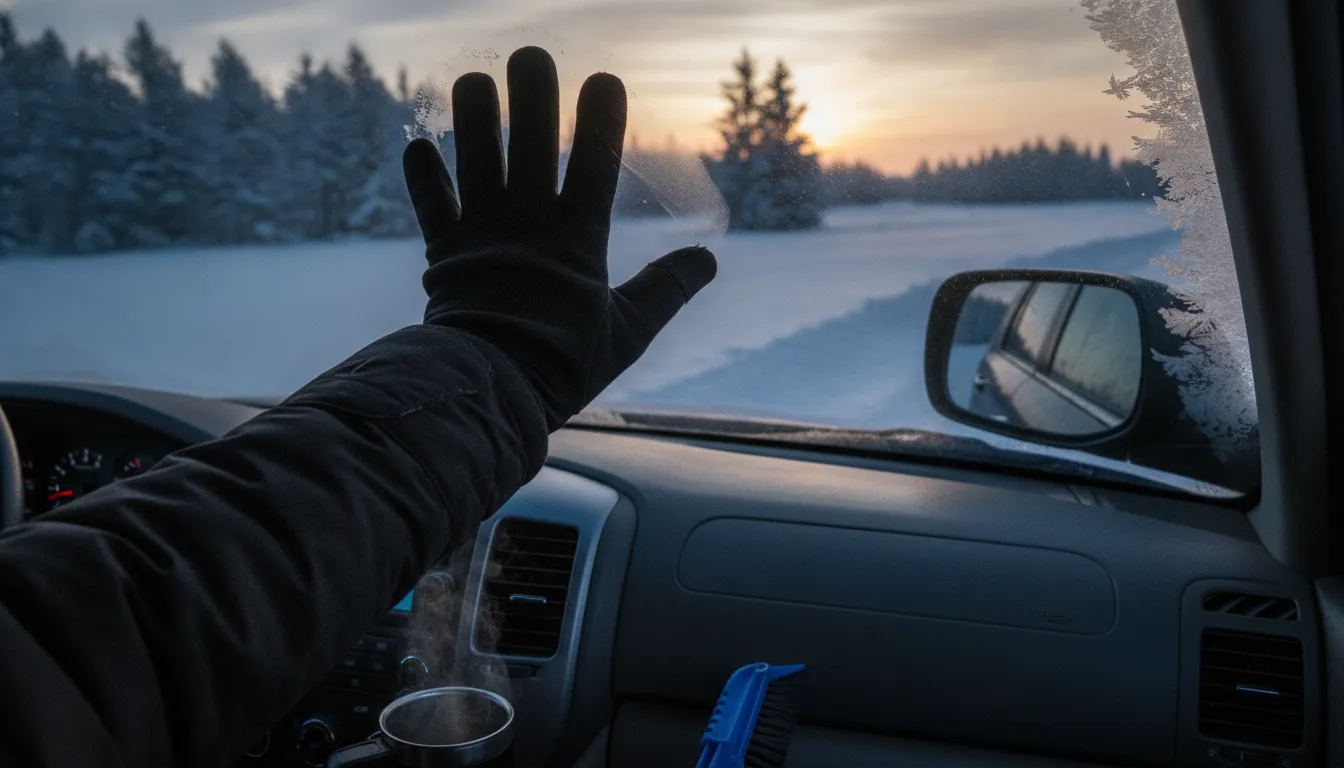
For commuters, families, and anyone who starts the day in the snowbelt, the fit is practical: more coverage for the windshield. Dedicated access for icy wipers, a paint-friendly edge for controlled work, and stowage that does not demand much space. The product page also lists a 5-year performance guarantee covering defects in materials and workmanship under normal use, subject to stated exclusions.
Frequently Asked Questions
What is the fastest way to remove frost from a windshield?
Start the vehicle and use the defroster while you clear loose frost with controlled scraper strokes. Work across the glass instead of attacking one small patch. Clear the full windshield, side windows, mirrors, and lights before driving. The goal is a complete view, not a narrow opening. The California Highway Patrol advises keeping the windshield and windows clear: winter driving guidance.
What should you look for in a windshield frost scraper?
Prioritize broad coverage, a durable edge, comfortable handling, and a way to reach wiper blades. The EDGE has an 18-inch primary edge, a 14-inch secondary edge, rounded corners, and a Wiper Blade Clearing Groove designed for de-icing wiper blades. Its paint-friendly Rubber Snow Plow takes loose snow off any vehicle surface. See the official product specifications.
What is the best tool to remove ice from a car windshield?
The best tool matches the surface and the ice. A scraper handles frost and loosened buildup, while the vehicle defroster helps release more stubborn layers. Choose controlled pressure over force, and do not scrape with a damaged or rough edge. For heavier ice, give heat-assisted loosening time to work before clearing the glass completely.
How do I get the cloudy film off my windshield?
First determine whether the cloudiness is fog or residue. For interior fog, use the vehicle defroster and a clean cloth, as recommended by the California Highway Patrol. If a film remains, clean the glass with a product approved for your vehicle and a clean, lint-free cloth. Keep the glass, wipers, and mirrors clear before moving.
Ready to Make Frosty Mornings Easier?
A dependable windshield frost scraper helps you clear glass thoroughly while keeping your routine simple. The EDGE combines broad coverage, a paint-friendly edge, a Wiper Blade Clearing Groove, and flat stowage in one winter-ready tool. Shop The EDGE windshield frost scraper and get started with a scraper built for clearer visibility and easier vehicle prep.