


How to Remove Ice From Windshield Without Damage
Andrew MelamedIt’s the winter morning ritual nobody asked for. You’re running late, only to find your car sealed in a stubborn sheet of ice. Your cheap plastic scraper isn’t a tool; it’s a liability waiting to snap in the cold. Hacking away at a frozen windshield shouldn’t be your morning cardio. There’s a better way that doesn’t involve brute force or broken tools. This guide will show you how to remove ice from your windshield efficiently and safely. We’ll cover the right techniques, the tools that actually work, and the common mistakes that can lead to costly damage.
Key Takeaways
- Let Your Defroster Do the Heavy Lifting: Before you even start scraping, run your car’s defroster for a few minutes. This heats the glass from the inside, breaking the ice’s bond and making it dramatically easier to clear away in large sheets.
- Outsmart Ice Before It Forms: The best way to win a winter morning is to prevent the battle altogether. Use a windshield cover or a simple DIY spray (two parts rubbing alcohol, one part water) the night before a freeze to keep your glass clear.
- Avoid Costly Shortcuts: Never use hot water, metal tools, or brute force, as they can crack or permanently scratch your windshield. A proper, paint-friendly scraper is a small investment that protects you from expensive repairs and dangerous blind spots.
Why Your Windshield Ices Over
It’s the winter morning ritual nobody asked for: you’re running late, coffee in hand, only to find your car sealed in a stubborn sheet of ice. It feels personal, like winter is out to get you. But it’s just science. Understanding how that ice gets there is the first step to clearing it faster and getting on with your day. It all comes down to a simple battle between temperature and moisture, and your windshield is the battleground. Whether it's a delicate layer of frost or a thick, solid shield of ice, the cause is the same. The air around your car is full of water vapor, and when conditions are right—or wrong, depending on your morning schedule—that moisture freezes directly onto your glass, creating the barrier between you and the road.
The Role of Temperature and Humidity
Think of your windshield like a cold can of soda on a hot day. Moisture from the air instantly beads up on the surface. The same thing happens in winter, but with a much colder result. When the temperature of your windshield drops below the air's dew point (the point where water vapor condenses into liquid), moisture collects on the glass. As the temperature keeps falling below freezing, that condensation turns to ice. The more moisture in the air—higher humidity—the more potential ice you’ll have to deal with. It’s a simple formula that can completely derail your morning commute if you’re not prepared.
How Frost Forms Overnight
Frost is a little different. It’s the ninja of winter precipitation—it can appear overnight without any rain or snow. Frost forms when the surface of your windshield gets colder than the freezing point, causing water vapor in the air to skip the liquid phase and turn directly into ice crystals. This happens most often on clear, calm nights. Without clouds to act as a blanket, your car’s heat radiates away into the atmosphere, making your windshield cool down rapidly. That super-chilled glass becomes a perfect canvas for intricate, view-blocking frost, leaving you with a mess to scrape before you can safely drive.
Your De-Icing Toolkit: The Right and Wrong Tools
A frozen windshield is a battle, and you need the right weapon. Grabbing the wrong tool—or worse, a makeshift one—can waste your time and even wreck your glass. Let's break down your options, from the category-killers to the old standbys, so you can win the morning without a fight.
The EDGE: Your Best Bet for a Clear View
Tired of flimsy scrapers that snap under pressure? The EDGE isn’t just another scraper; it’s a winter-dominating tool designed to clear your windshield with significantly less effort. Its oversized 18-inch blade removes frost and ice in wide, efficient passes. The multi-purpose grip is designed for comfort, and the Wiper Blade Clearing Groove clears ice from your wiper blades.
Unlike cheap plastic tools that break and get tossed, The EDGE is built to last and backed by a 5-year performance guarantee. It stows flat under a seat or in the trunk, so it’s always there when you need it. This isn’t a disposable gadget—it’s a permanent solution for safer, faster winter mornings.
Old-School Plastic Scrapers
We’ve all been there: hunched over in the freezing cold, chipping away at thick ice with a cheap piece of plastic. While they can get the job done eventually, traditional scrapers are a lesson in frustration. They’re slow, their small blades require endless passes, and the handles often feel like they’re about to break.
For really thick ice, some people recommend you use the bumpy side of the scraper first to break it up before clearing it with the flat edge. But let’s be honest—most of these tools are inefficient and end up in a landfill after one bad storm. They’re a temporary fix for a recurring problem.
The Deal with De-Icer Sprays
De-icer sprays seem like a magic bullet, and they can certainly help soften stubborn ice. You can buy commercial sprays or even make your own de-icer with simple household ingredients like two parts rubbing alcohol and one part water in a spray bottle.
But sprays aren’t a complete solution. They turn thick ice into a heavy slush that you still need to remove from your windshield. Think of them as a helpful assistant, not the main tool for the job. A de-icer can loosen the ice, but you’ll still need a powerful, wide scraper to quickly and effectively clear the mess away for full visibility.
The Right Way to De-Ice Your Windshield
Scraping ice isn't just a chore—it's a battle against the clock on a frozen morning. But brute force is for amateurs. The truth is, there’s a right way and a wrong way to clear your windshield. The wrong way leaves you frustrated, late, and with a tiny peephole to see through. The right way gets you on the road faster and safer, with significantly less effort.
Winning the war against winter ice comes down to two things: having a tool that works as hard as you do and using a technique that’s smart, not strenuous. While The EDGE gives you a serious advantage with its wide blade and ergonomic grip, mastering these simple steps will turn a frustrating task into a quick, clean sweep. Forget hacking away at stubborn ice—this is how you clear it with confidence.
Start Your Engine and Defroster First
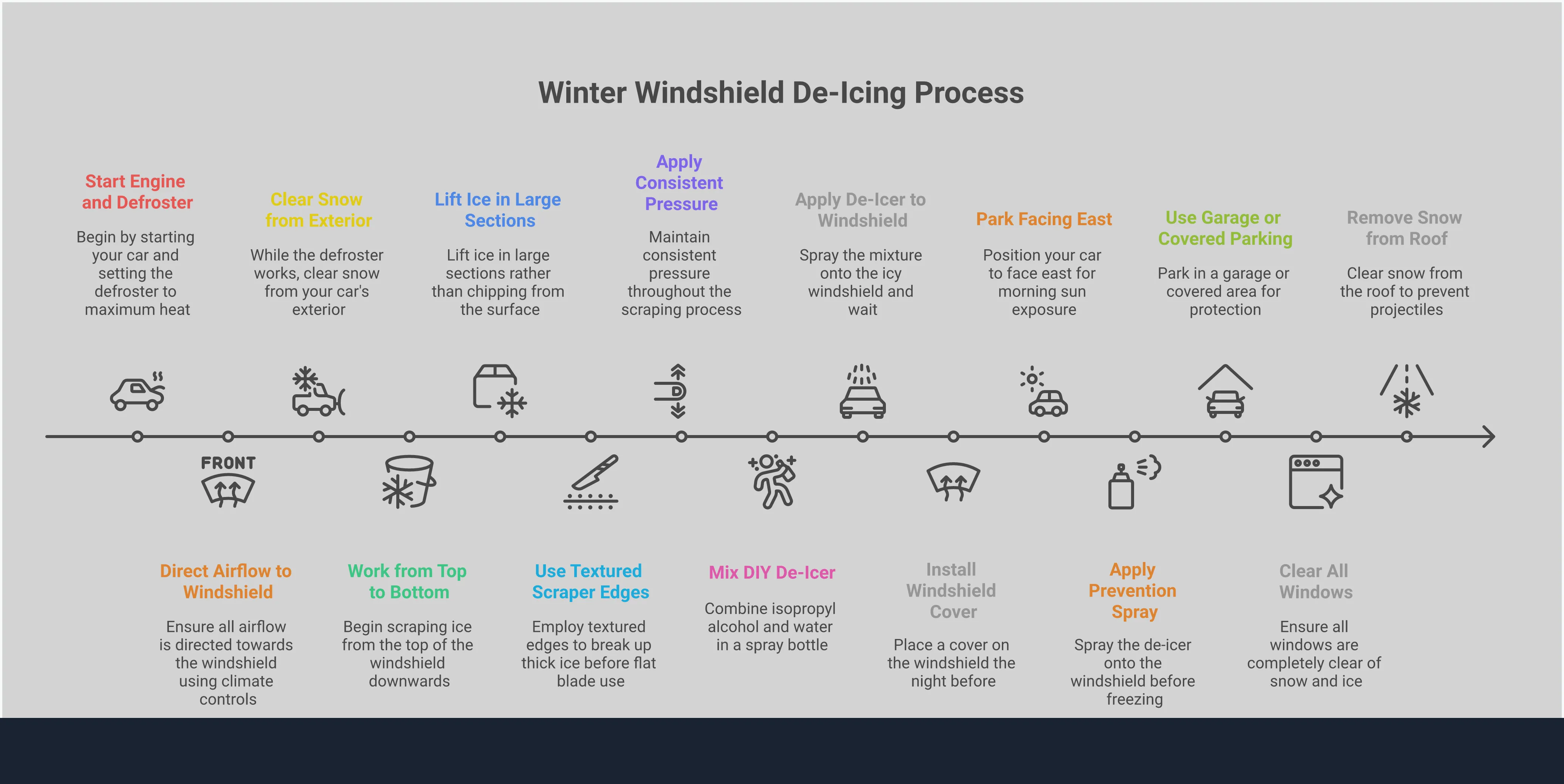
Before you even think about scraping, get inside your car and start the engine. Crank up your defroster to the highest setting and direct the airflow to the windshield. This is the single most important step most people skip. While you’re enjoying the warmth, the heat from inside begins to melt the ice from the bottom up, breaking the stubborn bond it has with the glass. This isn't cheating; it's strategy. Let your vehicle’s climate control system do the initial heavy lifting, making the physical work of scraping dramatically easier.
Master the Proper Scraping Technique
Once the defroster has had a few minutes to work, it’s time to scrape. The goal isn't to chip away at the ice from the top down. The most effective method is to get the blade underneath the sheet of ice and push it off in large sections. Apply firm, steady pressure and use long, even strokes. With a wide scraper like The EDGE, you can clear huge swaths of your windshield in a single pass. For exceptionally thick ice, use the textured side of your scraper first to break it up, then flip to the flat blade to lift it away. This technique requires far less effort and clears your glass in a fraction of the time.
Always Work from Top to Bottom
This might sound obvious, but it’s a rule worth following: always scrape from the top of your windshield down. Gravity is your friend here. By starting at the top, you ensure that all the ice, snow, and debris you clear falls down and away from the areas you’ve already finished. Working from the bottom or the middle just means you’ll have to clear the same spots twice. Scrape from the top down, push the mess off the glass, and you’re left with a clean surface and the full visibility you need to drive safely. It’s a simple habit that makes the entire process more efficient.
DIY De-Icers: Do They Actually Work?
Caught in a freeze without a proper tool? A DIY de-icer can get you out of a tight spot. While some homemade solutions work to melt thin layers of ice, they aren't a replacement for a tool designed for the job. Think of them as a backup plan—a way to loosen stubborn ice, making the real work of scraping significantly easier. The best approach combines a pre-treatment spray with a high-quality scraper to get your windshield clear fast and without damage. The most effective recipe is simple and uses two common household items.
The Rubbing Alcohol and Water Mix
Forget the weird online hacks. The only DIY de-icer worth your time is a simple mix of rubbing alcohol and water. Combine two parts 70% isopropyl alcohol with one part water in a spray bottle. Why does it work? Rubbing alcohol has an incredibly low freezing point, so it cuts through ice without re-freezing on your windshield. It’s a straightforward chemical reaction that gives you a head start before you even start scraping.
How to Apply It Safely
Once mixed, spray the solution evenly across your icy windshield. Let it sit for a minute to break down the ice—you’ll see it start to dissolve or turn slushy. This is where a proper tool takes over. The spray loosens the ice, allowing a scraper like The EDGE to clear the slush with a significantly reduced workload. A critical warning: never pour hot water on your windshield. The sudden temperature shock can cause the glass to crack, turning a minor delay into a costly replacement.
Stop Damaging Your Windshield: What Not to Do
Winter mornings are a battle. When you’re late and the ice is thick, it’s tempting to try any shortcut to get on the road. But those desperate moves can lead to costly repairs and leave you worse off than when you started. Damaging your windshield isn’t just about a crack; it’s about compromising your visibility and safety. The wrong tools and techniques can scratch the glass, tear your wiper blades, or even break the wiper motor. It’s the difference between a quick, clean clear and a five-hundred-dollar mistake.
Instead of fighting the ice with brute force or risky hacks, the goal is to work smarter. That means understanding what not to do. Forget the frantic scraping and dangerous shortcuts. A few simple rules can protect your vehicle and save you a massive headache. It starts with having the right tool for the job—one designed to clear ice efficiently without putting your glass at risk. By avoiding these common mistakes, you can clear your windshield faster and drive away safely, without causing damage that will haunt you long after the snow has melted.
Never Use Hot Water or Metal
That viral video of someone instantly melting ice with a bucket of hot water? Don’t try it. Pouring hot water on frozen glass creates a rapid temperature change called thermal shock, which can cause your windshield to crack immediately. Even warm water is a gamble. And while you’re at it, put down the metal spatula, keys, or any other hard-edged object from your kitchen or pocket. These tools weren't designed for glass and will leave permanent scratches and gouges on your windshield, impairing your vision long-term. Stick to tools made specifically for the task.
Don't Force Frozen Wiper Blades
When your wipers are frozen solid to the windshield, yanking on them is a recipe for disaster. Forcing them up can tear the rubber blade, rendering them useless in the next storm. Worse, you could damage the delicate wiper motor, leading to an expensive repair. Instead, let your car’s defroster do the heavy lifting. Turn it on and give it a few minutes to gently melt the ice around the blades. The EDGE also includes a built-in wiper groove cleaner, so you can clear ice from the blades themselves without pulling or tearing them.
Avoid Scraping with Brute Force
Hacking away at thick ice with a flimsy scraper is exhausting and ineffective. It’s not about how hard you scrape; it’s about how you scrape. The most effective technique is to get the blade underneath the layer of ice and lift it off in sheets. Trying to chip away at it from the top just wastes energy and risks scratching your glass if the scraper slips. For really thick ice, a good scraper will have a feature to break it up first before the blade clears it away. A well-designed tool like The EDGE gives you the leverage to clear ice efficiently, requiring significantly less effort.
How to Tackle Seriously Stubborn Ice
Some mornings, winter isn't playing nice. You’re not dealing with a delicate layer of frost; you're facing a solid sheet of ice that seems fused to your windshield. It’s the kind of ice that laughs at those cheap, plastic scrapers that snap in the cold. Your first instinct might be to attack it with brute force, chipping away tiny pieces while your hands go numb. But that’s a losing battle. It’s slow, exhausting, and a great way to scratch your glass or pull a muscle before you’ve even had your coffee.
This is where you need a real strategy, not just more elbow grease. When winter throws its worst at you, you need to work smarter, not harder. The secret to defeating stubborn ice isn't about how much force you can apply; it's about using physics to your advantage. By combining a little bit of heat with the right technique, you can turn an impossible task into a quick win. Forget hacking away at the surface like you’re carving a statue. We’re going to show you how to get under the problem and lift it away, clearing your windshield efficiently and safely so you can get on with your day.
Combine Your Defroster and Scraper
Patience is your secret weapon here. Before you lay a scraper on the glass, get in your car and start the engine. Turn the front defroster on high and let it run for at least five minutes. This isn't just about making the cabin comfortable; it's a critical first step. The warm air heats the glass from the inside, attacking the ice from its weakest point: where it meets the windshield. This simple action helps to start the melting process safely, preventing the kind of thermal shock that can crack your glass. Use this time to clear snow off the rest of your car. By the time you return, the ice will be ready to surrender.
Breaking Through Thick Ice Layers
When you’re facing ice that’s practically bulletproof, stop chipping at the surface. Your goal is to get under it. With your defroster having done the prep work, apply firm, steady pressure with your scraper to find a weak point. Once you break the surface, slide the blade underneath to lift the ice away in large sheets. This technique is far more effective than hacking away at the top layer and dramatically reduces the risk of scratching your windshield. A sturdy scraper with a wide, flat blade gives you the leverage to pop off entire sections at once, clearing your view in a fraction of the time and with significantly less effort.
Win the Morning: How to Prevent an Icy Windshield
The alarm blares. It’s dark, it’s cold, and your windshield is a solid sheet of ice. Your whole day feels derailed before it even starts. That morning scramble—chipping away at a frozen fortress while your hands go numb—is a winter ritual nobody asked for.
But what if you could skip the battle altogether? The best way to deal with an icy windshield is to stop it from forming in the first place. A few minutes of prep the night before can save you from a frantic, freezing scramble. It’s not about working harder; it’s about working smarter. Taking proactive steps means you’re always one step ahead of the weather.
While having a reliable tool like The EDGE is essential for any storm, prevention is your first line of defense. Think of it as setting yourself up for success. These strategies will help you reclaim your winter mornings, so you can get on with your day without the icy delay. Stop fighting ice—outsmart it. A clear windshield isn't just about convenience; it's a critical part of winter driving safety. It ensures you see the road clearly from the moment you pull out of your driveway, reducing the risk of accidents caused by poor visibility.
Use a Windshield Cover
This is the most straightforward way to keep your windshield clear. Using a windshield cover creates a physical barrier that prevents ice and snow from ever touching the glass. Think of it as a winter coat for your car. In the morning, you just peel it off—along with all the frost, ice, and snow—and you’re ready to go. It saves you time and protects your glass from the potential scratches of frantic scraping. There are plenty of different types of covers available, from simple tarps to fitted covers with magnetic edges that secure it in place. It’s a simple solution that makes a huge difference.
Try a DIY Prevention Spray
You can fight frost before it forms with a simple homemade solution. Creating a DIY prevention spray with a mixture of rubbing alcohol and water can keep your windshield clear overnight. Just mix two parts isopropyl alcohol with one part water in a spray bottle. Lightly mist your windshield and windows the evening before a predicted freeze. The alcohol lowers the freezing point of water, preventing ice from bonding to the glass. This makes any light frost incredibly easy to wipe away in the morning. It’s a cheap, effective trick that can make your morning routine much easier.
Park Smarter, Not Harder
Where you park can make all the difference. If you have a garage or carport, use it. This is the easiest way to protect your vehicle from the elements. If you have to park outside, think strategically. Parking under a tree or close to a building can offer some shelter from frost. Facing your car east can also help, as the morning sun will hit your windshield first and start the melting process for you. It’s a simple change in habit that can significantly reduce the amount of ice you have to deal with. A little bit of strategic parking goes a long way in winning the war against winter.
Beyond the Scrape: Driving Safely
Clearing your windshield is more than just a morning chore. It’s the first step to a safe drive. Rushing out the door with a tiny peephole scraped in the ice is a gamble you can’t afford to take. It’s not just about seeing what’s directly in front of you; it’s about protecting yourself, your passengers, and everyone else on the road. A few extra moments with the right tool can be the difference between a safe commute and a serious accident. This isn't just about convenience—it's about responsibility.
Why Full Visibility Is Non-Negotiable
That small circle you scraped out of the ice? It’s a massive blind spot. Driving with an obstructed view means you won't see a child running into the street, a car merging into your lane, or a patch of black ice until it’s too late. Full visibility isn't a suggestion; it's a fundamental requirement for safe driving. When you can't see everything, you can't react to anything.
Some studies show drivers can waste over three hours a year just de-icing their cars, which makes cutting corners tempting. But your safety, and the safety of others, is worth more than a few minutes. You need to clear every window completely—windshield, side windows, and rear window—before you even think about putting the car in drive. A tool that works faster, like The EDGE, eliminates the excuse to drive half-blind.
Stay Legal: Avoid Fines for an Unclear Vehicle
Driving with an icy or snow-covered windshield isn't just dangerous; it's illegal in many places. Police can and will pull you over for having an obstructed view, handing out fines and penalty points on your license. Think of it this way: a cheap, ineffective scraper could end up costing you way more than the price of a proper tool. The law requires a full, clear view of the road, and "I was in a hurry" isn't a valid defense.
And it’s not just about your windows. Many states have laws requiring you to clear snow and ice from your entire vehicle—roof, hood, and trunk included. A chunk of ice flying off your roof at highway speeds can shatter another driver's windshield, causing a serious crash. AAA reminds drivers of this every winter, because the consequences are real. Don't let a preventable ticket or a dangerous situation ruin your day. Clear it all, every time.
Related Articles
- How to Scrape Ice Off Windshield The Right Way – The EDGE
- How to Quickly Remove Ice From Windshield: 3 Fast Ways – The EDGE
Frequently Asked Questions
Is using hot water on my windshield really that bad? Yes, it's a terrible idea. Pouring hot water on frozen glass can cause it to crack from the sudden temperature change, a phenomenon called thermal shock. You could turn a simple morning chore into a costly windshield replacement. It's much safer to let your car's defroster do the initial work from the inside.
What's the absolute fastest way to clear my windshield if I'm in a rush? The quickest method is a one-two punch. First, start your car and blast the defroster to begin melting the ice from the inside out. While that's working, use a wide, powerful scraper like The EDGE to clear the glass in long, even strokes from top to bottom. This combination of heat and an efficient tool clears your view in a fraction of the time it takes to just hack away at the ice.
I'm worried about scratching my glass. How should I use The EDGE on my windshield and paint? The EDGE’s hard blades are built for glass and ice, and its paint-friendly Rubber Snow Plow clears loose snow from painted surfaces. Unlike metal tools or cheap, jagged plastic scrapers, it's built to be tough on ice, so you can clear your view with confidence.
Do homemade de-icer sprays work as well as the ones from the store? A simple mix of two parts rubbing alcohol and one part water works surprisingly well to loosen light frost and thin ice. It's a great backup if you're in a pinch. However, for thick ice, it acts more as a pre-treatment. You'll still need a solid scraper to clear away the resulting slush for full visibility.
Why is it so important to clear my entire car, not just a spot on the windshield? Driving with a small peephole is incredibly dangerous because it creates massive blind spots, preventing you from seeing pedestrians or other cars. Beyond that, it's illegal in many states to drive with an obstructed view. Chunks of snow and ice flying off your roof can also cause serious accidents for drivers behind you, leading to hefty fines and dangerous situations on the road.