


Paint-Friendly Snow Scraper: A Safer Way to Clear Your Car
Andrew MelamedFresh snow is easy to underestimate. Beneath it, road grit, salt, and hard-packed ice can turn a rushed swipe into unnecessary wear on your vehicle's finish. The safest approach starts before the first pass: choose the right edge, clear loose snow, and keep pressure controlled.
Ready to upgrade? The EDGE has you covered.
A snow scraper should combine a paint-friendly edge with a shape that gives you control and useful coverage. No tool can replace careful technique, so remove loose snow first, avoid dragging grit across paint, and use light, deliberate passes on ice and snow.
From edge material and surface contact to stowage and pre-drive visibility, a few practical details separate a dependable winter tool from one that creates more work. Start with the design features that help make each pass safer and more manageable.
What Makes a Snow Scraper Safer to Use?
A paint-friendly snow scraper is not defined by a label alone. Safer vehicle clearing depends on the edge contacting the finish, the condition of the surface, the pressure in your hands, and how much area the tool can cover. Look for a paint-friendly edge, keep grit from becoming part of the pass, and choose a shape that gives you control without forcing repeated swipes.
A practical snow scraper should combine a paint-friendly contact edge with enough coverage for real winter buildup. Clean the tool and vehicle surface first, use controlled pressure rather than force, and choose rounded, manageable geometry for tight areas. No scraper can promise a perfect result when grit or misuse enters the process.
Start with the edge and the surface
Finish protection is a real buyer concern, especially when snow hides road grit, salt, or other debris. The EDGE uses a paint-friendly Rubber Snow Plow for loose snow on any vehicle surface, and its hard blades are for glass and ice only. That feature matters most when paired with good technique. Before making a pass, inspect the area and remove loose snow first. A clean contact surface gives the edge a better chance to do its job.
Pressure is the next variable. Do not lean into stubborn buildup and drag whatever is underneath across the paint. Work with controlled pressure, and pause if the scraper picks up visible grit. Clean the tool before continuing. The goal is steady contact and deliberate movement, not brute force. For a more detailed glass-focused routine, follow this guide to safe windshield ice removal.
Coverage reduces unnecessary passes
A narrow tool can work, but clearing a larger vehicle with repeated short passes creates more opportunities for fatigue, uneven pressure, and contact with debris. The EDGE measures 18 inches wide by 14 inches long, providing a broad working surface for snow and ice removal. Choose coverage that fits your vehicle and your reach, then keep each pass controlled rather than stretching or twisting.
Shape matters, too. Rounded corners are designed to reach tight spots without turning every contour into an awkward angle. Use the broad face on open panels, then shift carefully around edges and confined areas. Windows, mirrors, and wiper areas require their own attention. When you reach the blades, use the dedicated method explained in this guide to remove ice from wiper blades. For a wider look at choosing dimensions and handling features, review these car snow scraper features.
The right test is simple: can you keep the contact surface clean, maintain controlled pressure, and cover the vehicle without losing reach or balance? If yes, the scraper is built around safer use rather than a marketing promise.
How Do You Clear Snow Without Dragging Grit Across Paint?
A careful clearing routine protects more than the finish. It also keeps visibility open and prevents loose snow from becoming a hazard once the vehicle moves. Start with the least abrasive work, use controlled pressure when ice remains, and treat the tailpipe as a safety check, not an afterthought.
Quick summary: Inspect the vehicle and tool first, then remove loose snow before making controlled passes over ice. Never force grit across painted panels. Finish by clearing glass, mirrors, lights, the roof, and tailpipe so the vehicle is ready to move with visibility and airflow unobstructed.
Start clean and work from loose snow to bonded ice
- Inspect the surface. Look for road grit, salt, sand, and chunks of frozen snow on the panels. Check the scraper edge as well. If either surface is visibly dirty, clean it before placing the tool against paint. The goal is simple: avoid dragging grit across the vehicle finish.
- Remove loose snow first. Push or lift the soft layer away with broad, light movements. Do not begin by pressing hard into a snow-covered panel. Removing loose material first reduces what can be trapped between the tool and the vehicle.
- Let the vehicle warm gradually. Start the vehicle only in a safe, ventilated setting and use the defroster as appropriate. Do not pour warm water over frozen glass. A rapid temperature change can crack glass, according to Ohio State guidance.
- Use controlled passes. Hold the tool steadily and apply only the pressure needed for the remaining snow or ice. Make short, deliberate passes rather than grinding aggressively. A paint-friendly edge can support careful removal, but no scraper should be treated as an absolute guarantee against damage. If the edge picks up grit, stop and clean it.
Finish with a complete pre-drive check
- Change direction only when the surface is clear. Work across manageable areas, pause when debris collects, and wipe or rinse the tool before continuing. Keep the tool under control around trim, seals, badges, and tight edges. For glass-specific technique, see this guide to safe windshield ice removal.
- Clear the visibility zones. Finish the windows, mirrors, and lights. Remove snow and ice from the hood and roof before driving, as recommended by the New Jersey traffic safety guidance. Do not leave a roof load that can slide or blow onto another vehicle.
- Check the wipers and tailpipe. Free ice from the wiper blades without forcing them against frozen glass. This wiper de-icing guide covers that separate step. Finally, check that the tailpipe is clear. The CDC warns that a blocked tailpipe can allow carbon monoxide to build up quickly inside a vehicle, so make this check before driving after a storm.
That sequence keeps the job practical: clean contact, light work first, controlled pressure where needed, then a final all-around safety check before you go.
Coverage, Control, and Stowage Matter
Choosing a winter tool is not only about how sharp the edge feels. Coverage determines how much surface you clear per pass, control determines how confidently you work around trim and glass. And stowage determines whether the tool stays in your vehicle when you need it. The right balance depends on your vehicle, snowfall, and available space.
Compare the tool to the job
| Tool | Best use | Coverage and reach | Control | Stowage tradeoff |
|---|---|---|---|---|
| Narrow handheld scraper | Targeted ice on windows and small areas | Limited coverage; close-range reach | High precision in tight spots | Usually compact enough for a door pocket or console |
| Snow brush | Light snow and occasional storms | More reach than a handheld scraper, but less coverage than a broom | Useful for sweeping, with less direct edge control | Compact, though it trades some coverage for easier stowage |
| Snow broom | Heavier snow across larger vehicle surfaces | Broad brush head and, on some models, adjustable reach | Good for pushing loose snow; less suited to detailed ice work | Longer or extended designs need more trunk or back-seat space |
| Broad scraper | Snow and ice across broad vehicle panels | Wide working surface with close-range control | Controlled pressure across a large area | Handle-free, flat designs can stow on the floor, seat, or in the trunk |
Category guidance reflects real tradeoffs. Snow brushes can suit occasional storms and are generally more compact, while snow brooms prioritize reach and broad snow movement. A narrow scraper remains useful for focused ice, but a broad tool can simplify large surfaces when you can maintain a clean contact area and controlled pressure.
The EDGE is 18 inches wide by 14 inches long, giving drivers a broad working surface without an extension pole. Its rounded corners are designed to reach tight spots, helping one tool move from open panels toward edges and contours. The handle-free rectangular design stows flat in a vehicle, which matters when trunk and cabin space are already crowded.
Use the same criteria when reviewing car snow scraper features: match coverage to the surfaces you clear, control to the areas you approach, and stowage to the space you actually have. A paint-friendly edge is useful, but careful technique and a clean tool still matter. No scraper should be treated as an absolute guarantee against damage.
Is The EDGE a Good Fit for Snowbelt Drivers?
Summary: Snowbelt drivers need more than a small tool for one stubborn patch of ice. The EDGE combines broad coverage with a paint-friendly edge, a Wiper Blade Clearing Groove, flat stowage, and useful snow-pushing capability. Recyclable materials and a 5-year performance guarantee add practical value for drivers who prepare for winter year after year.
For drivers who face regular lake-effect snow, freeze-thaw cycles, or packed-down accumulation, fit comes down to workflow. The EDGE is designed to handle more than a quick windshield scrape. Its large format, multi-use shape, and easy vehicle stowage make it a practical candidate for daily winter preparation.
One tool, several winter jobs
The EDGE measures 18 inches wide by 14 inches long. Treat that as a product-positioning claim, not a promise of identical results in every storm. Snow depth, ice thickness, temperature, and technique still affect the job.
Its paint-friendly Rubber Snow Plow is for loose snow on any vehicle surface, and its hard blades are for glass and ice only. That feature works best alongside careful use: remove loose snow first, check for grit, and apply controlled pressure. No scraper makes careless technique risk-free, but a finish-conscious edge gives drivers a sensible starting point when protecting the vehicle matters.
The shape also adds control across different parts of the vehicle. A V-shaped Wiper Blade Clearing Groove is designed for wiper-blade de-icing, while the broad face can push snow from larger surfaces. Rounded corners help reach tighter spots. Used as a scraper and snow pusher, The EDGE can support a more consistent clear-out instead of requiring several separate tools.
Stowage matters when the back seat is already full of winter gear. The handle-free rectangular design stows flat on a vehicle floor, back seat, or in the trunk. That profile is easier to keep within reach than a bulky handled tool. While its additional utility as a portable tray or floor-mat protector gives it a role beyond storm cleanup.
What adds long-term value?
The EDGE is made with recyclable materials, which may appeal to drivers who consider material choices alongside performance. It also carries a 5-year performance guarantee covering defects in materials and workmanship under normal use, subject to stated exclusions and proof of purchase. Review those terms before relying on any guarantee.
If this combination matches your winter routine, review the paint-friendly vehicle scraper details before deciding. The best choice is the tool that fits your vehicle, storage space, typical snowfall, and willingness to use controlled pressure.
Build a Winter Clearing Kit Around Your Scraper
Winter readiness is bigger than the windshield. A scraper handles the immediate job, but a well-packed vehicle kit helps you manage snow, ice. Poor visibility, cold, and the small problems that can turn a routine drive into a roadside delay. Keep the essentials together, easy to reach, and ready before the next storm.
Keep the essentials accessible
Start with the clearing tools you will use first: a scraper or brush, a small shovel, and traction material such as sand, salt, or kitty litter. The New Jersey Division of Highway Traffic Safety also lists jumper cables or a battery starter, a blanket, a flashlight with fresh batteries. Extra windshield-wiper fluid, a warning device, a phone with a spare battery, water, nonperishable snacks, and a cloth or paper towels as useful vehicle-kit supplies. Review the full winter vehicle safety-kit guidance and adapt it to your route, climate, and vehicle.
Stow the scraper where you can reach it without unpacking the entire trunk. A tool that disappears beneath groceries or sports equipment is not ready when frost covers the glass. Check its edge and working surfaces before winter, then remove packed dirt, salt residue, or loose debris. A clean tool and controlled pressure support more careful clearing. If you use The EDGE, its handle-free rectangular design is made to stow flat on a vehicle floor, back seat, or in the trunk, which can make access simpler in a crowded vehicle.
Run a complete pre-drive check
Clear loose snow before working on stubborn ice, and do not focus only on the driver-side glass. Before moving, clear the windows, mirrors, lights, hood, and roof. The New Jersey guidance specifically reminds drivers to remove ice and snow from the hood, windows, and roof before driving. Snow left on top can shift onto the vehicle or roadway, while covered lights, mirrors, or glass reduce what you can see and what others can see.
Do not skip the tailpipe. The CDC warns that a blocked tailpipe can allow carbon monoxide to build up quickly inside a vehicle. After a storm, check that the exhaust outlet is clear of snow before starting or driving. The same careful approach applies to de-icing methods: avoid pouring warm water over frozen glass because a rapid temperature change may crack it. Use a suitable scraper, take controlled passes, and give the vehicle the time it needs.
Finally, check winter basics beyond the clearing kit. The CDC recommends checking tire tread and air pressure before winter weather and replacing standard windshield-wiper fluid with a wintertime mixture. A scraper gets you through the first few minutes. A complete kit and a deliberate pre-drive check help you finish the job safely.
Snow Scraper Buyer Checklist
A smarter winter tool is only part of the equation. Look for a paint-friendly edge, then pair it with clean contact and controlled technique. A useful checklist should also cover how much area you can clear, where the tool lives between storms, and whether the care and guarantee information is clear.
Check the edge and contact surface
Start with the edge. The EDGE uses a paint-friendly Rubber Snow Plow for loose snow on any vehicle surface, and its hard blades are for glass and ice only. That is a design aid, not an absolute promise that a tool can never scratch. Surface conditions and handling still matter. Loose grit trapped between the scraper and paint can create avoidable risk.
- Edge material: Look for a paint-friendly edge intended for vehicle-finish protection.
- Clean contact: Remove loose snow first, and do not drag grit across painted surfaces.
- Controlled technique: Choose a tool you can guide with controlled pressure rather than forcing it through every layer.
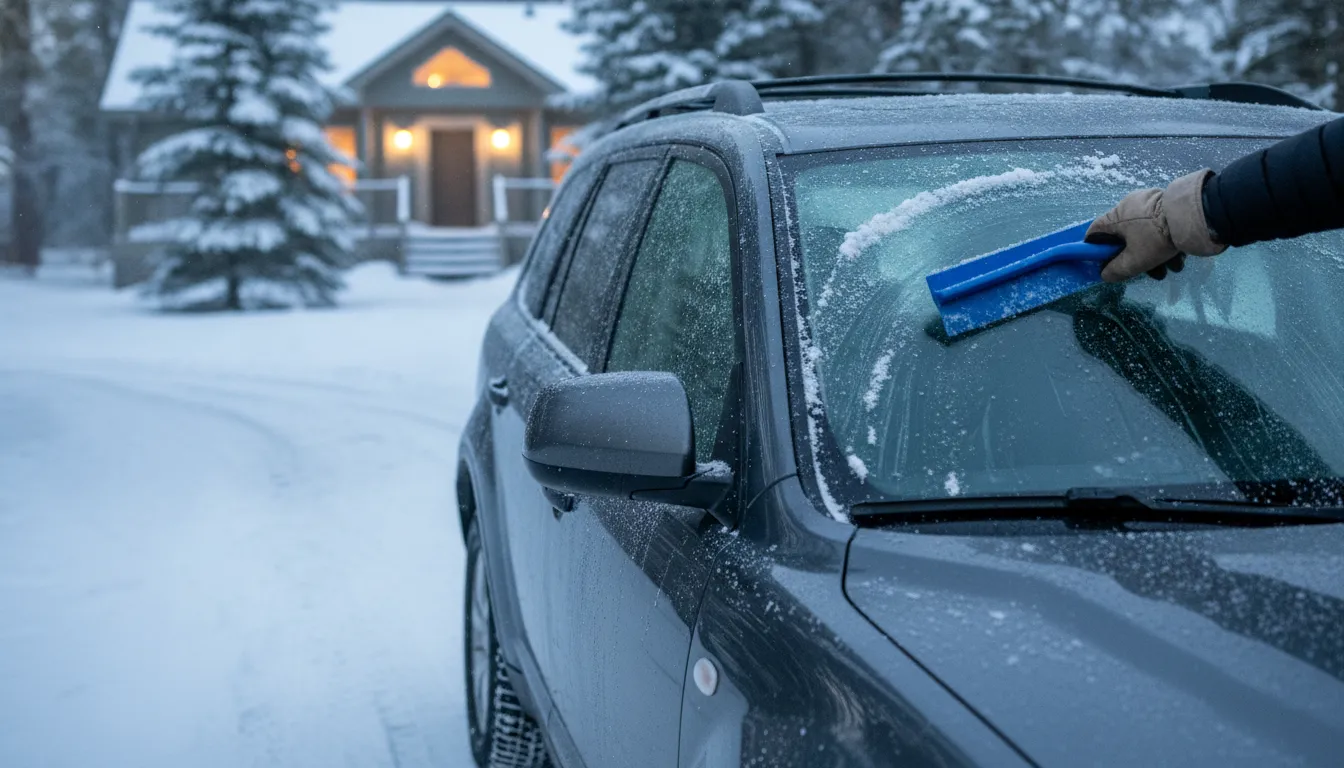
Choose a paint-friendly vehicle scraper built for practical winter prep.
Match coverage, stowage, and support to real use
Next, evaluate whether the shape fits your routine. A narrow tool may require more passes across a larger vehicle, while a broader design can help cover more area. The EDGE measures 18 inches wide by 14 inches long. Its handle-free rectangular design stows flat on a vehicle floor, back seat, or in the trunk, so stowage does not have to compete with everyday cargo.
- Adequate coverage: Select a size that suits your vehicle and the amount of snow you regularly clear.
- Easy stowage: Confirm the scraper can stay accessible without taking over the trunk or back seat.
- Care guidance: Read the product's use and care instructions before relying on it through winter.
- Guarantee documentation: Check what is covered, what exclusions apply, and what proof of purchase you must keep.
The EDGE carries a 5-year performance guarantee covering defects in materials and workmanship under normal use, subject to stated exclusions and proof of purchase. Keep the purchase record with your winter gear. Finally, before driving, clear the windows, mirrors, lights, and roof. A scraper that fits your vehicle is useful only when the full vehicle is ready for the road.
Frequently Asked Questions
What is a good ice scraper that does not scratch?
Look for a paint-friendly edge, a clean contact surface, controlled handling, and enough coverage to reduce repeated passes. The EDGE combines a paint-friendly edge with an 18-inch-wide by 14-inch-long design. No scraper can guarantee zero damage in every condition, so remove loose snow first and avoid dragging grit across the finish. See the paint-friendly vehicle scraper.
What is the best way to remove snow from a car safely?
Start by clearing loose snow, then use light, controlled passes rather than forcing the tool through packed debris. Keep the contact area clean, work methodically, and finish by clearing the windows, mirrors, lights, and roof. New Jersey safety guidance also recommends removing ice and snow from the hood, windows, and roof before driving: read the guidance.
Can I use one scraper across my car?
Yes, a broad scraper can handle large painted panels while its corners help reach tighter areas. Use extra care around trim, mirrors, lights, and glass, and keep grit from getting between the tool and the surface. The EDGE also has a V-shaped Wiper Blade Clearing Groove designed for removing ice from wiper blades, so the same tool can support more of your winter clearing routine.
How should I stow a snow scraper in my vehicle?
Stow it where you can reach it before driving, such as the trunk, back seat, or vehicle floor. A flat, handle-free design is useful when cargo space is limited. The EDGE stows flat in a vehicle and can also serve as a snow pusher, portable tray, or floor-mat protector. Check the tailpipe before starting out, because a blockage can allow carbon monoxide to build up quickly inside the vehicle: review CDC guidance.
Ready to Clear Winter Weather with More Control?
A paint-friendly edge, broad coverage, and a flat design can make routine vehicle prep simpler when snow and ice arrive. Choose a scraper that supports controlled clearing without relying on excessive pressure or rushed passes. Get started with The EDGE.