


Ergonomic Ice Scraper Design: Grip, Control, Coverage
Andrew MelamedWinter scraping gets harder when the tool makes you pinch, overreach, or push with uneven pressure. A better design keeps the work simple: give your hands a stable contact point. Cover more glass per pass, and make tricky areas like the wiper zone easier to reach.
Ready to upgrade? The EDGE has you covered.
An ergonomic ice scraper is designed around fit, force, and control. Handle shape, size, weight, and operating force all affect how naturally you can guide it across a frosted windshield. Broad coverage and a comfortable grip can make everyday clearing feel more manageable, while a dedicated wiper-blade groove helps address ice in a commonly missed area.
Those principles start with how the scraper meets your hand and the glass. Once that foundation is right, every pass becomes easier to guide, from the first broad sweep to the final check around the wipers.
What Makes an Ice Scraper Ergonomic?
Ergonomic design matches the tool to the task, so you can clear winter buildup with a natural grip, controlled pressure, and less unnecessary exertion. For an everyday ice scraper, that means paying attention to posture, hand fit, dimensions, weight, and the force needed to move across glass.
An ergonomic ice scraper isn't defined by a curved handle or a senior-focused label. It's defined by how naturally the tool works during a cold, rushed morning. The goal is practical: help drivers guide the scraper across the vehicle without awkward wrist angles, excessive squeezing, or repeated repositioning.
Neutral posture starts with the working angle
A neutral posture keeps the wrist and hand closer to their natural position instead of forcing them sharply forward, backward, or sideways. That matters when a scraper meets bonded frost and you instinctively push harder. Ergonomic hand-tool guidance emphasizes that hand-tool design should support neutral posture and minimize exertion. Applied to a windshield, the principle is simple: the tool should let you push and guide it without fighting its shape.
Good posture also depends on reach. A tool that is too short may make you hunch or stretch toward the center of the glass. A tool with useful surface area can help you work from a more stable position, using deliberate passes instead of frantic, narrow strokes.
Grip fit, size, and weight shape control
Grip fit is more than softness. The tool should give your hand a secure point of control without requiring a constant, forceful squeeze. A properly fitting grip can reduce the need for forceful gripping. Gloves add another variable, so the usable contact area should remain easy to guide when fingers are bulky or cold.
Size and weight need to work together. A scraper that is too small may require many passes and frequent changes in hand position. One that is too heavy can make each pass feel cumbersome. Ergonomic evaluation considers handle shape, size, weight, and operating force as connected design factors, not isolated specifications.
For a handle-free design, the same test still applies. Look for direct control, a stable working surface, and a shape that lets you apply pressure where the ice is instead of twisting the tool. The best everyday choice is one that feels predictable from the first pass. It stows without taking over the vehicle and helps turn a stubborn chore into a cleaner, more controlled routine.
How an ergonomic ice scraper improves control
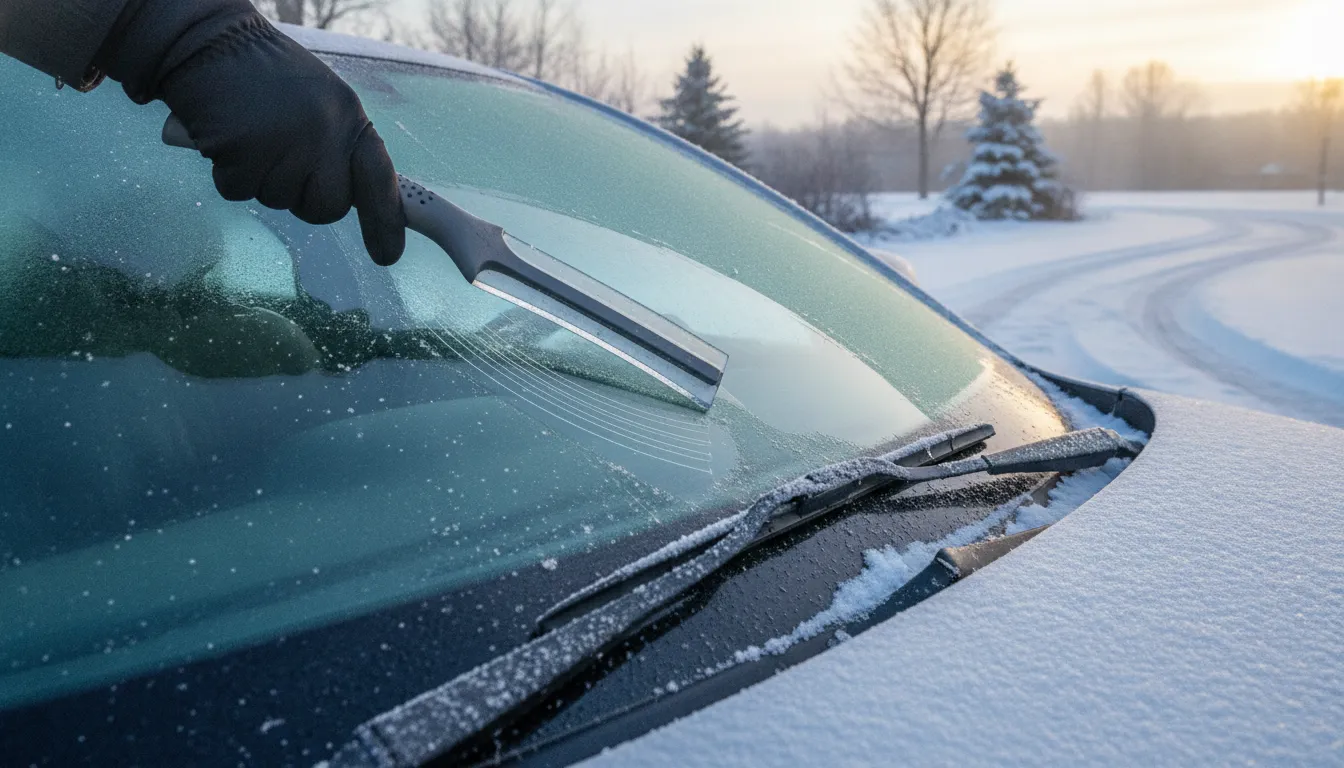
Control starts with contact, not brute force. An ergonomic ice scraper should let you guide each pass with steady pressure, even when you're wearing thick winter gloves. That matters during a frosty morning departure, when cold fingers, slippery surfaces, and uneven ice can make a small tool feel harder to manage.
Traditional narrow scrapers often encourage a tight, one-handed grip. A broader, handle-free surface gives you another option: place your gloved hand where it feels most stable, then push or pull from above. Your hand stays closer to the scraping edge, so the tool responds directly to your movement instead of wobbling at the end of a long handle.
In short, a better grip helps you apply pressure deliberately rather than squeeze harder and hope for the best. Ergonomic hand-tool guidance commonly evaluates grip fit, operating force, size, and weight together. The goal is practical control, with a tool that feels secure through the pass. For The EDGE, the multipurpose grip is designed for comfortable snow removal, while the wide surface creates a stable contact area across the vehicle.
Elevate your winter gear with The EDGE.
Gloves, pressure, and a cleaner pass
Gloves change how a tool feels. Bulky insulation reduces fingertip feedback, and wet fabric can make a slim handle harder to hold confidently. A broad grip gives your palm and fingers more room to participate. You can shift hand position as you move across the windshield, maintain a firm hold, and keep the edge aligned with the surface.
That direct guidance also helps with pressure. Start with a controlled pass instead of leaning into every patch of ice. Let the scraping edge do the work, then adjust your angle and pressure when the surface changes. Smooth, deliberate movement is easier to repeat than short, frantic strokes.
One grip, more winter tasks
The EDGE's grip is built for more than snow. Its Wiper Blade Clearing Groove gives you a dedicated way to address ice accumulation around the blades without reaching for a second tool. The handle-free design also stows flat, so it can stay under a seat or in a seat-back pocket without adding a bulky object to the vehicle.
If you want direct, broad-surface control in a compact winter kit, explore The EDGE ergonomic ice scraper. It keeps the motion simple: set the surface, guide the pass, and move on.
Broad coverage changes the work
Summary: A wider scraping surface changes each pass from a small, repetitive stroke into a deliberate push across more glass.
Surface area matters on a frosted windshield. A narrow scraper clears a narrow lane, so the same movement must be repeated again and again. That can turn a simple morning task into a series of short, forceful strokes. A broad tool lets you cover more glass with each pass and keep your motion directed instead of constantly resetting your hand.
The EDGE is built around that broader contact area. Its 18-inch by 14-inch design gives drivers a larger working surface than traditional 4 to 4.5-inch scrapers. These are product-page comparisons, not a promise of a fixed clearing time or a substitute for adapting your technique to the weather.
| Design factor | Narrow traditional scraper | Broad-surface approach |
|---|---|---|
| Area per pass | Small 4 to 4.5-inch working edge | 18-inch by 14-inch surface on The EDGE |
| Movement | More repeated strokes and resets | Longer, more deliberate passes across the glass |
| Pressure | Can encourage concentrated force on a small spot | Controlled pressure spread across a wider contact area |
| Removal per pass | 4-inch blade | 4x more removal per pass than a 4-inch scraper |
Controlled pressure is the other half of broad coverage. More surface does not mean pressing harder. Start with loose snow cleared away, place the edge flat, and guide it through the bonded layer with steady passes. Let the tool's width do more of the work. The EDGE's paint-friendly Rubber Snow Plow is made for loose snow on any vehicle surface. The same principle extends beyond the windshield when clearing the rest of the vehicle.
This is where an ergonomic ice scraper becomes a practical design choice rather than a buzzword. The goal is not maximum force. It is useful coverage, stable guidance, and fewer unnecessary repetitions. The EDGE scraper puts that broad, controlled approach into a flat, handle-free format made for winter prep.
The wiper-blade groove adds useful reach
A dedicated Wiper Blade Clearing Groove turns wiper-blade de-icing into a deliberate part of the routine, not an awkward afterthought. It is built into The EDGE to work around the narrow areas where ice collects on the blades. That gives an ergonomic ice scraper another useful job without forcing you to switch between several tools in the cold.
After clearing loose snow from the windshield, guide the groove along each accessible wiper blade to work through the ice accumulation. Use controlled passes rather than forcing the scraper through a stubborn buildup. Clear the blade area, then return to the windshield and finish the glass around the wiper zone. Before driving, check that the windshield is clear and the wipers can move as expected.
The workflow is simple: clear, de-ice, check. It keeps the wiper area in the same sequence as the rest of the vehicle instead of leaving a hidden strip of frozen buildup behind. The groove is designed for removing ice accumulation from blades, but it does not replace a normal inspection of the blades or the surrounding glass.
One tool for the whole vehicle
Wiper access is only one part of the design. The EDGE is made for whole-vehicle use, so the same flat tool can help clear snow and ice from more than the windshield. Its broad surface supports pushing loose snow, while the rubberized edge is designed to be paint-friendly during exterior cleanup. That makes the tool practical for morning departures when the roof, hood, windows, and other surfaces need attention.
Its handle-free shape also solves a common winter nuisance: stowage. Instead of finding room for a long shaft or bulky brush, you can stow The EDGE flat in a vehicle. It can slide under a seat or fit in a seat-back pocket, keeping it ready without taking over the cargo area. Flat stowage also makes it easier to return the scraper to its place after use, so it is there when the next frost arrives. See these ice scraper stowage ideas for practical placement options.
Interior protection extends that practical thinking inside the cabin. The EDGE is designed with an added layer of protection from melt, slush, and dirt, helping keep the mess from winter cleanup contained. Scrape outside, stow flat, and bring less winter residue into the vehicle. That is useful design, not extra complexity.
When the wiper groove, whole-vehicle coverage, and flat stowage work together, an ordinary scraping task becomes more organized. You clear the areas that affect visibility, handle the rest of the vehicle with the same tool, then put it away without sacrificing valuable cabin space. For a closer look at that focused wiper workflow, see how to use a wiper blade de-icer tool.
Ready for a cleaner, more controlled winter routine?
A simple ergonomic scraping routine
Summary: A practical winter routine starts with preparation, not brute force. Clear loose snow, guide the scraper in controlled passes, use the wiper-zone feature deliberately, and confirm your sightlines before driving. Finish by stowing the tool flat, so it stays ready for the next frosty departure without taking over your vehicle.
- Prepare the vehicle and your approach. Start with the vehicle parked securely and give yourself room to move around it. Brush away anything loose from the roof, hood, windows, and mirrors before concentrating on bonded ice. Keep your motions deliberate rather than reaching across awkward angles. A broad, handle-free design gives you a direct contact point. So you can place the scraper where you need it and guide it with both hands when the surface calls for extra control.
- Clear loose snow first. Push or sweep the soft layer away before scraping the glass. Work from the top down when practical, letting cleared snow fall away from areas you have already finished. This simple order keeps loose snow from sliding back across a clean windshield. It also lets the edge meet the ice that actually needs attention instead of forcing one tool through every layer at once.
- Use controlled passes on bonded ice. Set the edge against the glass and use steady, overlapping passes. Let the tool do the contact work, then adjust your angle and pressure as the ice breaks up. Shorter passes help you stay accurate around trim, mirrors, and corners. On larger areas, use smooth strokes that cover a section at a time. The goal is consistent control, not a frantic push that sends ice back over the surface.
- Work the wiper zone separately. Lift the wiper arms only when appropriate for your vehicle, then address the ice around the blades with care. The EDGE includes one Wiper Blade Clearing Groove for wiper-blade de-icing. Guide the groove along the iced area without forcing the blade through a frozen bond. Clear the surrounding glass, too, so the wipers have a clean operating area when you lower them.
- Finish with a complete visibility check. Look through the windshield from the driver position, then check the side windows, mirrors, headlights, and rear glass. Remove remaining patches that interrupt your view. Do not treat a small uncleared area as someone else's problem. A full check turns scraping from a quick gesture into a repeatable departure habit, especially on mornings when frost hides in corners.
- Stow the scraper flat. Shake off loose moisture and place the tool where it will not interfere with pedals, seats, or other controls. Because The EDGE is handle-free, it can be stowed flat in a vehicle, which makes cramped compartments easier to use. That flat profile also keeps the tool close at hand for the next winter departure. The EDGE is backed by a 5-year performance guarantee, supporting its role as a durable everyday winter tool.
Keep the sequence consistent, then adapt the pressure and direction to the surface in front of you. Scrape. Stow. Go.
Frequently Asked Questions
What should you look for in an ergonomic ice scraper?
Look for a design that supports a comfortable, secure grip, controlled pressure, and a natural working position. Size, weight, edge shape, and the force needed to move the tool all affect everyday usability. The goal is simple: clear winter buildup with steady passes instead of awkward, forceful motions.
How can I keep a firm grip while wearing winter gloves?
Choose a scraper with a broad, easy-to-guide contact surface rather than relying on a narrow handle alone. Keep both hands positioned where they can direct the tool, then use short, deliberate passes. A stable grip helps you control pressure without repeatedly squeezing harder as the windshield frost changes.
Does a wider scraper make ice removal easier?
A wider scraping surface covers more windshield area with each pass, which can reduce repeated back-and-forth movement. Actual results depend on the vehicle and ice conditions.
How does a wiper-blade groove work on an ice scraper?
A wiper-blade groove gives you a dedicated place to work ice buildup from the blades after clearing loose snow and windshield ice. The EDGE includes one Wiper Blade Clearing Groove designed for wiper-blade de-icing. Use controlled pressure, then check the blades and your full field of view before driving.
Ready to upgrade your winter routine?
A well-designed scraper should make the morning clear-out feel more controlled, from broad windshield coverage to comfortable grip points and a wiper-blade groove for targeted de-icing. The EDGE brings those practical details together in a flat, multipurpose design built for everyday vehicle use. Get started with The EDGE scraper.