


Best Way to Remove Snow From an SUV
Andrew MelamedYour SUV is a major investment. So why are you attacking it with a flimsy, ten-dollar piece of plastic? The tools you use make all the difference between a clean finish and a paint job riddled with swirl marks. From your jacket sleeve to a credit card, the wrong tool turns snow and dirt into sandpaper. Finding the best way to remove snow from an SUV starts with having the right gear. We’ll break down which tools are safe, which ones to avoid at all costs, and how to use them effectively all winter.
Key Takeaways
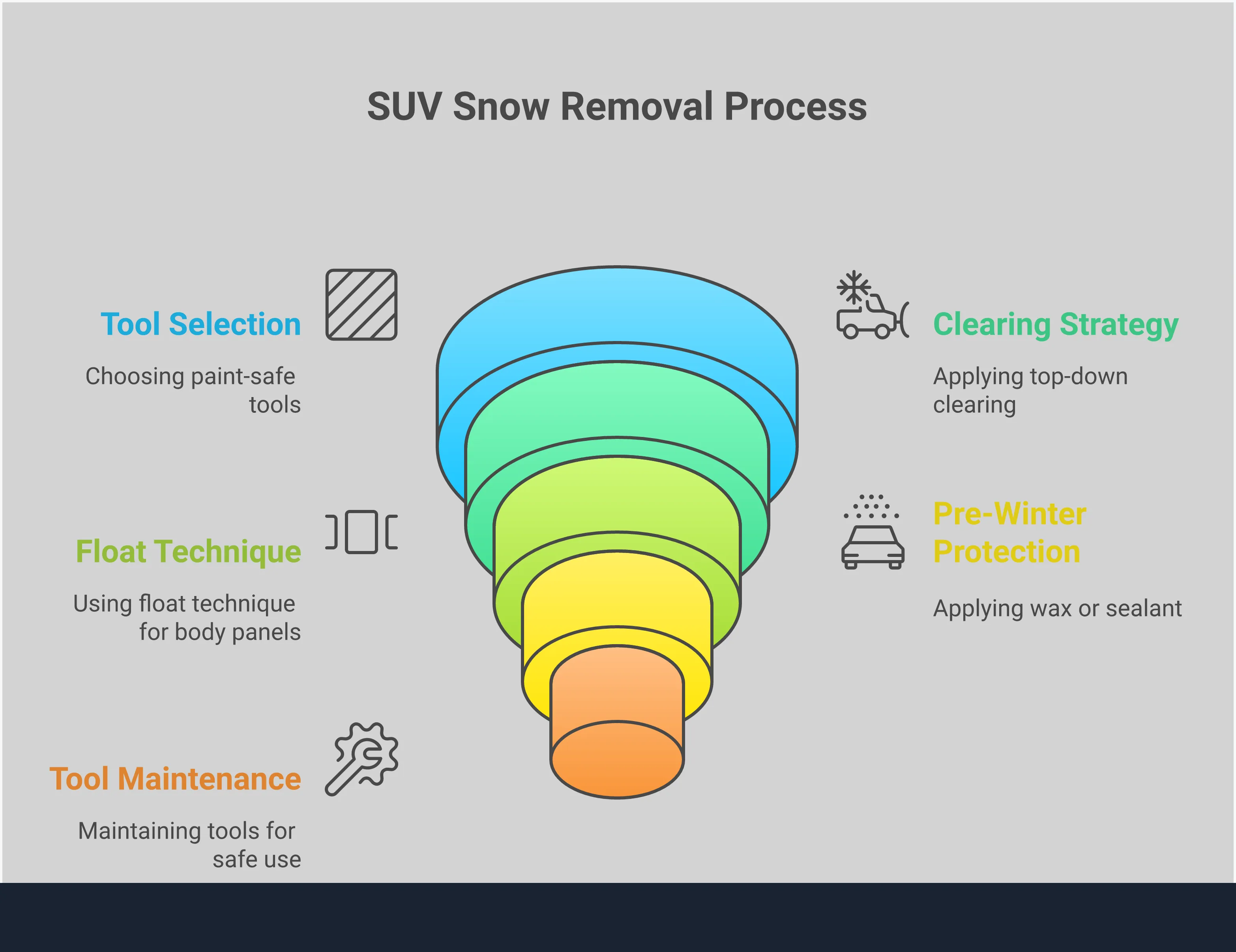
- Use the Right Tool for the Job: Stop gambling with your paint by using credit cards, stiff brooms, or cheap scrapers. A quality tool with a paint-friendly edge is your best defense against scratches, turning a risky chore into a safe and efficient task.
- Master the Right Technique: Protect your paint by working smarter, not harder. Always clear from the top down, push snow off surfaces instead of dragging it, and float your tool slightly above the paint to avoid grinding in abrasive dirt and salt.
- Protect Your Paint Before and After You Scrape: A layer of wax or sealant applied before the first storm creates a slick, protective barrier. After clearing snow, always wipe your tools clean to remove salt and debris, preventing them from scratching your glass and paint next time.
Get the Right Paint-Friendly Tools
Your SUV is an investment. Don’t destroy its finish with a cheap, flimsy scraper you grabbed at the gas station. The wrong tools turn snow and dirt into sandpaper, grinding tiny scratches into your paint that can lead to rust and costly repairs. Using your jacket sleeve or a credit card isn't a clever hack—it's a recipe for a trip to the auto body shop.
Getting the right gear isn’t just about protecting your paint; it’s about making the job faster and safer. The best tools clear snow and ice efficiently without forcing you to make a dozen passes or put your back into it. They’re built to last, so you’re not buying a new one every winter. Before the first storm hits, make sure you have the right equipment ready to go.
Soft Brushes & Snow Brooms
Stiff bristles are your paint’s worst enemy. A hard-bristled broom might seem effective, but it drags grit and ice crystals across your vehicle, leaving a web of fine scratches on your clear coat. Instead, opt for a tool with a soft foam head. These are designed to push snow off the surface without digging into the finish. They give you a way to clear large amounts of snow quickly and safely, protecting the long-term value and appearance of your car’s finish. Think of it as the difference between using a scouring pad and a soft sponge on a non-stick pan—one preserves the surface, the other ruins it.
Scrapers with a Paint-Friendly Edge
Not all scrapers are created equal. Most are made from brittle plastic that can easily chip, creating sharp edges that gouge your glass and paint. Worse, they can drag trapped debris across your vehicle’s surface. You need a scraper that’s tough on ice, with a paint-friendly edge for loose snow. The EDGE Snow + Ice Scraper was engineered for this exact purpose. It’s a smarter tool built to dominate winter.
Telescopic Handles to Reach the Roof
An SUV’s height presents a unique challenge. If you can’t reach the roof, you can’t clear it safely—and leaving a sheet of snow up there is a danger to you and other drivers. A tool with a long or telescopic handle is essential. It lets you clear the entire roof from a safe position on the ground, without having to stretch, climb on your vehicle’s running boards, or lean against the side panels. This prevents you from accidentally scratching the paint with a zipper on your coat and ensures you get the job done right. Proper reach is a non-negotiable part of any winter car safety routine.
Microfiber Tools for Extra Protection
If you’re serious about protecting your paint, microfiber is your best friend. For an extra layer of protection, you can wrap the head of your snow brush in a plush microfiber towel. This creates an incredibly soft barrier between the tool and your SUV’s finish, making it nearly impossible to cause scratches while sweeping away light, fluffy snow. While it’s not a solution for heavy, wet snow or ice, it’s a great pro-level trick for those who want to give their vehicle the ultimate white-glove treatment during winter clean-offs. It’s a simple hack used by many auto detailing experts.
Clear Your SUV the Right Way
Clearing a snow-covered SUV feels like a workout, but doing it right is about working smarter, not harder, to get on the road safely without damaging your vehicle. The wrong tool or technique can leave you with a scratched-up mess by the time spring rolls around. A proper clearing strategy protects your paint, ensures you have full visibility, and keeps you on the right side of the law. Forget hacking away at the ice—let’s cover the simple, effective steps to clear your SUV like a pro.
Start at the Top
Always work from the top down. That heavy blanket of snow on your roof needs to go first. If you clear your windows and then the roof, you’re just creating more work for yourself. More importantly, leaving snow on your roof is a major safety hazard. Once you hit the road, it can slide down onto your windshield, completely blinding you, or fly off and hit the car behind you. Many states have strict snow removal laws that come with hefty fines for leaving your vehicle covered, so clear it all off before you even think about starting the engine.
Sweep, Don't Scrape the Paint
Your SUV’s paint is more delicate than you think. Taking a stiff-bristled broom or your jacket sleeve to it is a guaranteed way to create fine scratches and swirl marks in the clear coat. The right tool makes all the difference. You want something that can push heavy snow without grinding dirt and debris into the finish. A foam brush or a scraper with a paint-friendly edge is designed to glide over the surface, removing snow efficiently while preventing paint scratches. Think of it as sweeping, not scraping—a gentle push is all you need for the painted surfaces.
Float Your Tools Above the Surface
When clearing the hood, trunk, and side panels, you don’t need to get every last flake. The goal is to remove the weight and bulk of the snow. A great technique is to "float" your tool, holding it about a half-inch above the paint's surface. This method pushes the deep snow off without your tool ever making contact with the car itself. The thin layer left behind is harmless and will blow away as soon as you start driving. This simple trick protects your paint from unnecessary contact and potential damage, especially from hidden ice or grit trapped in the snow.
Clear Glass & Mirrors First
After clearing the roof, your next priority should be total visibility. This means clearing every inch of glass—windshield, rear window, side windows, and mirrors. Don’t just carve out a tiny peephole to see through. Take the extra minute to scrape from edge to edge for a completely unobstructed view. While you’re at it, wipe the snow off your headlights, taillights, and turn signals. Being able to see is only half the battle; other drivers need to be able to see you, too. This is a non-negotiable step for safe winter driving.
Protect Your Paint Before the First Snowfall
The best defense is a good offense. Prepping your SUV’s paint before the first storm hits is the smartest way to prevent scratches all winter long. Think of it as creating a barrier between your clear coat and the elements. When snow and ice have a slick, protected surface to land on, they can’t bond as tightly, making removal faster and safer. A little prep work now saves you from costly paint correction later.
This isn’t just about aesthetics; it’s about preserving your vehicle’s value. Road salt, grime, and moisture are a paint job’s worst enemies, and a blanket of snow traps them against the surface. By taking a few simple steps before winter sets in, you ensure that when it’s time to clear your SUV, your tools can glide over the surface without grinding abrasive debris into the finish. This proactive approach makes every snow-clearing session—whether with a leaf blower or a high-performance scraper—significantly less risky for your paint.
Add a Layer of Wax
Applying a quality layer of wax is one of the easiest ways to shield your paint. A good car wax creates a hydrophobic barrier that repels water and makes it harder for ice to stick. This means snow slides off more easily instead of clinging to the surface. When you go to clear your SUV, you’ll find that the snow comes off in clean sheets rather than a stubborn, icy mess. It’s a simple step that not only protects your paint from scratches but also from the corrosive effects of road salt and winter grime, keeping your finish looking sharp all season.
Apply a Paint Sealant
For longer-lasting protection, consider a paint sealant. While wax offers a great shine, synthetic paint sealants are engineered to bond with your paint, creating a more durable and resilient shield that can last through the entire winter. This tough barrier is your best defense against the harsh realities of snow removal. It provides an ultra-slick surface that minimizes friction, allowing your tools to float just above the clear coat. This dramatically reduces the risk of micro-scratches and swirls, ensuring your SUV’s finish stays flawless even after the toughest storms. Think of it as armor for your paint job.
Wash Your Car Regularly
It might seem counterintuitive, but washing your SUV regularly during the winter is critical. Every time you drive, your vehicle collects a layer of dirt, salt, and road grime. If you try to remove snow from a dirty surface, you’re essentially dragging those abrasive particles across your finish—it’s like using sandpaper. A clean surface is a safe surface. Even a quick rinse at a touchless car wash helps remove the grit that causes the most damage. Keeping your SUV clean ensures that when you use a tool like The EDGE, it’s gliding over paint, not a layer of debris.
Paint-Scratching Mistakes to Avoid
Winter mornings are a race against the clock, and it’s tempting to take shortcuts when clearing your SUV. But grabbing the wrong tool or using a sloppy technique can turn your snow removal routine into a costly mistake. A few seconds saved isn't worth a trip to the auto body shop for paint correction. Your vehicle's clear coat is tough, but it's not invincible, and the wrong approach can easily create a network of fine scratches that dull your finish and can even lead to rust down the road.
Think of that layer of snow as a protective blanket hiding an abrasive secret: dirt, salt, and road grime. Every wrong move you make grinds that debris directly into your paint. Using stiff snow brushes, old brooms, or even your jacket sleeve can cause permanent damage. The key isn't to work harder, but smarter. It’s about recognizing that what seems harmless—like dragging heavy snow off the roof—is actually like using low-grit sandpaper on your car. These small scratches accumulate over time, making your paint look tired and old. Understanding the common pitfalls is the first step to keeping your SUV looking great all winter long. Let's break down the most frequent mistakes people make and how you can avoid them.
Using Too Much Force
You don’t need to muscle your way through snow and ice. In fact, trying to overpower a storm with brute force is one of the fastest ways to damage your SUV’s paint. Pushing down hard with a cheap, stiff-bristled brush or a flimsy scraper grinds any trapped dirt and debris directly into your clear coat. The goal is to let the tool do the work. A well-designed scraper with a sharp, effective edge shouldn't require you to lean into it. If you find yourself straining, you’re either using the wrong tool or the wrong technique. Remember, finesse beats force every time when it comes to protecting your vehicle's finish from expensive repairs.
Dragging Heavy Snow Across Paint
That thick blanket of snow on your SUV isn't as pure as it looks. It’s full of abrasive particles like dirt, dust, and pollutants it collected on its way down. When you drag that heavy, contaminated snow across the roof or hood, you’re essentially pulling a sheet of sandpaper over your paint. This action is a primary cause of "swirl marks" and fine scratches that are only visible in direct sunlight. Instead of dragging, you should be pushing. Use a snow broom or the wide blade of a tool like The EDGE to push the snow off in sheets, letting it fall away from the vehicle without making prolonged contact with the surface.
Using Your Sleeve (or a Credit Card)
We’ve all been there—running late, no scraper in sight. The temptation to use a jacket sleeve or a credit card is real, but it’s a terrible idea. Your coat’s fabric, especially on a winter jacket, is far more abrasive than you think, and zippers or buttons can cause deep gouges. A credit card is even worse; its hard plastic edge will absolutely scratch your glass and paint. Beyond the damage, these makeshift tools are incredibly inefficient. Failing to clear your entire vehicle isn't just lazy—it's dangerous. Snow flying off your roof can blind other drivers, and in many states, it can get you a hefty traffic ticket.
Scraping Over Dirt and Debris
Even with the best tool, you can cause damage if you’re not mindful of what’s underneath the snow. If your SUV was already covered in a layer of road salt and grime before the storm hit, that dirt is now trapped. Scraping aggressively over these areas is a recipe for disaster. This is where the quality of your tool really matters. A scraper with a poorly designed or damaged edge will catch on this debris and drag it across the paint. You need a tool with a smooth, paint-friendly edge that’s designed to glide over the surface. Always try to push snow off first before tackling any ice underneath to minimize contact with hidden grime.
Other Ways to Clear Snow Safely
While a great scraper is your best defense against winter, different types of snow call for different tactics. Having a few extra techniques in your back pocket can save time and protect your SUV’s paint. These methods work well for minor snowfalls or as a first step before you grab your main tool for heavier work. Think of them as smart, situational strategies to make your snow-clearing routine faster and safer.
Use a Leaf Blower for Light Snow
When you wake up to a few inches of light, fluffy snow, your leaf blower can be a surprisingly effective tool. It allows you to clear your SUV without ever touching the surface. Just make sure the blower’s nozzle is clean before you start so you don’t blast dirt onto your paint. This method is perfect for a quick clear-off, but it’s only effective on dry, powdery snow. For anything wet, heavy, or icy, you’ll need a tool with more muscle.
Use Your Hands for Delicate Spots
For the final cleanup or for tight spaces around mirrors and door handles, sometimes your own hands are the best tools. Put on a pair of soft, thick gloves and gently brush away the remaining snow. This gives you the precision to clear sensitive areas without risking damage from a larger tool. Just be mindful of your winter coat—avoid leaning against the car if your jacket has sharp zippers or buttons that could scratch the paint.
Let Your Car Do the Work
You can clear the bulk of the snow without scraping directly on the paint. Hold your scraper or brush about an inch above the surface of your SUV’s roof and hood. Push the top layers of snow off, leaving a thin, protective base layer behind. Most of this remaining snow will safely blow away once you start driving. The key is to ensure all your windows and lights are completely clear for full visibility. Many states have laws that require you to clear your entire vehicle, so this trick is best for body panels, not glass.
Foam-Tipped Plows for Heavy Snow
If you’re buried under a foot of heavy, wet snow, a foam-tipped snow plow or broom can help you move large amounts at once. These tools are designed to push snow without putting too much pressure on your vehicle’s surface. The best way to use them is to gently push off the top layers, leaving about an inch of snow directly on the paint. This buffer prevents the foam head from grinding any hidden dirt or debris into your clear coat.
Tackling the Toughest Spots on Your SUV
SUVs are built to handle winter, but their size can make clearing snow a serious workout. The roof feels like it’s a mile away, heavy snow can feel like concrete, and the side panels are magnets for slush and ice. Trying to clear these spots with a flimsy scraper is a recipe for frustration and potential damage. But with the right approach, you can conquer even the most awkward areas of your vehicle quickly and safely, without leaving a single scratch. It’s not about using more muscle; it’s about using a smarter tool and a better technique.
Reaching the Roof Safely
Forget climbing on your running boards or doing a risky balancing act. The safest way to clear your SUV’s roof is from the ground with a tool that gives you proper reach. Start on one side and push the snow across and off the other side, away from your body. This keeps you dry and stable. Once one side is clear, move to the other and repeat. Clearing your roof isn’t just for looks; in many places, it’s the law. Driving with a snow-covered roof can create a massive hazard for drivers behind you, and you could face hefty fines. Taking a few extra moments to clear it completely is a non-negotiable part of safe winter driving.
Clearing Heavy Snow Without Dents
When your SUV is buried under a foot of wet, heavy snow, don’t just start hacking away at it. That’s how you get dents and deep scratches. Instead, think in layers. Use a wide, sturdy tool to push off the top layer of snow, leaving about an inch of it behind. This removes the weight without your tool ever making contact with the paint. Once the bulk is gone, you can gently sweep away the remaining light layer. A tool with a broad, flat surface is perfect for this because it distributes pressure evenly, letting you move huge amounts of snow without putting your vehicle’s body panels at risk. Let the tool do the work, not your back.
Protecting Side Panels and Running Boards
The snow and ice that build up on your side panels and running boards can be just as dangerous as the snow on your roof. As it melts or breaks off, it can fly into adjacent lanes, creating a hazard for other drivers. Before winter even hits, do your future self a favor and get a good coat of wax on your SUV. A quality wax or paint sealant creates a slick barrier that makes snow and ice slide right off. It also adds a crucial layer of protection against salt, sand, and grime. When clearing these areas, use a gentle sweeping motion to avoid grinding trapped debris into your paint.
Tools That Should Never Touch Your Car
When you’re in a hurry, it’s tempting to grab the closest object to clear your SUV. But using the wrong tool can turn a five-minute task into a costly trip to the auto body shop. Some items are guaranteed to damage your vehicle’s finish, leaving behind scratches, swirls, and gouges that ruin your paint job. Before you reach for a makeshift solution, make sure you know which tools are off-limits. Your SUV’s paint will thank you.
Metal Shovels and Scrapers
This one should be obvious, but it needs to be said: metal has no place near your vehicle’s paint. A metal shovel or scraper will do more than just remove snow—it will dig into your clear coat, gouge your paint, and potentially even dent the body panels. The damage is immediate and often deep enough to require professional repair. Save the metal tools for your driveway and sidewalk. For your SUV, you need a tool with a purpose-built, paint-friendly edge for loose snow, and hard blades that stay on the glass.
Stiff-Bristled Brooms
A household broom might seem like a good way to push large amounts of snow off your roof, but those stiff bristles are a nightmare for your paint. Whether they’re made of straw or nylon, the bristles act like coarse sandpaper, creating thousands of tiny micro-scratches. Over time, these scratches will dull your SUV’s finish and make it look faded. Even a standard car snow brush can be too harsh. The key is to find a way to remove snow gently, which means leaving the abrasive brooms in the closet.
Credit Cards and Kitchen Utensils
We’ve all seen someone in a parking lot frantically hacking at an icy windshield with a credit card. It’s a move born of desperation, and it rarely ends well. Not only are you likely to snap your card, but its hard plastic edge can easily scratch glass. The same goes for kitchen spatulas or other household items. These tools weren't designed for clearing ice and can cause unexpected damage. A proper scraper is designed to apply pressure evenly across a surface, something a credit card or spatula simply can’t do.
Your Jacket Sleeve
Wiping away light snow with your arm might seem harmless, but it’s another easy way to scratch your paint. Your jacket—whether it’s a puffy coat or a technical shell—has zippers, buttons, and seams that can drag across the surface. Worse, the fabric itself can pick up dirt and debris already on your car and grind it into the clear coat as you wipe. It’s an ineffective method that puts your paint at risk for no reason. Keep your jacket on and use a tool designed for the job.
Keep Your Tools in Top Shape
Your snow scraper is the unsung hero of winter mornings, but even heroes need a little backup. Keeping your tools in top shape isn't just about making them last longer—it's about protecting your SUV from the very damage you're trying to prevent. A dirty, chipped, or worn-out tool can turn a simple task like clearing ice into a costly mistake, leaving behind a network of fine scratches on your glass and paint. Think of tool maintenance as a non-negotiable part of your winter prep routine. It’s a few minutes of effort that pays off every time you face a frozen windshield. A well-maintained tool works faster, performs more safely, and won't betray you by causing damage. That’s why we built The EDGE to be incredibly durable, but its longevity is maximized with proper care. We stand behind it with a 5-year performance guarantee because we know that a quality tool, treated right, is an investment in your vehicle’s health and your own peace of mind. These simple habits will ensure your gear is always ready for battle.
Clean Tools After Every Use
This might be the most important—and most overlooked—step. After clearing snow and ice, your scraper’s edge can pick up salt, sand, and other road debris. If you don't wipe it down, that grit acts like sandpaper the next time you use it, grinding fine scratches into your glass and paint. A quick wipe with a dry cloth is all it takes to remove any lingering debris. This simple habit is your first line of defense against the kind of micro-scratches that can lead to expensive repairs and a dull finish over time.
Stow Them Properly
How you stow your tools matters just as much as how you use them. Tossing a scraper onto a dirty floor mat or into a trunk full of loose items is a good way to chip or damage its edge. A compromised edge won’t clear ice effectively and increases the risk of scratching your vehicle. Look for tools designed for smart stowage. The EDGE, for example, lays flat, so you can easily slide it under a seat or in a trunk organizer where it stays clean and protected. Proper stowage keeps your tool in prime condition and ensures it’s always accessible when you need it most.
Know When to Replace Old Gear
That ten-year-old plastic scraper with the chipped edge and brittle handle is a liability. Worn-out tools are not only frustrating to use but are also a direct threat to your vehicle’s finish. Stiff, frayed bristles on an old snow brush can easily scratch your car's clear coat, and a damaged scraper blade can do even more harm. Regularly inspect your gear for signs of wear and tear. If a tool is cracked, warped, or damaged, it’s time to replace it. Investing in a durable, long-lasting tool from the start saves you the hassle for years to come.
Related Articles
- Best Tool to Remove Snow From Car – The EDGE
- 5 Best Ice Scrapers for Car Paint & Rubber – The EDGE
- 25+ Costly Winter Car Care Mistakes to Avoid – The EDGE
- How to Maintain an Ice Scraper & Make It Last – The EDGE
- The Ultimate Guide to Winter Car Care – The EDGE
Frequently Asked Questions
Why can't I just use a regular snow brush on my SUV's paint? Think of your car's clear coat like the screen on your phone—it scratches easier than you'd expect. The stiff bristles on a standard snow brush trap dirt, salt, and tiny ice crystals. When you sweep that across your paint, you're essentially grinding those abrasive particles into the finish, creating a web of fine scratches that dulls your paint over time.
What exactly makes a scraper "paint-friendly"? A paint-friendly scraper is all about smart design and material. It has a smooth, durable edge that’s engineered to glide over surfaces without gouging them. Unlike cheap plastic that can chip and create sharp points, a quality edge is built to be tough on ice but gentle on your vehicle, ensuring it removes frozen stuff without dragging debris into your paint or glass.
If I only have time for one thing, what's the best way to protect my paint when clearing snow? The single most effective technique is to push, not drag. When clearing snow off your hood or roof, always push it in a single direction until it falls off the edge of the vehicle. Dragging snow back and forth across the paint is what causes the most damage. For an extra level of safety, try to "float" your tool about a half-inch above the surface to remove the bulk of the snow without ever touching the paint itself.
Is it safe to clear the roof by pushing all the snow off one side? Yes, that’s the safest and most efficient way to do it. Stand on one side of your SUV and push the snow completely across and off the other side. This method ensures you stay on solid ground instead of climbing on running boards, and it keeps the falling snow away from you. Once you finish one half, simply walk around and repeat the process from the other side.
Do I really need to clean my scraper after using it? Absolutely. After a single use, your scraper's edge is covered in road salt, sand, and grime. If you use it again without wiping it down, you're just rubbing that abrasive gunk all over your glass and paint. A quick wipe with a cloth after each use is the easiest thing you can do to prevent scratches and keep your tool working effectively all winter.