


How to Winterize an Electric Car for Winter
Andrew MelamedWinter asks more of an electric car before the wheels even turn. Cold temperatures can reduce driving range, while cabin heat, defrosters, and other comfort features draw additional battery power. Snow and ice also reduce tire grip and visibility, making a complete pre-drive check essential.
Ready to upgrade your winter vehicle prep? The EDGE has you covered.
Learning how to winterize an electric car means preparing three connected systems: protect available range with thoughtful charging and trip planning. Confirm tires and safety equipment are ready, and clear every window, light, mirror, sensor, and roof surface before driving. Always follow your vehicle manufacturer's manual for model-specific battery and charging guidance.
That approach turns winter preparation into a repeatable routine instead of a last-minute scrape. Start by separating battery-conscious steps from the broader readiness checks that help you see, steer, and travel safely in changing conditions.
How to winterize an electric car before winter driving
Winterizing an electric car means preparing the systems and equipment that cold, snow, and ice affect most. It is more than checking a windshield-washer reservoir or tossing an ice scraper in the trunk. A complete plan considers battery range, charging access, cabin heating, tire grip, visibility, and safe snow removal.
In practical terms, learning how to winterize an electric car means planning for changed energy use before the temperature drops. Freezing weather can reduce EV range, while cabin heat, heated seats, window defrosters, and heater fans use additional battery power. Cold-weather charging may also take longer, and some vehicles can warm the cabin and battery while still plugged in through pre-conditioning. Whether your vehicle offers those features depends on the manufacturer's instructions.
EV winterization combines battery-conscious planning with ordinary winter readiness. Check your manual before changing charging or storage habits, allow for reduced cold-weather range, prepare for longer charging times. Inspect tire pressure and traction, and clear every window, light, mirror, roof, and sensor before driving.
The battery and charging setup are only one part of the job. Cold temperatures can lower tire pressure and increase rolling resistance, while snow or ice reduces tire grip. That affects how the car moves, stops, and uses energy. Build extra margin into travel plans rather than assuming the range estimate will match a mild-weather trip.
Visibility is equally important. Snow and ice can cover cameras, sensors, lights, mirrors, and the roof, then slide forward when the vehicle moves. Clear them all before driving. Do not force a frozen charging connector, door, wiper, or sensor. Use the method recommended for your vehicle, and follow the manual for model-specific charging, tire, battery, and storage guidance.
For the general vehicle items, use this winter car care checklist. When ice is the immediate problem, these safe snow removal techniques provide a useful companion to EV-specific preparation. The goal is simple: protect available battery energy, preserve traction, and start every trip with a clear view.
How should you prepare the battery and charging setup?
Cold weather can reduce EV range, increase charging time, and make cabin comfort more energy-intensive. Plan for those variables before leaving: precondition while plugged in when your vehicle supports it. Allow extra charging time, protect the connector from moisture and ice, and use the owner's manual for every model-specific instruction.
Start with range planning, not guesswork. Freezing temperatures can significantly reduce electric-car range. The Department of Energy explains that cold weather can reduce an EV's range, but the effect varies by vehicle and conditions. In a referenced 20°F mixed-driving test, the DOE Vehicle Technologies Office Program Record reports an approximately 41% reduction in range. That result is a test condition, not a universal prediction. Your vehicle, tires, speed, weather, heating settings, and route all matter. Build a sensible margin into winter trips and identify a reliable charging option before the battery gets low.
Charging may also take longer in the cold. If your EV has a preconditioning feature, schedule it while the car remains connected to power. Some vehicles can warm the cabin and battery while plugged in, reducing the amount of battery energy needed before departure. The feature, timing, and operating conditions vary by model, so confirm the correct procedure in your manual rather than assuming every EV behaves the same way.
Balance cabin comfort with available range
Cabin heat draws energy from an EV battery during extreme cold. Heated seats generally use less energy than warming the entire cabin, but comfort and visibility come first. Use the defroster whenever needed to maintain a clear view, then adjust other settings thoughtfully. The DOE notes that heated seats, window defrosters, and heater fans all use additional power. Smooth acceleration and moderate trip planning can help preserve the range you have.
For fast charging, plan around the actual drive rather than automatically waiting for a full battery. The DOE explains that charging power commonly tapers between 80% and 100%, so the final portion can take longer. An 80% charge may suit immediate driving needs in many situations, but the right target depends on your route, weather, access to chargers, and the vehicle manufacturer's guidance. Read the full Department of Energy winterizing guidance for additional planning context.
Before plugging in, inspect the charge port, connector, and cable for snow, ice, standing water, or visible damage. Do not force a frozen connection or improvise a repair. Keep the connector stored exactly as the manufacturer recommends when it is not in use. The DOE specifically advises following those manufacturer recommendations. If the port will not open, the connector will not seat, or charging behaves unexpectedly, stop and consult the manual or qualified service support.
Tires, visibility, and winter readiness checks
Before you drive, check the parts that control grip, what you can see, and how confidently you can follow your route. Cold temperatures lower tire pressure and increase rolling resistance, while snow and ice reduce tire grip. A quick walk-around, a clean field of view, and a realistic route plan can help you prepare without guessing. Use your vehicle manual and local road guidance for model-specific tire, sensor, and winter-driving instructions.
| Check | What to inspect | Why it matters |
|---|---|---|
| Tire pressure | Check pressure when the tires are cold, using the vehicle maker's recommended setting. | Cold lowers pressure and can increase rolling resistance. Read the Department of Energy's winterizing guidance. |
| Tire suitability | Confirm that your winter or all-weather tires match local conditions and your vehicle guidance. | Snow- and ice-covered roads reduce tire grip. Choose equipment for the conditions you actually face. |
| Traction and speed | Assess road conditions before leaving and allow more time for a controlled drive. | Safe speeds on slick roads may be lower than normal. Avoid treating normal dry-road speed as a winter default. |
| Washer fluid | Top up with fluid rated for the temperatures in your area. | A clean windshield supports visibility. Follow the product label and vehicle guidance. |
| Lights and mirrors | Clear snow and ice from headlights, taillights, turn signals, mirrors, and camera views. | Clean surfaces help preserve the information you need around the vehicle. |
| Windows and sensors | Clear every window, roof, and sensor area. Do not force frozen components. | Uncleared snow or ice can obstruct sightlines or interfere with sensor functions. |
| Route readiness | Review weather, road conditions, charging access, and likely delays before a longer trip. | Cold weather can reduce EV range, and combining trips or parking in a warmer location can reduce cold starts. |
Keep the check practical. If roads are slick, reduce speed and increase following distance according to local guidance. If visibility is poor, stop and clear the vehicle safely rather than relying on partially cleared glass, lights, or mirrors. A broad, paint-friendly scraper such as The EDGE can help with exterior snow and ice preparation. Its 18-by-14-inch surface is designed to clear more area with fewer swipes than a traditional small scraper, while its wiper de-icing V ports address ice buildup on blades. Product details and use guidance are available on the official product page.
How do you remove snow and ice from an electric car safely?
Safe clearing protects visibility first. Before moving, remove loose snow and ice from the roof, windows, lights, mirrors, sensors, and wipers. Work gently around frozen components, follow your vehicle manufacturer's instructions, and never treat a scraper as a substitute for EV charging or battery guidance.
A careful clearing sequence helps prevent rushed decisions, blocked cameras, and avoidable damage. It also makes your winter-ready routine faster and more repeatable.
- Power down as appropriate. Put the EV in park and follow the owner's manual before clearing around charging equipment, powered doors, cameras, or other vehicle-specific systems. If the vehicle is connected to a charger, use the manufacturer's instructions for the connector and charging setup. Do not force a frozen charge-port door or cable.
- Remove loose snow from the highest surfaces first. Clear the roof, hood, trunk, and upper windows so snow does not slide back over the glass when you drive. Use a soft brush or a scraper designed for vehicle surfaces. Push snow away from the car rather than grinding packed debris across the paint.
- Protect the glass and finish. Break up ice with controlled pressure. Keep grit out of the contact area, and do not use hot water on frozen glass. A paint-friendly edge, such as the Rubber Snow Plow on The EDGE, takes loose snow off any vehicle surface; keep hard blades on the glass.
- Clear lights, mirrors, and sensors. Remove snow and ice from every lamp, mirror, camera, and sensor area you can identify. These surfaces support visibility and vehicle awareness. If a component remains frozen, use the vehicle's recommended defrosting method instead of forcing it.
- Free the wipers carefully. Confirm the blades are not bonded to the windshield before lifting or operating them. Clear ice from the blade and its contact area without yanking. The EDGE product page documents three dedicated wiper-blade de-icing crevices, called V ports, for removing ice accumulation from wiper blades.
- Finish with a visibility check. Confirm that the windshield, side windows, mirrors, lights, roof, plate area, and sensor surfaces are clear. Check that the wipers move normally and that no loose snow can fall onto the glass or roadway. If visibility is still compromised, keep clearing before selecting drive.
Elevate your winter kit with a paint-friendly scraper built for clear visibility.
The EDGE measures 18 inches wide by 14 inches long, giving it a larger clearing surface than a traditional small scraper. Its handle-free rectangular design stows flat on a vehicle floor, back seat, or trunk, so it can stay ready without taking up much space in an EV winter kit.
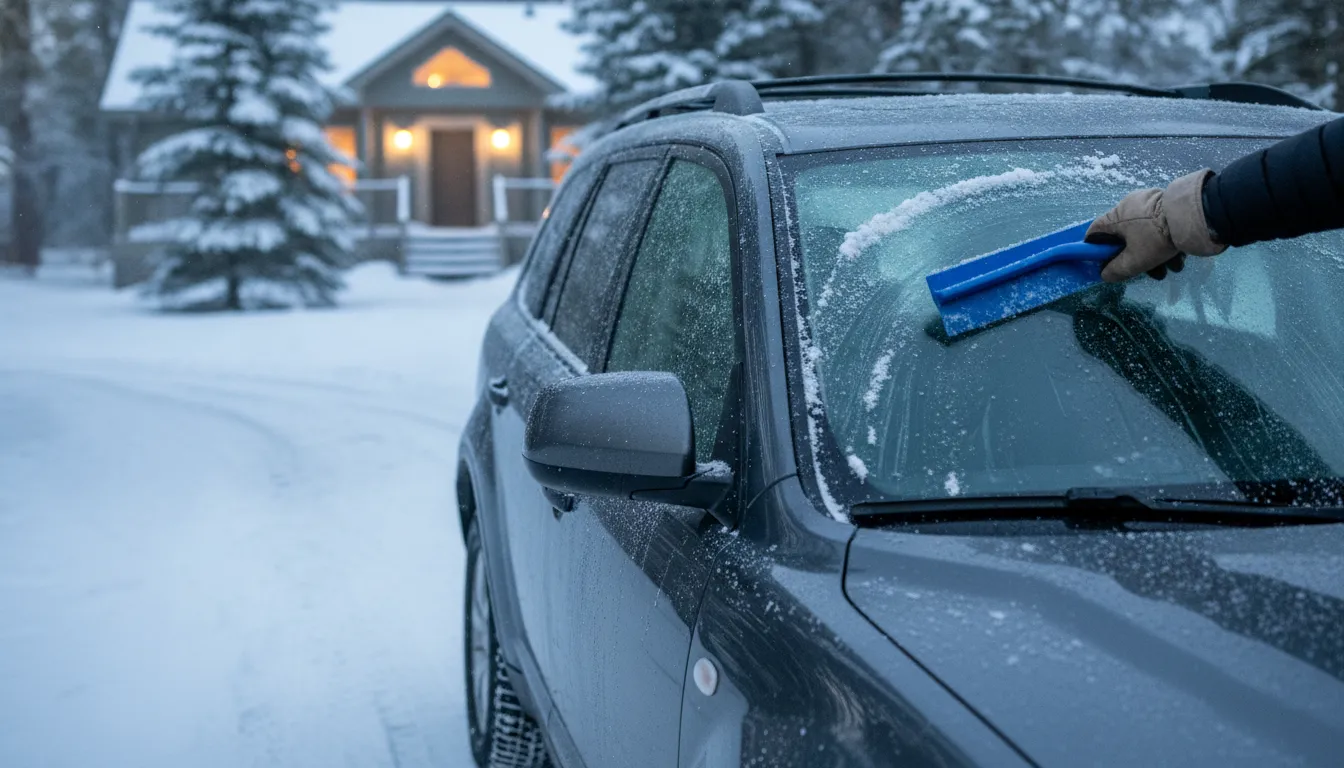
For more detail on protecting vehicle finish, review these safe snow removal techniques. When the job is done, visibility is the standard: clear completely, inspect carefully, then go.
A simple EV winter checklist for daily driving
Winter readiness works best as a repeatable pre-drive habit. This quick checklist covers the details that can affect range, traction, visibility, and comfort without turning every commute into a project. Keep your vehicle manual handy for model-specific charging, tire, and battery instructions.
- Plan your plug-in time. If your EV offers preconditioning, use it while the vehicle is connected, following the instructions in your manual. Some EVs can warm the cabin and battery while plugged in, and cold-weather charging may take longer. Review the DOE winterizing guidance.
- Check charge against the route. Do not rely on a warm-weather range assumption. Freezing temperatures can reduce EV range, while cabin heating and defrosting use additional battery energy. Before leaving, confirm the charge level, destination, available charging stops, and a sensible margin for traffic or detours. For a short local trip, your normal routine may be enough. For a longer drive, plan deliberately.
- Check tire pressure when the tires are cold. Cold temperatures lower tire pressure and increase rolling resistance. Use the pressure listed by the vehicle manufacturer, not a guess based on the tire sidewall. Inspect tread and look for visible damage. Snow and ice reduce grip, so lower your speed when road conditions require it.
- Clear every visibility surface. Remove snow and ice from the windshield, side windows, mirrors, lights, roof, cameras, and sensors. Never drive with a small cleared patch. Do not force frozen wipers, mirrors, charging doors, or other components. Let them loosen according to the vehicle maker's guidance.
- Build route margin. Leave extra time for slower traffic, slick roads, charging delays, and detours. Combining errands can reduce the number of cold starts, and parking in a warmer location can raise the vehicle's initial cabin temperature.
- Carry a compact emergency setup. Keep a scraper, gloves, reflective gear, a phone charger, and any supplies recommended for your region in the vehicle. Store the charging connector exactly as the manufacturer recommends when it is not in use.
- Finish with a safe clearing pass. Use a paint-friendly tool and controlled pressure on frozen surfaces. The EDGE measures 18 by 14 inches, clears a broad area with fewer swipes than a traditional small scraper, and includes a Wiper Blade Clearing Groove for de-icing wiper blades. See The EDGE.
Frequently Asked Questions
How cold is too cold for an electric vehicle?
There is no single temperature cutoff for every EV. Freezing weather can reduce battery range, and cabin heating adds energy demand. Plan extra charging margin and check the estimated range before leaving. Follow the manufacturer's cold-weather guidance. The U.S. Department of Energy explains that cold weather can reduce EV range and recommends planning around vehicle-specific conditions: DOE winterizing guidance.
Can you leave an electric car outside in the winter?
Yes. Outdoor parking is generally practical when you follow the vehicle maker's instructions for charging, battery storage, and connector care. Clear snow and ice from the windows, mirrors, lights, roof, and sensors before driving. If possible, parking in a warmer location can raise the vehicle's initial cabin temperature.
Should I plug in my EV every night in winter?
Use your normal charging plan, adjusted for the extra energy winter driving and heating may require. If your EV supports preconditioning while plugged in, scheduling it before departure can warm the cabin and battery using the connected power source. Charging may take longer in cold weather, so allow more time and follow the manual for connector handling.
Do electric cars struggle to start in cold weather?
Electric cars do not need a gasoline-style engine warm-up, but cold temperatures can affect available range, charging time, and cabin comfort. Give yourself more range margin, drive smoothly, confirm tire pressure, and remove all snow and ice before moving. Never force a frozen charging connector, door, wiper, or sensor. Use the manufacturer's approved procedure instead.
Ready to simplify your winter vehicle prep?
Clear visibility is one practical part of a safer, simpler cold-weather routine. The EDGE helps you remove snow and ice from key exterior surfaces, and it stows flat, so it is ready when winter weather hits. Get started with The EDGE for easier visibility clearing.