


Classic Car Winter Storage Tips for a Safer Spring
Andrew MelamedA classic car does not need a climate-controlled showroom to make it through winter, but it does need a deliberate storage plan. The biggest threats are usually moisture, a neglected battery, aging fuel, tire stress, and a rushed first drive in spring.
Ready to upgrade your winter vehicle prep? The EDGE has you covered.
The most useful classic car winter storage tips start with choosing the driest, most protected space available. Then prepare the battery, fuel, tires, cover, and ventilation before the car sits. A dry unheated garage can work well. Outdoor parking demands extra caution because dampness can reach hidden areas even under a cover.
Start with the storage environment itself. The right location shapes every decision that follows, from cover selection and airflow to moisture control and the inspection you will perform when driving season returns.
What Is the Best Place to Store a Classic Car for Winter?
Best answer: choose a dry, enclosed garage whenever possible. It does not have to be heated, but it should limit dampness, allow reasonable airflow, and keep the car away from snow, standing water, and wind-driven moisture. A fitted cover still matters, especially where active air filtration is not available.
A dry, unheated garage is usually a stronger option than outdoor parking because it reduces direct exposure to precipitation and winter moisture. However, indoor storage is not automatically safe. Some flooring and storage surfaces can trap humidity and allow it to circulate beneath the vehicle, so inspect the floor and watch for condensation. These practical points come from Hagerty's seasonal-storage guidance and classic-car storage advice from Chapman University.
| Storage location | Advantages | Risks and precautions |
|---|---|---|
| Dry, enclosed garage | Limits snow, rain, wind, and dampness. Heating is not essential when the space stays dry. | Humidity can still collect below the car. Use a suitable cover and check ventilation and floor conditions. |
| Professional indoor storage | May provide a more controlled environment and dedicated space. | Confirm the facility's moisture-control, access, cover, and inspection practices before committing. |
| Outdoor parking | Accessible and often less expensive than indoor options. | A cover does not eliminate dampness. Moisture can gather below the vehicle and reach hard-to-protect areas. |
If outdoor storage is your only realistic choice, treat the cover as one layer of protection, not a complete storage solution. Choose a cover designed for the environment. Keep the car off wet or poorly draining ground where practical, and inspect for moisture rather than assuming the interior is dry. Do not seal the vehicle so tightly that trapped condensation has nowhere to go.
Storage length also changes the decision. A roughly three-month winter period can be manageable with proper preparation, but fuel, tires, and battery care still need attention. Longer storage raises more serious preservation concerns, so owners should consider professional advice and a more deliberate maintenance plan. For the broader preparation sequence, use this winter car care checklist.
Clean and Prep the Car Before Storage
Storage starts with a clean, dry baseline. Wash the exterior, dry it completely, clear the cabin, and document the car's condition before you cover it. A careful handoff to storage makes spring inspection easier and helps you distinguish old blemishes from anything that appears later.
Before choosing fluids or maintenance intervals, check the owner's manual and account for the car's age, engine, fuel system, and storage duration. General winter guidance is not universal for every classic. If the manual is unavailable or the car has unusual systems, ask a qualified technician before making changes.
- Wash and dry the exterior. Remove road film, salt residue, mud, and other debris. Pay attention to seams, trim, wheel wells, and the underside where moisture can linger. Let the car dry fully before applying a cover or moving it into storage.
- Clean the cabin. Vacuum upholstery, carpets, mats, and the trunk. Remove food, paper, and anything that could attract pests or hold moisture. A thorough interior cleaning is included in established classic-car storage guidance, along with clearing debris from the air-intake area.
- Clear the air intake and drainage areas. Remove dead leaves, seeds, and loose debris from the air-intake area. Check visible drains and openings without forcing tools into them. If you find standing water, blocked passages, or signs of nesting, resolve the issue before covering the vehicle.
- Record the starting condition. Photograph each side of the car, the wheels, interior, odometer, paint flaws, and any existing leaks or warning lights. Write down the date, fuel level, tire readings, battery status, and maintenance that was recently completed. These notes create a useful spring comparison.
- Review oil and filter timing. One source recommends following the severe-service oil and filter schedule in the owner's manual during cold-weather preparation. Another storage guide says an oil change may help remove acidic residues when regular oil is used. Treat both as prompts to check your manual, not as a universal prescription. Read the winter maintenance guidance and confirm the correct specification for your car.
- Make a cautious fuel decision. Fuel plans depend on the tank, fuel type, storage length, and manufacturer guidance. One storage reference discusses filling the tank and using a gasoline conditioner, then running the engine long enough for it to circulate through the fuel system. Do not add a product or run the engine solely for a brief start-stop cycle without confirming the procedure for your vehicle. A start-stop routine can do more harm than good when it does not include meaningful driving.
Finish by noting exactly what you changed and where you stored the keys, manual, charger, and photos. That small record turns winter preparation into a repeatable process instead of a memory test.
How Should You Handle Fuel and Battery Care?
Fuel and battery decisions should match the length of storage, the condition of the car, and the instructions for its specific engine and electrical system. For a typical winter pause, a charged battery and a deliberate fuel plan can prevent avoidable spring problems. Longer storage deserves more caution, especially with older tanks, wiring, and charging equipment.
For a storage period of roughly three months, the battery is usually manageable when it remains charged. But gasoline can deteriorate and tires may develop flat spots if the car sits substantially longer. Storage closer to six months places more stress on the vehicle and should not be treated like a short seasonal break. If the car will sit for years, risks expand to metal fuel-tank rust, deteriorating brake or clutch hydraulics, and piston rings sticking to cylinder walls. Hagerty's storage guidance offers useful context for those different time horizons.
Plan the fuel before you park
Fuel preparation depends on the vehicle and the storage period. One established storage approach is to fill the tank and add a compatible gasoline conditioner. Then run the engine long enough for the conditioner to circulate through the fuel system. Do not assume every classic car, fuel system, or additive follows the same procedure. Confirm compatibility, dosage, and circulation instructions with the owner's manual or a qualified technician before proceeding.
Avoid repeated brief starts simply to hear the engine run. Starting and stopping without meaningful driving can do more harm than good, particularly when the engine does not reach normal operating conditions. If you cannot drive the car safely or long enough to follow the manufacturer's guidance, leave it stored and ask a technician about the best preservation routine.
Choose battery disconnection or a charger
Cold batteries deliver less current, so a marginal battery can become a spring-starting problem. Before storage, inspect the battery and terminals. Corrosion can make a vehicle difficult to start, and white or green buildup should be addressed safely using the vehicle's service guidance. A battery check can also provide useful information; the University of Missouri cites at least 12.5 volts across the terminals as a benchmark in its winter-care guidance.
Two common storage options are disconnecting the battery cables or leaving the battery connected to a small maintenance charger. Neither option is universal. Disconnecting may affect clocks, radios, alarms, electronic memory, or other equipment. A charger must be approved for the battery type and installed according to its instructions, with safe power and ventilation. When uncertain, defer to the owner's manual or a technician rather than guessing at polarity, charge rate, or connection points.
Document what you disconnected and where each cable belongs. That small record makes spring reassembly safer and helps you spot an issue before the first start.
Tires, Brakes, and Underbody Protection
Storage summary: Tire pressure, brake condition, and floor moisture deserve attention before a classic car sits for the season. Cold air lowers tire pressure, while damp storage can encourage corrosion beneath the vehicle. Use the owner's manual for pressure guidance, keep the car on a dry surface, and arrange a professional inspection when the brakes, tires, or underbody raise questions.
Cold temperatures reduce tire air pressure, so check the tires at the temperature and conditions recommended by the manufacturer. Set pressure according to the vehicle owner's manual, not a generic internet number. The University of Missouri Extension guidance also cautions against inflating beyond the maximum pressure printed on the tire sidewall. That sidewall figure is a limit, not an automatic storage target.
Inspect the tread, sidewalls, valve stems, and visible aging before parking the car. If a tire is cracked, damaged, losing air, or already close to replacement, storage is not the time to ignore it. Longer storage can also contribute to flat spots. A short winter pause may be manageable, but a vehicle sitting for months should be checked periodically and evaluated against the tire maker's and vehicle maker's guidance. If you are unsure whether the tires are safe to support the car, ask a qualified tire professional.
Do not park over a developing brake problem
Look for leaks, damaged lines, unusual wear, or signs that a wheel is not releasing cleanly. Moisture during outdoor storage can contribute to rust on brakes and other components, according to classic-car storage guidance. A surface-level check cannot confirm the condition of hidden hardware, calipers, wheel cylinders, or aging hydraulic components. If the pedal feels soft, the car pulls, a wheel is hot after driving, or braking behavior has changed, have the system inspected before storage and again before the first spring drive.
Underbody protection starts with a clean, dry parking area. Some surfaces can trap humidity and allow it to circulate beneath the vehicle, creating a damp environment around suspension parts, fasteners, exhaust components, and brake hardware. Avoid storing a wet car on a surface that stays damp. After washing or driving in precipitation, allow the underside and wheel areas to dry fully before covering the vehicle. A professional inspection is wise for cars with fresh rust, fluid residue, long storage intervals, or a history of restoration work.
Covers and Ventilation Matter
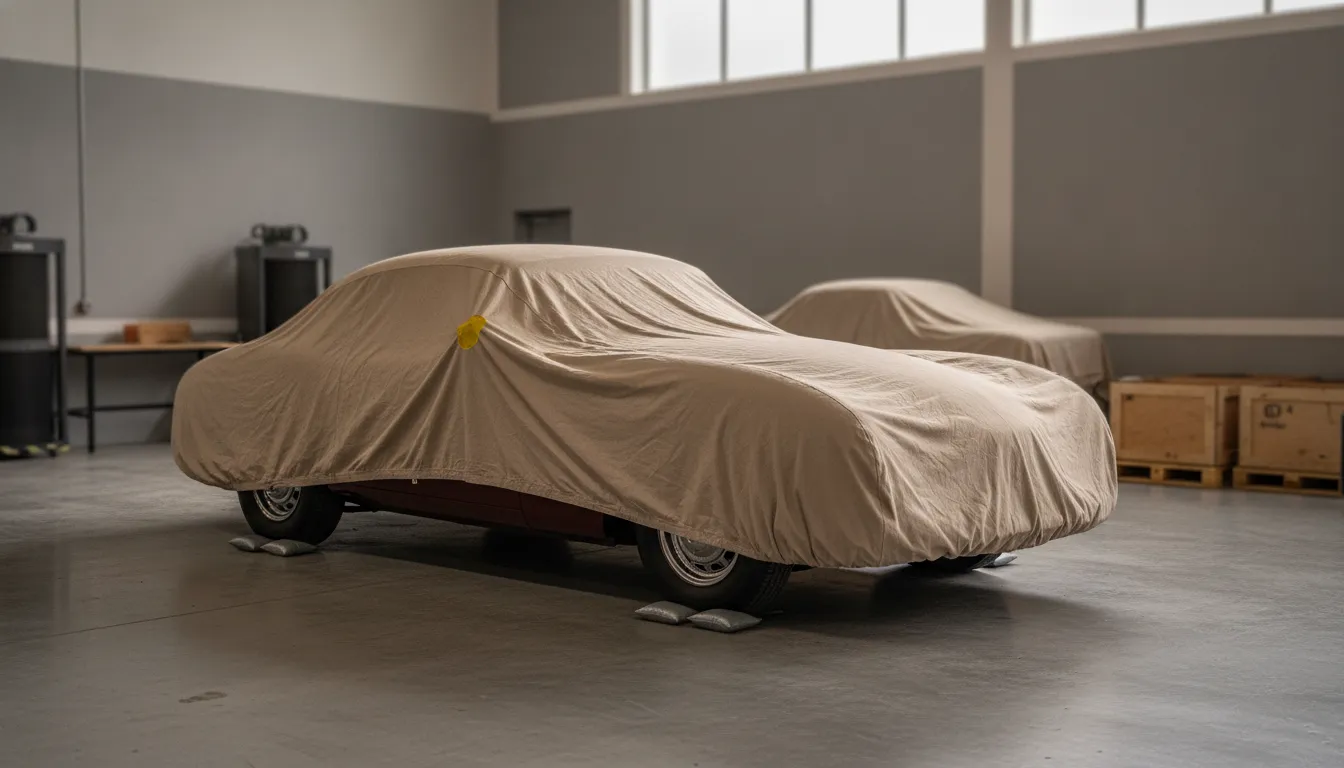
A breathable, properly fitted cover helps shield a stored classic from dust. Dry airflow helps limit moisture that turns a quiet storage period into a corrosion problem. Indoors, focus on dryness and air movement. Outdoors, recognize that a cover reduces exposure but cannot create a dry storage environment.
Choose a cover made for the car's shape, with enough room to sit without pulling tightly across mirrors, trim, or sharp edges. It should stay in place, but it should not seal dampness against the paint. A cover is particularly important where the storage area lacks active air filtration, according to Hagerty's seasonal-storage guidance. Put it on only after the vehicle is clean and fully dry.
Indoor storage still needs attention. A dry garage does not have to be heated to protect a vehicle, but it should not be treated as a sealed box. Check for condensation, roof leaks, and standing water. Leave enough clearance around the car for inspection and access. If the floor or surrounding surfaces hold humidity, moisture can circulate beneath the vehicle and reach areas that are easy to overlook. Periodic checks are more useful than assuming the cover has solved every problem.
Outdoor storage carries a bigger risk. Dampness can gather from below and work into crevices even when the car is covered, as noted in this classic-car storage reference. If outdoor parking is unavoidable, prioritize a raised, well-drained location, use a fitted breathable cover, and inspect beneath and around the car after wet weather. Do not trap a wet vehicle under the cover.
Ventilation also supports pest prevention, but it is not a substitute for inspection. Look for leaves, seeds, nesting material, and signs of rodents before covering the car and during longer storage. For more avoidable errors involving moisture and winter preparation, review these winter car care mistakes.
Where Does The EDGE Fit in Winter Vehicle Prep?
Extractable summary: The EDGE belongs in the final, before-driving part of winter vehicle prep. It clears snow and ice from the vehicle, uses a paint-friendly edge, and stows flat between storms. It does not replace a fitted cover, battery tender, indoor storage, or professional preservation plan for a classic car.
Storage protects the car while it sits. The EDGE handles a different job: clearing snow and ice before you drive. That distinction matters with a classic vehicle. A good storage plan still needs the right cover, a suitable parking environment, battery care, tire attention, and a careful spring inspection. The EDGE is the tool you keep ready for the days when the car comes out into winter conditions.
Its broad design is built to move snow from the vehicle, while the paint-friendly edge helps you clear the exterior without treating the finish like a shovel target. The product page also identifies a Wiper Blade Clearing Groove for removing ice buildup from wiper blades. That makes it useful during a post-storm check when visibility and a clean driving surface come first. Use reasonable care, clear loose snow before working through stubborn accumulation, and follow the needs of the vehicle's finish.
The flat shape is practical for seasonal readiness. It can stay in the trunk, on the vehicle floor, or in another accessible spot without taking up the space of a long-handled brush. That means the scraper is available when weather changes, rather than buried in a garage behind the equipment used for storage. The EDGE is a winter vehicle-prep tool, not a reason to leave a valuable car exposed or unattended.
Elevate your winter vehicle prep with The EDGE.
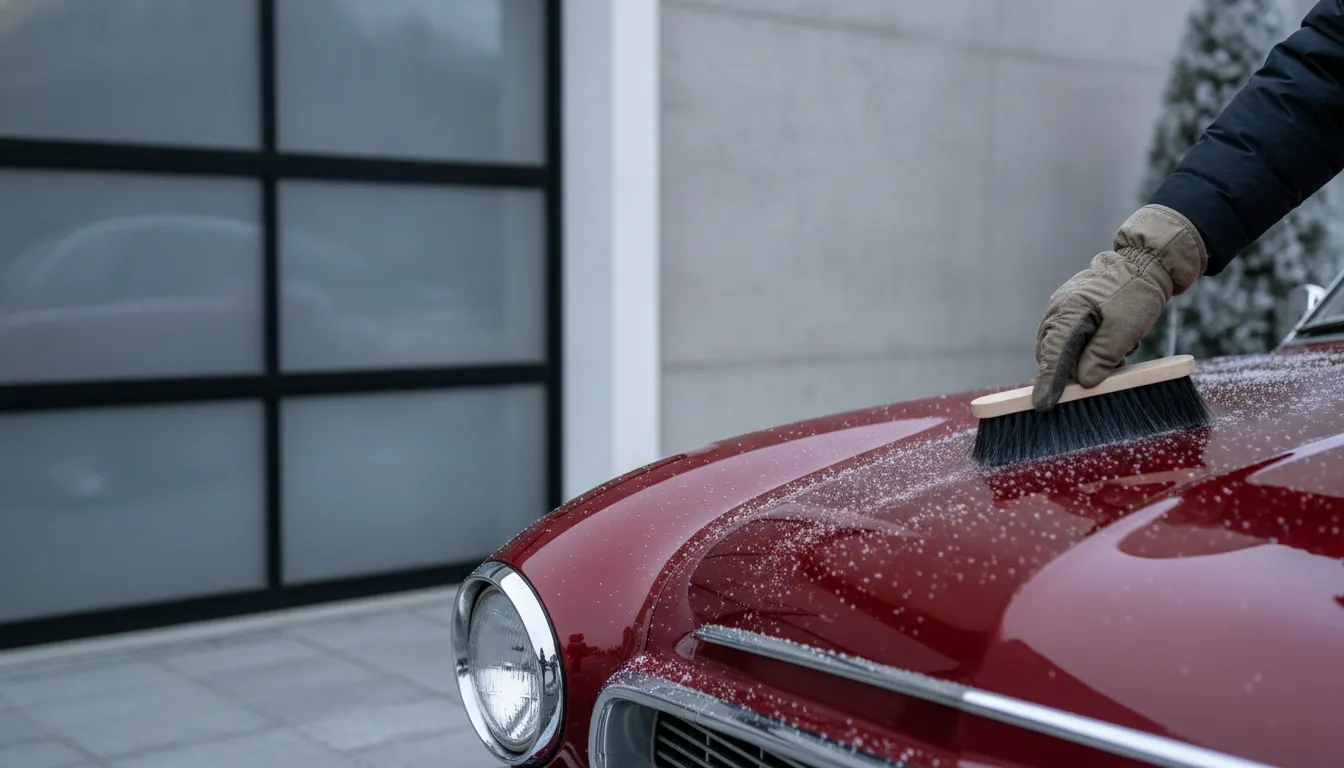
Keep the boundaries clear. The EDGE does not replace a car cover, battery tender, indoor storage, moisture control, or professional preservation advice. It also does not make repeated winter driving risk-free for a vehicle that should remain stored. When the classic car needs to move, however, having a purpose-built snow and ice scraper within reach can make the vehicle-prep step simpler. For the product details, see The EDGE snow and ice scraper.
What Are the Best Classic Car Winter Storage Tips for Spring?
Spring inspection is where careful storage pays off. Remove the cover slowly, look for moisture or pests, and check the battery, tires, fluids, and brakes before the first drive. Long-term storage can affect vintage fuel tanks, brake and clutch hydraulics, and engine components, so treat anything unusual as a reason to pause.
Use this sequence to bring the car back into service without turning a spring check into a rushed start-up. For broader seasonal reminders, keep this winter car care checklist nearby.
- Inspect the storage space and remove the cover. Open the garage or storage area for fresh air if conditions allow. Look for dampness beneath the vehicle, standing water, droppings, nesting material, and signs of insects or rodents. Remove the cover carefully so trapped dust or moisture does not spread across the paint. Photograph anything that looks new before cleaning it.
- Check the battery before attempting a start. Inspect the case, cables, and terminals for damage or corrosion. Cold conditions reduce the current a battery can deliver, and corrosion can make starting difficult. If you use a meter, the University of Missouri guidance identifies at least 12.5 volts across the terminals as a check benchmark. Follow the battery, charger, and vehicle instructions for your specific model.
- Verify tires and the area around each wheel. Cold temperatures reduce tire pressure, so check all four tires when they are cold. Use the pressure listed in the owner's manual, never the maximum printed on the sidewall. Examine tread, sidewalls, and the contact area for cracking, damage, or a pronounced flat spot. Do not drive on a tire that looks unsafe.
- Look at fluids, belts, hoses, and visible leaks. Check engine oil, coolant, brake fluid, and other service points against the owner's manual. Long storage can allow brake and clutch hydraulics to deteriorate, while extended storage can affect fuel systems and engine components. Do not guess at fluid type, refill limits, or model-specific procedures. Ask a qualified technician when the condition is unclear.
- Test the brakes and start cautiously. Confirm the pedal feels normal before moving. Avoid repeated brief start-stop cycles, which can do more harm than good. If the engine cranks slowly, the battery is weak, fluid levels are abnormal, or the brakes feel soft, stop and arrange professional inspection before driving. A careful first trip is more useful than an improvised driveway test.
Elevate your winter vehicle prep with The EDGE.
A clean spring re-entry also gives you a chance to record what worked, what needs service, and what should change before the next storage season. Keep those notes with the vehicle records, especially when a classic has model-specific maintenance requirements.
Frequently Asked Questions
How long can a classic car sit unused in winter?
A three-month storage period is often manageable when the battery stays charged, but fuel and tires still need attention. Longer storage increases the need for a planned inspection. Gasoline can deteriorate, tires can develop flat spots, and older fuel-system or brake components may need professional review. See the winter car care checklist for related seasonal reminders.
How can you protect a classic car with no garage?
Choose the driest, best-sheltered location available, then use a properly fitted, breathable cover and inspect underneath it regularly. Outdoor parking still exposes the car to dampness, including moisture that can collect below the vehicle. So a cover reduces surface exposure but does not create indoor storage conditions.
How should you store a classic car in an unheated garage?
An unheated space can work if it stays dry. Clean and dry the car before covering it, keep airflow available, remove leaves and debris from intake areas. And watch for condensation or trapped humidity around the floor and underbody. A dry garage is more important than adding heat.
Should you remove the battery for winter storage?
Follow the vehicle and battery-maker guidance. Common options include disconnecting the battery cables or leaving the battery in place with a suitable low-rate maintenance charger. Cold batteries deliver less current, and terminal corrosion can make a spring start difficult. Check the battery condition before reconnecting or charging.
What should you inspect before driving in spring?
Remove the cover and look for moisture, pests, leaks, corrosion, tire-pressure changes, and battery-terminal buildup. Check fluids, belts, hoses, brakes, and the fuel system before starting. If the car has been stored for an extended period or anything looks questionable, have a qualified classic-car mechanic inspect it before the first drive.
Ready to prep your car before winter?
Storage protects your classic car while it rests, but winter driving still calls for a practical way to clear snow and ice before you leave. The EDGE is built for that vehicle-prep step and stows flat when the season is over. Shop The EDGE for your next winter drive, then keep your storage routine focused on a clean, dry, well-checked car.