


Car-Safe Ice Scraper Reviews: Compare Before You Buy
Andrew MelamedIce scraping is hard on cars when the tool is narrow, awkward, or built without a clear approach to surface safety. The strongest review does more than repeat a catchy handle claim. It explains how the scraper contacts glass and paint, how much area it covers, and how firmly you can control it. It also asks whether the tool deserves space in your winter kit.
Ready to upgrade? The EDGE has you covered.
The best car-safe ice scraper reviews compare edge design, coverage, grip, stowage, durability, and evidence quality. The EDGE brings a paint-friendly edge together with an 18-by-14-inch surface, a 5-year performance guarantee. And a flat format that gives shoppers concrete features to weigh against traditional scrapers.
Start with the criteria that separate a careful buying guide from unsupported marketing. Then compare named alternatives by the details that matter to your vehicle, your winter routine, and your storage space.
What should car-safe ice scraper reviews measure?
Strong car-safe ice scraper reviews measure features that affect safe, controlled clearing instead of repeating a product's loudest marketing claim. A transparent review explains what was examined, separates published specifications from observed results, and gives drivers a practical way to compare tools before the next freeze.
Look for edge design first. A review should identify the edge profile and intended surface use, then explain how those details relate to vehicle glass, paint, and trim. Avoid absolute language such as "scratch-proof" unless a credible, clearly described test supports it. A review can assess whether the design appears appropriate for careful use without pretending that technique and surface conditions do not matter.
Coverage is the next checkpoint. A narrow scraper may require many overlapping passes, while a broader surface can cover more area with each movement. Treat that as a published manufacturer claim, not an independent test result. Review The EDGE's official product specifications, then compare dimensions consistently across products.
See a broad scraper in action before you compare coverage details.
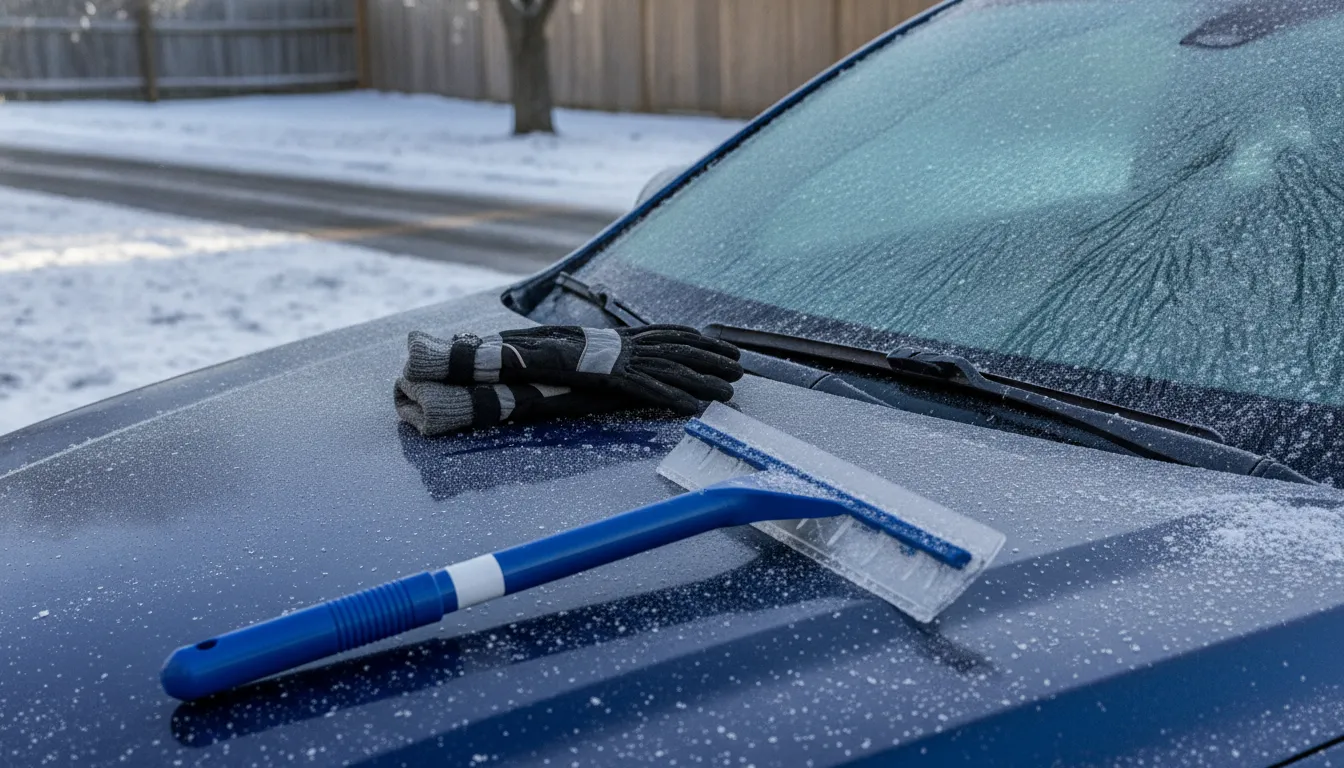
Grip and control deserve equal attention. Product descriptions and reviews commonly emphasize ergonomic handles, making hand position, reach, balance, and resistance to slipping useful review criteria. The question is not whether a handle sounds comfortable. It is whether the description gives enough detail for a reader to understand how the tool may be held and controlled while clearing frozen buildup.
Stowage and durability round out the practical evaluation. Note whether the scraper fits the vehicle, stows flat or compactly, and appears suited to repeated seasonal use based on documented materials or guarantee information. Do not convert a vague durability adjective into a proven lifespan. If the product has additional documented uses, list them separately rather than treating versatility as proof of scraping performance.
Finally, grade evidence quality. Label each point as a specification, manufacturer statement, customer review, or firsthand test. If no firsthand testing occurred, say so. Readers can then weigh the evidence instead of mistaking polished copy for independent validation.
- Edge: Check the edge description, profile, and intended surfaces.
- Coverage: Compare working dimensions and expected surface contact.
- Control: Evaluate grip, balance, reach, and hand position.
- Stowage: Confirm the tool fits your trunk, back seat, or emergency kit.
- Durability: Look for documented construction details and guarantee terms.
- Evidence: Separate specifications, customer feedback, marketing claims, and independent testing.
How do you judge edge safety on glass and paint?
Edge safety starts with the material, profile, and the way you use the scraper. Look for a design described as paint-friendly, then pair it with sensible technique. Clear loose snow first, keep the tool controlled, and avoid dragging grit across the surface. No scraper should be treated as absolutely damage-proof.
Safe edge design helps protect the surfaces you are trying to clear. The EDGE is described as using paint-friendly edge technology for vehicle finishes. That gives shoppers a specific feature to evaluate instead of relying on vague labels such as premium or heavy-duty. It supports a safer design intention, but it does not replace careful use or promise that damage is impossible.
Inspect any scraper before using it. Reject a tool that looks chipped, warped, or rough at the contact edge. Keep the surface clean, remove loose debris first, and use steady pressure rather than forcing an edge through a thick layer of frozen material. These habits matter because sand and grit can create risk even when the scraper itself is designed for vehicle use.
Material choice also belongs in a set of car-safe ice scraper reviews. A review should identify the edge material, explain the operating technique, and distinguish a publisher's test result from a guarantee. Claims such as scratch-proof, damage-proof, or safe in every condition deserve skepticism.
Finally, judge the complete routine, not just the blade. Clear the roof, hood, and trunk before driving so snow or ice does not slide onto your windshield or another vehicle. For a practical walkthrough focused on winter clearing, use this safe ice removal guide. The strongest choice is the tool whose design, instructions, and handling method work together.
Does scraper size improve coverage and control?
Broad coverage can reduce repeated passes, but useful control still depends on grip, leverage, and edge design. A narrow scraper concentrates pressure in a small area. That can help with a stubborn patch, yet it also means more overlapping strokes across a windshield. Treat that as a product claim, not a universal test result.
Size alone is not the decision. A broad tool should feel manageable as you move across glass, reach the center of the windshield, and work around mirrors and trim. Grip matters because awkward hand positioning can turn a larger surface into a tiring one. Compare the dimensions with the way you expect to use the tool, including whether you prefer a handle or a handle-free design.
| Criteria | Narrow traditional scraper | Broad-coverage design |
|---|---|---|
| Coverage | Smaller working area, so more passes may be needed. | More surface contact per stroke can reduce overlap. |
| Control | Compact and familiar, but may require repeated repositioning. | Useful when the grip and balance support steady movement. |
| Leverage | Depends heavily on handle length and hand position. | A longer or well-positioned grip can make heavy clearing easier. |
| Review evidence | Look for specific notes about edge behavior and comfort. | Look for dimensions, handling details, and clearly sourced performance claims. |
Use this framework when reading car-safe ice scraper reviews. Ask whether the writer describes dimensions, grip, reach, and surface contact, or simply repeats a marketing adjective. A bigger scraper is valuable when it combines coverage with a controlled, paint-conscious edge. The goal is fewer wasted passes without sacrificing confident handling.
Which named scraper options should shoppers compare?
A useful review guide names the alternatives a shopper may encounter, then gives each product a fair comparison question instead of inventing a universal ranking. Product listings, materials, availability, and features can change. Verify current details on the seller's page before buying, and treat any third-party review as evidence from that publisher rather than a guarantee for every driver.
| Option | Focus | Question |
|---|---|---|
| Subzero 80037 | Traditional scraper format and reach | Does the handle length help you reach the windshield while keeping the edge controlled? |
| OXO Good Grips Twister | Grip and head movement | Does the grip and head design suit your hand position and clearing style? |
| SnowMOOver | Multi-function winter tool design | Do the added clearing functions justify the space it takes in your vehicle? |
| Mallory 532 | Basic compact scraper format | Is a simple, easy-to-stow tool enough for your vehicle and winter conditions? |
| Lismodz electric scraper | Powered features and operating routine | Do you want a powered tool, and have you checked its current instructions and care requirements? |
| The EDGE | Broad coverage, paint-friendly edge, and flat stowage | Do the 18-inch by 14-inch surface, multi-purpose format, and guarantee fit your routine? |
This is not a claim that one option wins for every vehicle. It is a checklist for reading named product pages with the same standards. Compare edge design, working dimensions, grip, stowage, care instructions, and evidence quality. Then consider whether the tool gives you a meaningful advantage over the scraper already in your trunk.
Which features matter after the windshield is clear?
Stowage, durability, and versatility determine whether an ice scraper stays useful all winter or gets buried in the garage. The best option should be easy to keep within reach, sturdy enough for repeated snow clearing, and useful beyond one task. A tool that earns a permanent place in the vehicle is ready when the next storm arrives.
Flat stowage keeps the tool ready
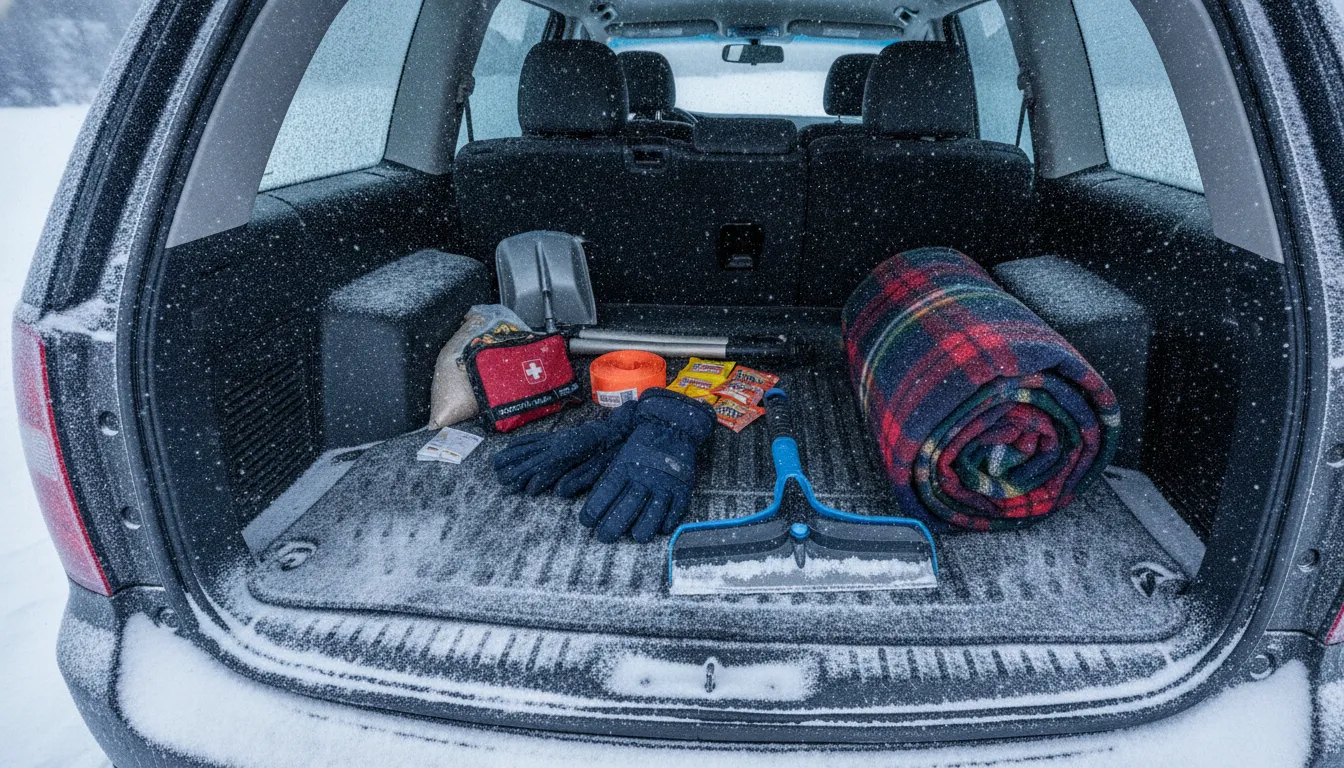
Winter equipment often fails at the stowage stage. A bulky scraper gets left outside, buried under gear, or wedged into a trunk where it is difficult to reach. A flatter design is easier to stow in a cargo area, behind a seat, or alongside an emergency kit. Preparation is practical only when the tool is available before frost and snow build up.
The EDGE is designed around a broad 18-inch by 14-inch surface and a flat format, giving it a different footprint from a narrow traditional scraper. Plan a dedicated stowage spot so the larger surface stays accessible. For more ideas on building a practical cold-weather setup, compare it with other winter car accessories.
Durability should support repeated use
Durability is not just about surviving one frozen morning. Look for a scraper that can be handled repeatedly, stowed with other equipment, and used across changing winter conditions without becoming another item to replace. Review the construction and intended uses, then separate documented product information from vague claims about being indestructible.
The EDGE is backed by a 5-year performance guarantee for the original purchaser, subject to its stated terms. The product information describes coverage for defects in materials and workmanship under normal use, with proof of purchase required. It excludes conditions such as improper use, accidental damage, neglect, modifications, unauthorized repairs, and normal wear and tear. Read the full terms before treating any guarantee as a promise that covers every type of damage.
Multi-purpose use improves readiness
A scraper becomes more valuable when it supports the whole clearing routine. Use it to remove accumulated ice from glass, push loose snow away from the vehicle, and protect the floor of the car throughout the year. The EDGE is positioned as an ice scraper, snow pusher, and year-round car floor protector. The goal is not to collect more winter gear. It is to choose one dependable tool that helps simplify the gear you already carry.
Check the wipers, too, and keep these wiper ice buildup tips nearby.
How do car-safe ice scraper reviews differ from firsthand tests?
Reviews tell you what a product claims and how buyers experienced it. Firsthand tests show what happened under defined conditions. Strong car-safe ice scraper reviews make that distinction visible instead of blending specifications, observations, customer feedback, and marketing copy into one verdict.
A product specification is the easiest evidence to verify. It may identify dimensions, edge design, handle construction, or intended uses. For example, The EDGE product page describes an 18-inch by 14-inch surface and paint-friendly edge technology. Those are published design details. They help you understand what the tool is built to do, but they are not the same as an independent test result.
Look for conditions, not just conclusions
A firsthand test should explain its conditions. What type of ice was present? Was the windshield cold, wet, or already partially cleared? How many vehicles or surfaces were tested? Was the comparison consistent across products? Without that context, phrases such as best or fastest are conclusions without enough supporting detail.
If a competitor article says its scraper performed best in its own testing, that is the publisher's claim, not a universal finding about every vehicle, climate, or scraper. The same caution applies when a review recommends a particular handle length or edge material. Treat the recommendation as an informed opinion unless the test method and results are clearly documented.
Use customer reviews for real-world friction
Customer reviews answer different questions. They can reveal whether a grip feels comfortable, whether stowage is awkward, or whether the tool holds up during repeated winter use. Still, individual experiences are not controlled tests. Look for patterns across multiple reviews, and separate specific observations from vague praise.
The most useful review combines published specifications, transparent test conditions, repeated customer experiences, and clearly labeled manufacturer claims. That gives you a practical basis for choosing a scraper without pretending that one review settles every winter-driving situation.
Why does The EDGE stand out in a car-safe scraper comparison?
The EDGE stands out by combining a paint-friendly edge, broad coverage, flat stowage, and practical use beyond the windshield. Its design gives shoppers clear criteria to evaluate: how it contacts vehicle finishes. How much surface it clears with each pass, and whether it earns space in the car after winter weather.
A car-safe choice starts with the edge. The EDGE uses paint-friendly edge technology designed for vehicle finishes. That is a meaningful product feature, but it is not a reason to ignore technique. Clear loose snow first, use controlled pressure, and pay attention to grit trapped between the tool and the vehicle. The goal is safer contact, not an excuse to scrape carelessly.
Coverage is the next differentiator. The EDGE has an 18-inch by 14-inch surface, compared with the narrow 4-inch to 4.5-inch width commonly associated with traditional scrapers. That statement is a sourced product claim, not a substitute for independent testing.
The format also changes where the tool fits in a winter routine. The EDGE is designed to work as an ice scraper, snow pusher, and year-round car floor protector. One tool can therefore serve several vehicle-care jobs instead of becoming a single-purpose item that stays buried in a trunk organizer once the windshield is clear.
For a straightforward product decision, review The EDGE's stated features against the criteria used throughout this guide. Look for the paint-friendly edge, the 18-inch by 14-inch surface, flat stowage, additional uses, and the 5-year performance guarantee with its terms. Those are concrete points to weigh when reading car-safe ice scraper reviews, without relying on unsupported ratings or claims of firsthand testing.
Compare The EDGE's features and choose a stronger winter setup.
Frequently Asked Questions
What should you look for in car-safe ice scraper reviews?
Look for clear evidence about edge design, surface coverage, grip, control, stowage, durability, and guarantee terms. Strong reviews separate published specifications from firsthand testing and customer feedback. They also explain how the tool should be used, rather than treating any scraper as automatically safe in every condition.
How can you tell if an ice scraper will scratch your car's paint?
Check the product description for a paint-friendly edge and inspect the tool for rough, damaged, or contaminated contact surfaces. Technique matters too. Remove loose grit before scraping, use steady pressure, and avoid dragging debris across the finish. The EDGE describes its edge technology as paint-friendly for vehicle finishes.
Is a broader ice scraper better than a narrow one?
It depends on the balance between coverage and control. A broader surface may reduce repeated passes, while a narrow tool may feel familiar and easier to position in tight spots. Compare the working dimensions, grip, edge design, and stowage footprint. Choose the format that fits your vehicle and winter routine.
What does The EDGE's 5-year performance guarantee cover?
The guarantee covers defects in materials and workmanship under normal use for five years from the original purchase date, subject to the published terms. It applies to the original purchaser, requires proof of purchase, and may provide repair or replacement for covered defects. Improper use, accidental damage, neglect, modifications, unauthorized repairs, and normal wear and tear are excluded.
How do you clear ice from a windshield without causing damage?
Start by clearing loose snow, then work with controlled strokes instead of forcing the tool through heavy ice. Keep the contact surface clean and maintain visibility before driving. Clear snow and ice from the roof, hood, and trunk as well, because loose buildup can slide onto the windshield or into traffic.
Ready to choose a broader winter scraper?
A car-safe ice scraper should make winter prep easier without asking you to trade coverage for control. The EDGE brings a paint-friendly edge, broad coverage, flat stowage, multi-purpose utility, and a 5-year performance guarantee with defined terms. Compare those features against your own vehicle and winter routine.