


The Best Ice Scraper for Trucks, SUVs, and Tall Windshields
Andrew MelamedTruck and SUV windshields are not just wider. They sit higher, stretch farther, and often collect more snow across the roofline and hood. A narrow scraper turns that surface into a repetition test: reach, pull, reset, repeat. That means more swipes and more strain before you can drive with a clear view.
Ready to clear more with less effort? Get The EDGE ice scraper.
An ice scraper for trucks should cover more glass per pass and give you the reach and control needed for larger vehicles. The EDGE's 18-by-14-inch design provides a much larger clearing surface than standard scrapers, helping remove snow in fewer swipes while reducing the workload on your arms.
The right tool starts with the vehicle itself. Once you account for windshield height, glass area, packed ice, and heavy snow, the case for a bigger scraper becomes clear.
Why Trucks and SUVs Need a Bigger Ice Scraper
A compact car and a full-size truck do not present the same winter problem. Trucks and SUVs have taller glass, wider hoods, and higher roofs, so the scraper has to cover more surface while reaching farther across the vehicle. A short handle and narrow blade force you to stretch, lean, and repeat the same motion until a simple morning chore feels like a workout.
More glass means more passes
Many standard scrapers use a blade around 4.5 inches wide. That may be manageable on a smaller windshield, but a truck windshield quickly turns that narrow edge into a long series of overlapping passes. Thirty or more strokes is easy to imagine when frost covers a wide pane and every strip of ice demands another reach.
The issue is not just inconvenience. More passes mean more opportunities to miss a section of glass, leave a frozen ridge behind, or put unnecessary strain on your shoulders and wrists. Large windshields make reach a primary factor when choosing a tool, not a bonus feature.
Heavy snow needs a stronger clearing surface
Ice is only half the battle. Overnight snow can settle across the windshield, hood, and roof in a dense layer. A sturdy, wide blade gives you more surface area to move that heavy accumulation instead of pushing a small ribbon at a time. It also helps you work across broad sections without constantly repositioning your hands.
That is why Wirecutter recommends a scraper with a 5-foot reach for trucks and SUVs with high roofs and wide hoods. The right proportions match the vehicle: enough reach to access distant surfaces, and enough blade to make each stroke count.
The EDGE brings that same large-vehicle logic into a broad 18-by-14-inch design. It is built to cover more of the windshield and move more snow per pass. Its paint-friendly edge is designed for clearing snow around the vehicle. For truck and SUV owners, a bigger scraper is not overkill. It is the practical match for a bigger vehicle.
What Size Ice Scraper Do You Need for a Truck Windshield?
For a truck windshield, size is not a nice-to-have. It determines how much glass each pass covers, how far you need to reach, and how many times you repeat the same motion on a freezing morning. Choose by surface area first, then check the scraper's reach and grip.
Measuring Your Windshield vs Scraper Surface
Start with the part of the windshield you need to clear, not the scraper handle hanging in the garage. A truck windshield presents more glass and more distance to cover than a typical car windshield, especially at the upper corners and along the lower edge. That makes a narrow blade a poor match for the job.
The math is simple: wider coverage means fewer passes. A standard scraper blade is commonly about 4.5 inches wide, according to Car and Driver's tested scraper comparison. On a large windshield, that narrow working edge leaves more strips of ice behind after every swipe. You end up overlapping passes, stretching farther, and repeating the effort across the entire pane.
Reach matters, too. Large windshields make reach a primary factor in choosing an efficient scraper, particularly when ice forms across the top section. The right tool should let you cover the glass deliberately instead of leaning over the hood or working from awkward angles.
18x14 Inches vs Standard 4.5-Inch Blades
The EDGE uses an 18x14-inch scraping surface, giving it substantially more working area than a conventional 4.5-inch blade. That broader footprint lets you remove wider bands of snow and ice with each movement. See the The EDGE vs traditional ice scrapers comparison for a closer look at the coverage difference.
Think in passes, not promises. A narrow blade may require many overlapping swipes to work across a truck windshield. An 18-inch-wide surface can cover a much larger section at once, so the same clearing pattern takes a fraction of the passes. You still need to clear thoroughly, including the edges and wiper area, but you spend less motion covering open glass.
That is the practical answer for anyone shopping for an ice scraper for trucks: match the tool to the windshield. Pick a wide, durable surface that reaches the glass you need to clear, then stow it flat for the next storm. The EDGE is built for that larger job without treating a truck like an oversized sedan.
Shop The EDGE ice scraper at edge.store. Wide-surface design built for large windshields.
How Does an 18x14 Ice Scraper for Trucks Clear Windshields in Fewer Swipes?
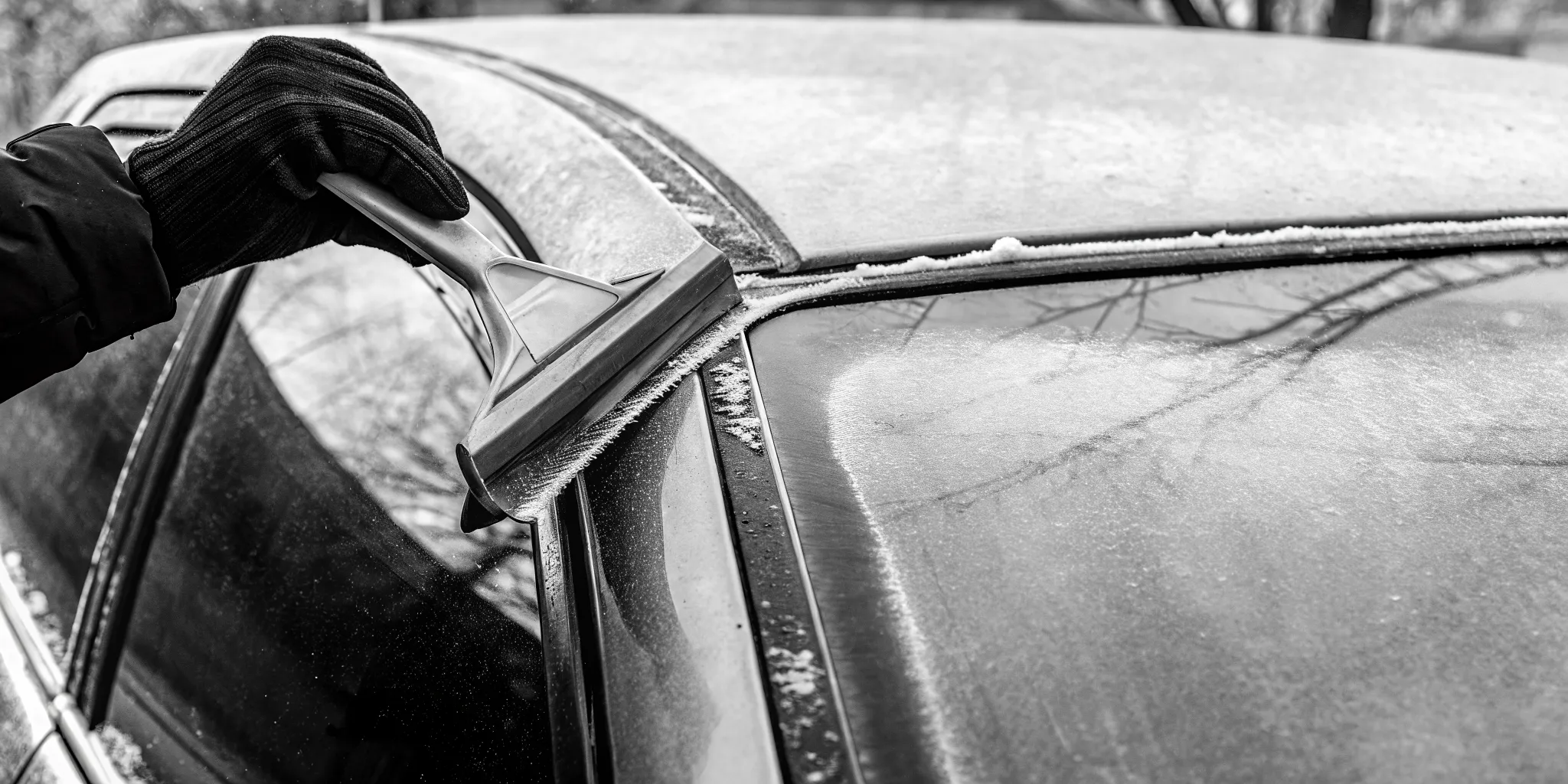
Big windshields demand more than a tiny blade and endless back-and-forth motion. The EDGE uses an 18-inch-wide blade edge to cover a much broader band of glass with every pass. Its 14-inch length also gives the pusher enough working surface to move deeper snow instead of merely nudging a narrow strip aside.
How Surface Area Cuts Swipe Count
A standard scraper blade may measure about 4.5 inches wide, which means a truck windshield can require repeated overlapping passes. A wider edge changes the job immediately. More blade contacts the glass at once, so each controlled sweep removes a larger section of snow or loosened ice. The result is less wasted motion and a more direct path from covered windshield to clear view.
The 18x14 design is built around that simple advantage: more surface coverage, fewer swipes. It is not about muscling through winter buildup with a smaller tool. It is about putting more clearing power against the surface from the start. See the full breakdown of heavy duty ice scraper features for a closer look at why blade size matters.
That wider profile also helps when snow is heavy or packed. The EDGE's scraper design helps break down packed ice, allowing the blade to work through stubborn buildup instead of leaving behind thin frozen patches that demand another round.
Push, Scrape, and Clear with One Tool
Width handles coverage, while length adds useful reach and leverage. The 14-inch profile lets you push deeper snow in one pass, making it practical for broad truck windshields, hoods, and other large surfaces. Research from Autoweek similarly points to the ideal scraper combining extended reach with a wide blade.
The tool does more than attack the center of the glass. Its V-notch Wiper Blade Clearing Groove is shaped to clear ice from the wiper blades, where frozen buildup can keep them from sitting correctly. Clear those problem areas without switching tools, then use the broad edge to finish the windshield.
The same multi-purpose design works across the driveway and the fleet lot, from sedans to commercial vehicles. For a tool sized to handle bigger winter surfaces without becoming a one-use gadget, explore this heavy duty ice scraper for trucks. Scrape. Stow. Go.
Does a Bigger Scraper Actually Reduce Arm Strain?
Yes. A wider scraper can reduce the repetitive work that makes winter clearing hard on your shoulders, elbows, and wrists. Fewer swipes, less reaching, and a broader contact surface add up to a noticeably easier job.
Think about what happens with a narrow scraper. You make one pass, reset your arm, make another pass, and repeat that pattern across the windshield. Standard blades can be about 4.5 inches wide, so a large truck windshield turns into a long series of overlapping strokes. Each stroke is small, but the repeated shoulder and elbow motion is what wears you down.
A wider blade changes the workload. It covers more glass with every push, which means fewer direction changes and fewer repeated movements. The load also spreads across more contact surface instead of concentrating at one narrow edge. In practical terms, you do not need to push as hard to move the same layer of frost or packed ice across a broader path.
That matters even more when the windshield is tall or the far side is difficult to reach. An ice scraper for trucks should help you cover the glass without constantly leaning, stretching, or twisting from the driver-side step. Less reaching keeps your body closer to a stable position and makes the process feel controlled instead of frantic.
The benefit is not just comfort. Daily commuters and cold-climate truck drivers value tools that reduce physical effort and help them get winter prep done with less disruption. When the scraper does more per stroke, your arms have less repetitive work before the windshield is clear.
After the work is done, the flat design stows easily inside a truck, so it stays within reach without taking over the cab. See how the coverage and motion compare in The EDGE vs traditional ice scrapers. Scrape. Stow. Go.
Heavy Duty Ice Scraper Features That Matter for Trucks and Fleets
For a truck or fleet vehicle, a scraper is not a throwaway accessory. The right tool should cover more glass, stay ready between shifts, and hold up through repeated winter use. Here is how The EDGE compares with a typical standard scraper.
What Fleet Managers Should Look For
| Feature. | The EDGE. | Typical standard scraper. |
|---|---|---|
| Blade width. | 18 inches for broad coverage across truck windshields and other large surfaces. | About 4.5 inches, requiring more passes. |
| Surface length. | 14 inches of working surface for a substantial clearing area. | Usually about 6 to 8 inches. |
| Finish protection. | Paint-friendly edge designed to clear loose snow from the vehicle. | May use sharp plastic or metal edges that offer less finish-friendly contact. |
| Stowage. | Flat and easy to stow in a truck cab, equipment compartment, or other tight space. | Often bulkier and harder to stow around other gear. |
| Durability. | Built for frequent daily commercial use. | May be treated as a seasonal replacement item. |
| Wiper de-icing. | A V-notch Wiper Blade Clearing Groove helps clear ice accumulation from wiper blades. | Usually has no dedicated wiper de-icing feature. |
| Materials. | Sustainable materials with a built-to-last design. | Often single-season plastic with limited long-term value. |
The difference adds up across a fleet. A tool that is wide enough to handle commercial vehicles, gentle on paint, and durable for daily use can help reduce repeated replacements and winter-related downtime. The flat profile also keeps essential equipment organized instead of competing for cab space.
For businesses that need consistent winter-readiness across multiple vehicles, review fleet purchase options. For individual operators and smaller teams, see the 18-inch scraper built for truck duty, faster, stronger, repeatable clearing.
How to Clear a Truck Windshield Safely in Winter
Clear the whole truck before you move, not just a small opening in the windshield. NHTSA identifies clear vision as one of the most important parts of winter driving safety, and snow or ice removal may be required by local law. Use a steady sequence so nothing gets missed.
-
Brush the roof off first.
Start at the highest point and push roof snow away from the cab, hood, and surrounding walkways. Snow left on top can slide or blow off while you drive, creating a hazard for drivers behind you. NHTSA recommends clearing the entire vehicle, including the roof, before departure: winter driving tips from NHTSA.
-
Clear the hood and side windows.
Remove loose snow from the hood before it can blow back across the windshield. Then clear both side windows and the mirrors. You need a full view of nearby traffic, cyclists, pedestrians, and lane changes, not only a narrow view straight ahead.
-
Scrape the windshield in long, overlapping passes.
Break packed ice first, then work across the glass with controlled pressure. A wide blade covers more surface with each pass, while overlapping strokes prevent thin strips of ice from hiding between cleared areas. For more ways to de-ice a windshield fast, match your method to the type of buildup.
-
Clear the wiper blade seats and headlights.
Lift the wipers only when it is safe for the vehicle and clear ice from the blade contact areas before lowering them. Remove snow and ice from every headlight, taillight, and signal so other road users can see your truck and you can see clearly at night. A tool with a groove for wiper-blade buildup can help reach those narrow areas.
-
Check every window before driving.
Walk around the truck once more. Confirm the windshield, rear glass, side windows, mirrors, lights, roof, and hood are clear. Keep a sturdy scraper in your winter car emergency kit so you can repeat the process if fresh snow or freezing mist builds up during the day.
Elevate your gear with The EDGE ice scraper, built for tall windshields.

Frequently Asked Questions
What makes a scraper suitable for trucks and SUVs?
Look for two things: enough reach to reach the upper windshield and roof, plus a wide, sturdy clearing surface for snow and ice. Larger vehicles create more area to cover, so a narrow handheld scraper can force repeated passes and awkward stretching. A comfortable grip also helps keep the motion controlled.
How large is The EDGE ice scraper?
The EDGE measures 18 by 14 inches, giving it a broad surface for clearing large windshields and other vehicle areas in fewer swipes. Its paint-friendly edge is designed to help remove loose snow from any vehicle surface. See the product details at edge.store.
Does a wider scraper reduce arm strain?
It can reduce the repeated motion required to cover a large windshield. A wider surface clears more area with each pass, while a comfortable grip helps make the work easier to control. You still need to use steady pressure and avoid forcing the scraper through hard ice.
Should I clear snow from a truck roof as well as the windshield?
Yes. Clear the roof, windows, lights, hood, and other surfaces before driving. Snow left on the roof can slide or blow off while you are moving, creating a hazard for other drivers. NHTSA recommends clearing snow and ice from the entire vehicle before travel: NHTSA winter driving tips.
Ready to Get The EDGE?
A wider scraping surface can make winter vehicle prep more manageable, especially on tall windshields and larger vehicles. Get The EDGE ice scraper and make each pass count with a tool built for broad coverage and less arm strain. Scrape. Stow. Go.