


How to Remove Ice From Wiper Blades Without Damage
You wouldn't use your car keys to chip ice off your windshield, so why use brute force on your delicate wiper blades? When your wipers are frozen solid, reaching for the wrong tool—or using no tool at all—is a recipe for disaster. Prying them off the glass can tear the rubber, and running the motor can cause it to burn out. Knowing how to remove ice from wiper blades safely is less about muscle and more about method. It’s about understanding which tools work and which common "hacks" will leave you with a bigger problem. Here, we’ll break down the best and worst ways to de-ice your wipers.
Key Takeaways
- Work smarter, not harder: Prevent ice from forming in the first place by lifting your wipers off the glass or using a windshield cover overnight. This simple habit saves you from scraping and protects your blades from damage.
- Patience prevents pricey repairs: Never use hot water on a frozen windshield or force your wipers free. A cracked windshield or a burnt-out wiper motor is a far bigger problem than a few extra minutes spent de-icing correctly.
- Use a tool designed for the entire job: While de-icing sprays can help, they don't clear the mess. A purpose-built scraper like The Edge not only clears glass safely but includes features like wiper grooves to clean your blades without tearing them.
How to Safely De-Ice Your Wiper Blades
We’ve all been there: you’ve cleared your windshield, but your wiper blades are frozen solid to the glass or encased in a thick layer of ice. Your first instinct might be to blast the defrost and hit the wiper switch, hoping for the best. But that’s a fast track to shredded rubber blades and a streaky, unsafe view of the road. Forcing frozen wipers can also burn out the wiper motor, turning a minor inconvenience into a costly repair.
The good news is you don’t need brute force to solve the problem. Safely de-icing your wipers is about using the right techniques and tools. Before you even think about scraping your windshield, give your wipers the attention they need. A few simple steps can preserve their lifespan, ensure they work effectively when you need them most, and save you from the frustration of driving with a smeared, unclear view. It’s about working smarter, not harder, to conquer the ice.
Clear Ice by Hand
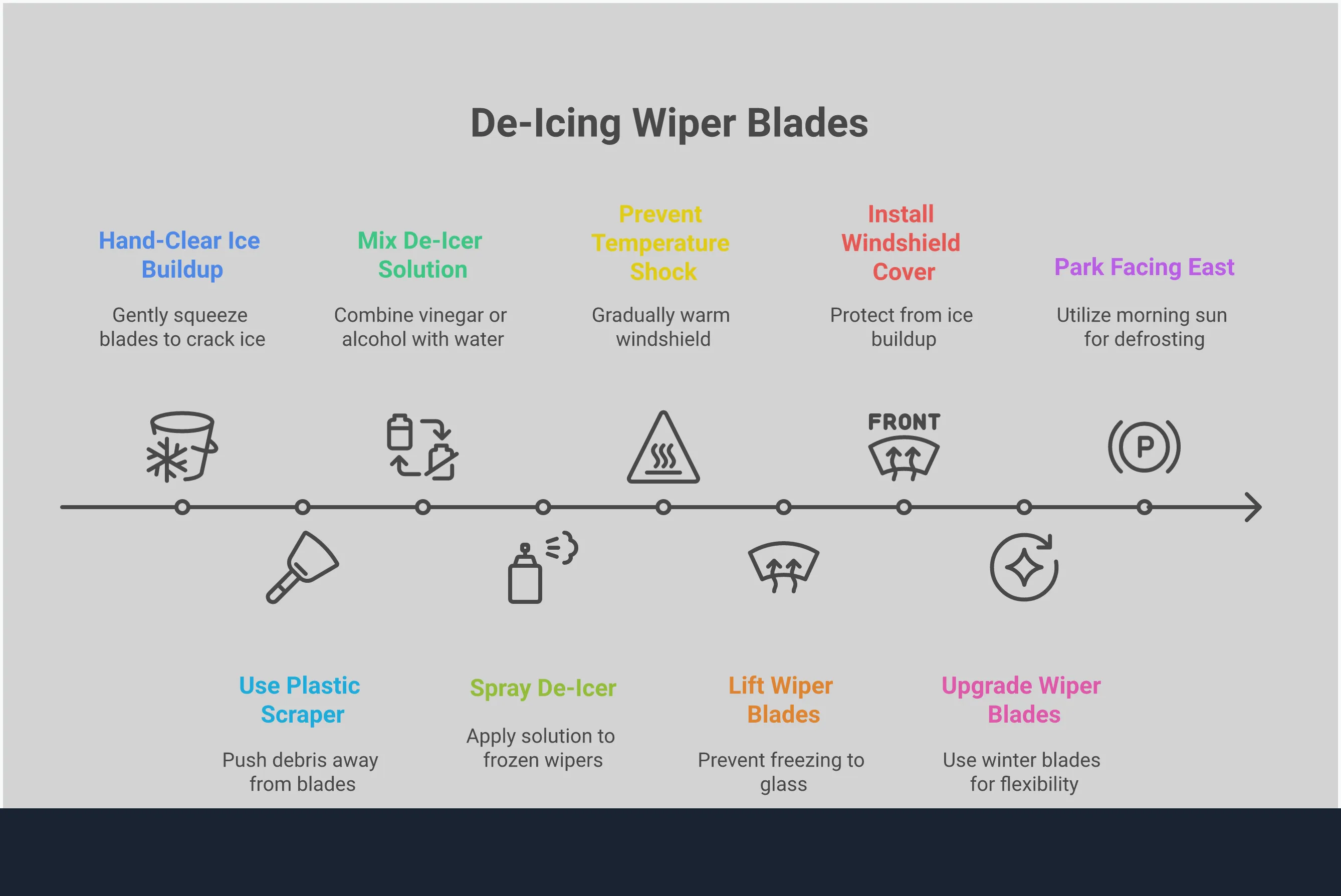
If your wipers are caked in ice, your hands are often the best first tool—as long as you’re wearing gloves. Start by gently squeezing the length of the wiper blade to crack and break up the ice. You can often knead or bend the blade slightly to loosen the most stubborn chunks. This method is effective because it uses gentle pressure without putting your wiper’s delicate rubber edge at risk. If you need a little more help, you can use a scraper, but be extremely careful. Never chop at the ice; instead, gently push it away from the blade, starting from the center and working your way out.
Use a DIY De-Icer
A simple homemade spray can make melting ice a breeze. Just mix three parts white vinegar with one part room-temperature water in a spray bottle. Liberally spray the solution over your frozen wipers and windshield. The vinegar’s acidity helps lower the freezing point of water, quickly melting the ice without damaging your vehicle’s paint or parts. For an even stronger solution, you can use isopropyl (rubbing) alcohol instead of vinegar. These DIY de-icing sprays are a great, inexpensive way to handle icy mornings without resorting to force.
Know When to Scrape
Knowing when not to do something is just as important as knowing what to do. Never, ever use your wipers as ice scrapers. Turning them on while they’re frozen to the glass will tear the rubber squeegee to shreds, making them useless for clearing rain or snow. Prying a frozen wiper blade directly off the windshield is just as bad—you risk ripping the rubber and can even chip the glass. Always make sure your wipers are completely free of ice and moving freely before you switch them on. Taking a moment to de-ice them properly prevents damage and ensures you have a clear line of sight.
Use The Edge's Wiper Grooves
Traditional scrapers aren’t designed to clean wiper blades, but The Edge is different. We built a smarter solution right into the handle. The grip features specially designed wiper grooves that fit perfectly around your blade. Simply slide the groove along the length of the rubber blade to break up and clear away ice accumulation without causing any damage. It’s a fast, controlled, and safe way to restore your wipers to perfect working condition. This purpose-built feature means you can stop fumbling with makeshift methods and clear your blades as efficiently as you clear your windshield.
The Best (and Worst) Tools for the Job
When your wipers are frozen solid, reaching for the right tool can be the difference between a quick clear-out and a costly repair. While some household hacks can help in a pinch, they often fall short when you’re dealing with serious ice. Let's break down the common go-to's and see how they stack up, from DIY sprays to tools designed to handle the toughest winter weather. The goal is to get you on the road safely without wrecking your wipers in the process.
Vinegar and Water Mix
You’ve probably seen this tip online: mix three parts vinegar with one part water in a spray bottle. Spritzing it on your windshield can help prevent frost from forming overnight or soften a thin layer of ice in the morning. It’s a decent trick if you’re dealing with light frost, but it’s not a miracle worker. This solution won’t do much against a thick sheet of ice, and you’ll still need to physically clear the slush. Plus, your car will smell like a salad for a bit. Think of it as a pre-treatment, not the main event.
Rubbing Alcohol Spray
Similar to the vinegar solution, a mix of two parts rubbing alcohol and one part water can also melt ice. Alcohol has a lower freezing point than water, which is why it works. However, you need to be careful with this one. Rubbing alcohol can be harsh on your car’s paint and can strip away wax over time, leaving your finish vulnerable. While it might work to loosen ice on your wipers, it’s a temporary fix with potential downsides. It’s another liquid solution that softens ice but doesn’t remove it, leaving the hard work to you.
Store-Bought De-Icing Sprays
Commercial de-icing sprays are a definite step up from DIY concoctions. These products are chemically formulated to melt ice quickly without harming your car’s paint or rubber components. They’re effective at softening thick ice on your windshield and wipers, making the scraping process much easier. The downside? They add another recurring cost to your winter prep, and just like the DIY sprays, they only do half the job. You still need a reliable tool to sweep away the melted mess. They’re a great assistant, but they can’t finish the job alone.
Choose the Right Scraper
This is where the real work gets done. A flimsy, cheap scraper won’t just break mid-scrape—it can also damage your wiper blades if you’re hacking away at the ice around them. You need a tool that’s both powerful and precise. The Edge Snow + Ice Scraper was designed for this exact problem. Its wide, paint-friendly blade clears huge sections of your windshield with significantly reduced effort, while the specially designed wiper grooves in the handle let you clear ice from the blades themselves without yanking or tearing them. It’s one tool that does the job right, backed by a 5-year performance guarantee.
Common Mistakes That Wreck Your Wipers
Winter is tough on your vehicle, but your wiper blades often take the worst of it. When you’re in a hurry on a frozen morning, it’s tempting to try any trick to clear the ice and get going. Unfortunately, many common de-icing “hacks” do more harm than good, leading to torn wiper blades, a damaged wiper motor, or even a cracked windshield. A moment of impatience can lead to an expensive repair and a serious safety hazard.
Before you grab the nearest tool or kitchen ingredient, stop. Knowing what not to do is just as important as knowing the right way to clear ice. These common mistakes can destroy your wipers and leave you with a bigger problem than a frozen windshield. Avoid these shortcuts to keep your wipers—and your glass—in perfect condition all winter long. Your wallet will thank you.
Don't Use Hot Water
It sounds like a quick fix, but pouring hot water on a frozen windshield is one of the fastest ways to cause serious damage. The drastic and sudden temperature change creates thermal shock, which can cause the glass to crack or even shatter instantly. You might solve the ice problem for a second, but you’ll be left with a much bigger one: a hefty bill for a full windshield replacement. Stick to lukewarm or cool water if you’re using it to help melt ice, but never use anything hot. It’s a gamble that simply isn’t worth the risk.
Don't Force Frozen Wipers
Resist the urge to pull your wiper blades off the windshield when they’re frozen solid. Forcing them can tear the delicate rubber edge that makes contact with the glass, making them useless for clearing rain or snow. You could also damage the wiper arm or burn out the wiper motor, which is a far more complicated and expensive repair. If your wipers are stuck, use a de-icing spray or your vehicle’s defroster to loosen them first. A little patience now will prevent costly damage to your wiper system later.
Avoid Metal or Sharp Tools
Your car keys, a metal spatula, or a screwdriver might seem like handy tools for chipping away stubborn ice, but they should never touch your windshield. Metal and other hard objects can easily scratch, chip, or gouge the glass, creating weak spots that can spread into larger cracks over time. These scratches also obstruct your vision, creating a safety hazard. Always use a scraper made from a durable, glass-safe material. A purpose-built tool like The Edge is designed to be tough on ice but gentle on your vehicle’s glass and paint.
Understand Temperature Shock
Temperature shock isn’t just a risk with hot water. Any rapid change in temperature puts immense stress on your windshield. For example, blasting the defroster on its highest heat setting immediately after starting your car on a sub-zero day can also create a risk of cracking, especially if the glass already has a small chip or nick. The best approach is to warm your vehicle up gradually. Start the defroster on a low setting and slowly increase the temperature, giving the glass time to acclimate and reducing the risk of a stress fracture.
Know When to Replace Your Wipers
Don’t wait for the first blizzard to realize your wiper blades are shot. Worn-out wipers are a liability in winter. Old, brittle rubber doesn’t conform to the windshield, leaving streaks and uncleared patches that reduce visibility. These worn blades are also more likely to freeze to the glass and tear when you try to free them. Before winter arrives, inspect your blades for signs of wear like cracking, splitting, or a rounded edge. Replacing your wipers is an inexpensive and simple bit of maintenance that makes a huge difference in safety and performance.
Stop Ice Before It Starts
The best way to deal with an icy windshield is to prevent it from happening in the first place. A few smart habits can save you a ton of time and frustration on a frozen morning. Instead of fighting a losing battle against Mother Nature, you can work smarter, not harder. These proactive steps mean less scraping, less stress, and a clearer view of the road ahead. Think of it as your pre-winter checklist to make sure your vehicle is ready for whatever the forecast throws at it. A little preparation goes a long way in keeping your mornings moving smoothly.
Park Smart and Lift Your Wipers
This is the simplest, no-cost trick in the book. When you park your car for the night and snow or freezing rain is expected, just lift your wiper blades so they aren't touching the windshield. This small move prevents ice from cementing the rubber blades to the glass. The next morning, you won't have to pry them loose, risking damage to the rubber. It makes clearing your windshield much faster because you won’t have to carefully chip away at the ice around the wipers. It’s a simple habit that makes a huge difference in your winter car care routine.
Use a Windshield Cover
If you want to practically eliminate scraping from your morning routine, a windshield cover is your best friend. These covers, often made with foil or other durable materials, act as a shield between your glass and the elements. Just lay it across your windshield in the evening and secure it. In the morning, peel it off, and you’ll find a clear, ice-free surface underneath. It not only saves you from scraping but also protects your wiper blades from freezing over. It’s a small investment that pays for itself in saved time and effort on the coldest days.
Upgrade to Winter Wipers
Not all wiper blades are created equal. Standard blades can become stiff and brittle in freezing temperatures, making them less effective at clearing your view. Consider swapping them out for a set of winter wipers before the first storm hits. These blades are built with a more rugged construction and use rubber compounds designed to stay flexible in the cold. This flexibility allows them to maintain proper contact with the windshield, clearing away snow and slush much more effectively. Having the right wiper blades is a critical part of safe winter driving.
Keep Your Wipers Maintained
Your wipers work hard, but they don’t last forever. Worn-out, cracked, or torn blades are a safety hazard, especially in winter. They can’t clear your windshield properly, leaving streaks and smears that obstruct your vision. Make it a habit to inspect your wipers regularly and replace them before winter begins. Old blades are also more prone to icing up and falling apart when you need them most. A fresh pair of wipers is an inexpensive and essential piece of maintenance that ensures you have maximum visibility during the toughest driving conditions.
Related Articles
- How to Quickly Remove Ice From Windshield: 3 Fast Ways – The Edge
- How to Scrape Ice Off Windshield The Right Way – The Edge
Frequently Asked Questions
What's the big deal with just turning on my wipers to break the ice? Think of it this way: you're asking a thin strip of rubber to fight a sheet of solid ice. It’s a battle the rubber will always lose. Hitting the switch on frozen wipers can shred the blades in seconds, leaving you with a streaky, useless mess. Even worse, the strain can burn out the wiper motor, turning a simple ice problem into a serious and expensive repair.
Is it safe to use a vinegar or alcohol spray on my car's paint? A diluted vinegar spray is generally safe for your car's finish and is a great way to soften light frost. Rubbing alcohol is more potent against ice, but it can also be harsh on your car's protective wax coating over time. Use it sparingly and consider it a backup plan rather than your go-to solution for every frosty morning.
I've heard pouring hot water on the windshield is a quick fix. Is that true? This is one of the most dangerous winter myths out there. Pouring hot water on frozen glass creates a rapid temperature change called thermal shock, which can cause your windshield to crack instantly. You might melt the ice, but you could also end up needing a full glass replacement. It's a high-risk gamble that's never worth it.
My scraper doesn't have wiper grooves. How should I use it on my blades without damaging them? If you're using a standard scraper, be extremely gentle. Never chop at the ice on the blade or try to pry the blade off the glass. Instead, use the scraper to gently push ice away from the rubber, working from the center of the blade outward. Your best bet is to use your gloved hands to carefully bend the blade and crack the ice off first.
Are winter wiper blades actually worth the money? Absolutely. Winter blades are designed with a more rugged rubber that stays flexible in freezing temperatures, unlike standard blades that can get stiff and brittle. This flexibility allows them to hug the curve of your windshield properly, clearing snow and slush effectively instead of skipping across the glass. They're a smart, proactive upgrade for safer winter driving.