


Large Ice Scraper for Trucks: Fleet Winter Guide
Andrew MelamedTruck windshields are large. Winter buildup is not impressed. A narrow scraper turns every departure into a long series of reaches, overlapping passes, and awkward pressure. Fleet managers, owner-operators, and commercial drivers need a tool that matches the vehicle and the pace of the work.
Ready to equip your trucks for winter? The Edge has you covered.
A large ice scraper for trucks should balance broad coverage, controlled contact, a comfortable grip, durable construction, and easy storage. The Edge combines an 18-inch by 14-inch design, a paint-friendly edge, wiper blade grooves, flat storage, and a 5-year performance guarantee for recurring winter preparation.
The right choice is not simply the biggest tool. It is the tool that helps drivers clear the right surfaces, return equipment to a known place, and start the next shift ready. This guide covers the features that matter, a repeatable visibility check, fleet standardization, and bulk buying decisions.
What should you look for in a large ice scraper for trucks?
Look for a truck scraper that balances coverage, control, durability, and storage. A broad working surface can reduce repeated passes across large glass. A stable grip supports controlled work in cold conditions, while a low-profile shape keeps the tool accessible in a cab, shop, or winter-prep station.
Coverage that matches the windshield
A full-size truck windshield gives a small scraper a large job. A narrow edge may handle light frost, but it creates more overlapping passes across the glass. More passes mean more reaching, repositioning, and opportunities to leave buildup near the edges, corners, or wiper zone.
The Edge uses an 18-inch primary scraping edge and a 14-inch secondary edge. That oversized footprint gives drivers more working surface with each push or pull. It is a more practical match for a semi truck, pickup, or work vehicle than a small glove-box scraper.
Control through gloves and cold weather
Size alone does not make a scraper useful. Drivers still need to guide it across the glass without losing control. A comfortable grip supports steady pressure when hands are cold or gloved. Rounded corners help with tighter areas, and a paint-friendly edge supports careful work around the vehicle.
Clear loose snow first. Then work through bonded ice with deliberate passes. Do not use a sharp object, excessive force, or a damaged tool on a windshield. A capable scraper supports a repeatable routine, but it does not replace the fleet's pre-trip inspection.
Durability for repeated fleet use
A commercial scraper may be used every morning, moved between drivers, stored in a cab, and handled in freezing conditions. That is a different demand from occasional use on one personal vehicle. Fleet buyers should evaluate daily usefulness, construction, storage, and product support instead of looking only at the purchase price.
The Edge is designed for recurring winter preparation and backed by a 5-year performance guarantee. The guarantee covers defects in materials and workmanship under normal use for the original purchaser, subject to its terms. That gives fleet teams a clear product commitment as they plan winter equipment.
Why does clear visibility matter before a commercial truck leaves?
Clear visibility is part of departure readiness. Drivers should clear the windshield, mirrors, lights, side windows, and other accessible surfaces that affect what they can see or how the truck can be seen. A consistent check gives every driver the same winter-prep standard.
A small clear patch is not a complete winter routine. Ice and packed snow can remain around the windshield perimeter, mirror faces, lights, steps, and camera lenses. Those areas can affect forward visibility, lane awareness, backing, communication with other road users, and safe access to the cab.
Fleet managers can make the check simple. Put the scraper where drivers expect it. Define the surfaces that must be cleared. Make it clear that the truck is not ready until the inspection is complete. The process should be practical enough to follow on every route and every shift.
A five-point visibility check
- Start with the windshield. Push off loose snow before scraping bonded ice. Work across the full glass area, including the edges and the space around the wipers.
- Clear mirrors and side windows. Remove frost from mirror faces, housings, and side glass so drivers can check adjacent lanes and backing areas.
- Expose lights and reflectors. Clear headlights, brake lights, turn signals, marker lights, and reflective areas so the truck is easier for others to recognize.
- Inspect access points. Check steps, door handles, and reachable surfaces for packed snow or ice that could create a slip or handling problem.
- Finish with a walk-around. Confirm that wipers, washer areas, cameras, doors, mirrors, and lights are usable before the truck moves.
This routine does not need to be complicated. The point is consistency. When every driver follows the same sequence, managers can identify missing equipment, damaged tools, and recurring winter-prep gaps before those issues slow the operation.
Give every cab a scraper built for the job.
Fleet buyers can also use the enterprise page to review business and fleet applications. Text-to-order fleet support is available at (833) 805-7733. Keep the number as plain text for fleet purchasing.
How does a large ice scraper for trucks avoid a bulky handle?
The Edge combines an oversized 18-inch by 14-inch surface with a handle-free shape that stores flat. Its multipurpose grip supports comfortable scraping, while built-in wiper blade grooves help address ice around the blades. A paint-friendly edge and durable construction make the design practical for recurring truck use.
The Edge gives drivers more coverage without adding a long tool to a crowded cab. Its flat, handle-free form can slide under a seat, behind equipment, or into a maintenance cabinet. That makes it easier to keep the scraper near the vehicle instead of leaving it in a remote supply area.
The shape also gives the tool more than one job. The broad edge helps clear snow and ice from vehicle surfaces. The grip gives drivers a comfortable way to apply pressure. Dedicated grooves help remove ice accumulation from wiper blades. The flat body can also serve as a portable tray and an extra layer of interior protection for melt, slush, and dirt.
See how The Edge fits a commercial winter kit.
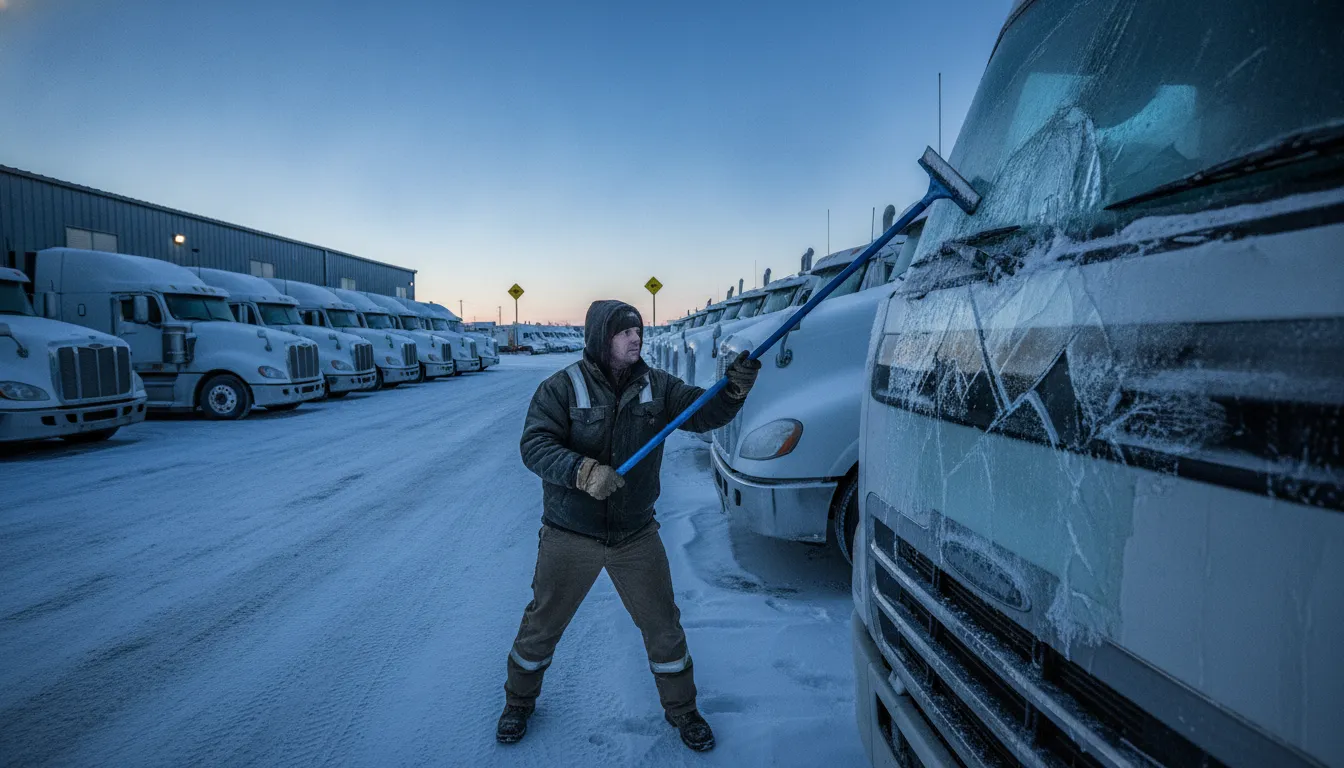
The multipurpose design can simplify the equipment list. Drivers do not need to switch between a small scraper for the glass and a separate tool for wiper buildup. They still need to follow vehicle-maker instructions and use sound judgment, but one accessible tool can support more of the departure routine.
Built for practical vehicle care
The Edge uses a paint-friendly edge for clearing snow and ice while treating the vehicle finish with care. The goal is controlled removal, not aggressive digging. Drivers should clear loose material first and avoid scraping over grit or debris that could be dragged across the surface.
Durability matters because a scraper that lives in a truck is working equipment. The Edge is designed for frequent winter use and carries an exact 5-year performance guarantee. Faster coverage, easy storage, and a tool that is ready when the weather is not make a clear fleet message: Scrape. Stow. Go.
How can fleet managers standardize winter prep across vehicles?
Standardize winter prep with one tool location, one clearing sequence, and one replenishment process. Equip vehicles consistently, train drivers on the same checkpoints, and review damaged or missing equipment after each weather cycle. The result is a manageable system instead of a last-minute search for supplies.
- Inspect the winter kit. Before the first serious freeze, confirm that every vehicle has a usable scraper in its assigned location. Check the windshield, mirrors, lights, wipers, cameras, steps, and doors for damage or buildup.
- Issue the same capable tool. A fleet should not depend on a mix of tiny emergency scrapers and unrelated household tools. A consistent, large-format scraper gives drivers a common option for broad truck surfaces.
- Teach one pre-departure sequence. Train drivers to clear loose snow, work through ice, inspect mirrors and lights, and complete a walk-around. Keep the instructions short enough to use during a real winter shift.
- Stow equipment in one known place. A flat scraper is easier to place in a designated cab compartment, service cabinet, or fleet-kit bin. Add that location to the vehicle handoff checklist.
- Replenish after each weather cycle. Ask drivers to report misplaced or damaged tools. Replace exceptions promptly and review patterns by route, shift, or vehicle type.
Standardization also reduces procurement confusion. Managers can order one product, train around one design, and set one expectation for where winter equipment belongs. That is especially useful when vehicles change drivers or operate from more than one yard.
Build a fleet winter-prep program with The Edge.
When do bulk and custom options make sense for fleets?
Bulk buying makes sense when multiple cabs need the same dependable winter tool. Customization adds value when the scraper also serves as a dealership handoff, client gift, or branded fleet asset. Start with coverage and daily durability, then choose volume and branding that match the operation.
One owner-operator may need one large ice scraper for trucks. A small fleet may need the same tool in every cab. A dealership, school, nonprofit, insurance company, or corporate team may need practical equipment that also carries its brand. The Edge supports these buying paths through consumer packages and enterprise solutions.
| Buyer | Primary need | What to prioritize |
|---|---|---|
| Owner-operator | One large vehicle faces regular snow and ice. | Coverage, grip, flat storage, and durability. |
| Small fleet | Several drivers need the same winter routine. | Consistent equipment and easy replenishment. |
| Dealership or institution | Useful equipment should support customer or team relationships. | Bulk efficiency, practical utility, and customization. |
| Enterprise fleet | Many vehicles need a repeatable standard across locations. | Durability, volume support, and account help. |
When should a small fleet standardize?
As soon as more than one driver shares equipment or expectations, standardization earns its place. A shared approach makes it easier to inspect each vehicle, identify missing tools, and train new drivers. It also prevents the fleet from relying on whatever scraper happens to be left in a cab.
Use volume to make the routine easier, not merely to fill a supply shelf. Decide how many vehicles need equipment, where replacements will be stored, and who reviews exceptions. The Edge bulk collection gives buyers a direct place to review available package options.
When does customization add real value?
Customization works best when the item will be used. A branded scraper can support a dealership delivery, client appreciation program, fleet team, or institutional vehicle group. The product page provides customization choices, including print-size options, so buyers can match the design to the intended use.
Lead with function. If a scraper is difficult to use or store, branding will not make it valuable. The Edge gives the branded item a practical role in winter preparation. Text-to-order fleet support is available at (833) 805-7733 when teams are comparing quantities and customization.
Large scraper versus standard scraper: what is the practical difference?
A standard scraper is compact, but its smaller edge can require more passes across a truck windshield. A large scraper covers more glass per movement and can reduce repeated reaching. The practical decision comes down to vehicle size, daily frequency, driver control, storage, and whether one tool must serve an entire fleet.
For a sedan side window, a small scraper may be enough. For a full-size truck windshield, the same tool can feel undersized. Drivers may need to lean farther, reposition more often, and make overlapping passes before the glass is clear.
The Edge changes that workflow with an 18-inch primary edge and a 14-inch secondary edge. Its broad surface is built to push and pull across larger areas. The design is not a promise that winter work disappears. It is a better match for a vehicle that gives a narrow tool far more surface to cover.
Coverage is only one part of the comparison. A truck scraper should also be comfortable enough for repeated use, stable through gloves, gentle on vehicle surfaces, and easy to store. A long handle may offer reach, but it can also take more room in a cab. The Edge keeps the profile flat and handle-free.
Equip more vehicles with a consistent winter standard.
Coverage and effort
A wide edge can cover more glass with each pass. The Edge product positioning includes a 4x faster clearing claim and up to 80% less effort than standard-sized tools. Treat those figures as product claims, not a promise of one fixed result. Actual effort depends on ice thickness, snow conditions, vehicle shape, technique, and the surface being cleared.
The sensible fleet takeaway is simple: match the tool to the job. Broad coverage can reduce unnecessary movement. Good grip and controlled contact can make the routine more manageable. Drivers still need to clear the full vehicle and inspect the result before departure.
Reach, fit, and storage
A handle-free tool will not replace every extended-reach situation. Drivers should follow their fleet process for safely reaching high surfaces and should never climb on unstable areas. For windshield work and cab storage, however, a flat body can keep equipment accessible without adding a long handle to the cab.
That footprint matters when several drivers share a vehicle or when maintenance teams stock multiple units. A scraper that stores flat is easier to organize, count, and return to the correct place after use.
Daily-use durability and truck-specific fit
Choose equipment that fits the frequency of the work. A tool used across a fleet should be evaluated for construction, grip, surface contact, storage, and product support. The Edge combines those elements with a 5-year performance guarantee and a design intended to work across cars, trucks, and other vehicles.
Frequently Asked Questions About a Large Ice Scraper for Trucks
The best choice depends on the truck, weather, frequency of use, and storage plan. For fleet teams, The Edge offers an oversized surface, multipurpose grip, flat storage, paint-friendly edge, wiper blade grooves, bulk availability, customization options, and a 5-year performance guarantee.
What is the best large ice scraper for trucks?
The best option matches the windshield size and daily routine. Look for broad coverage, controlled contact, a comfortable grip, durable construction, and easy storage. The Edge adds an 18-inch by 14-inch oversized design, multipurpose wiper grooves, flat storage, customization, and a 5-year performance guarantee.
How do fleet managers choose durable ice scrapers?
Start with frequency and workflow. Choose a tool drivers can handle in cold conditions, store in a consistent location, and use across repeated winter preparation. Review construction, the surface-friendly edge, coverage, and guarantee. Then set a replenishment process for missing or damaged equipment.
How can commercial drivers prepare a truck windshield for winter?
Remove loose snow first, then clear bonded ice across the full windshield. Check the wipers, mirrors, side windows, lights, cameras, steps, doors, and other accessible surfaces. Finish with a walk-around. Use the fleet's established pre-trip requirements and do not leave with only a small viewing patch clear.
Why is a large scraper useful on a truck?
A larger working surface can cover more glass per pass than a small standard tool. That can reduce repeated movement and make a full-size windshield easier to manage. The driver still needs control, proper technique, and a complete visibility check. Size helps, but it does not replace careful preparation.
Are custom ice scrapers useful for fleet teams?
Yes, when the scraper has a real operating role. Custom units can support dealership handoffs, client appreciation, fleet programs, and institutional vehicle teams. Choose the size and quantity that fit the use case. The Edge offers customization options and enterprise support for business and fleet buyers.
Ready to equip your trucks for winter?
Put broad coverage, flat storage, and dependable winter utility in every cab that needs it. Review The Edge for individual units or bulk packages, explore enterprise options for fleet teams, or text (833) 805-7733 to start a fleet order.